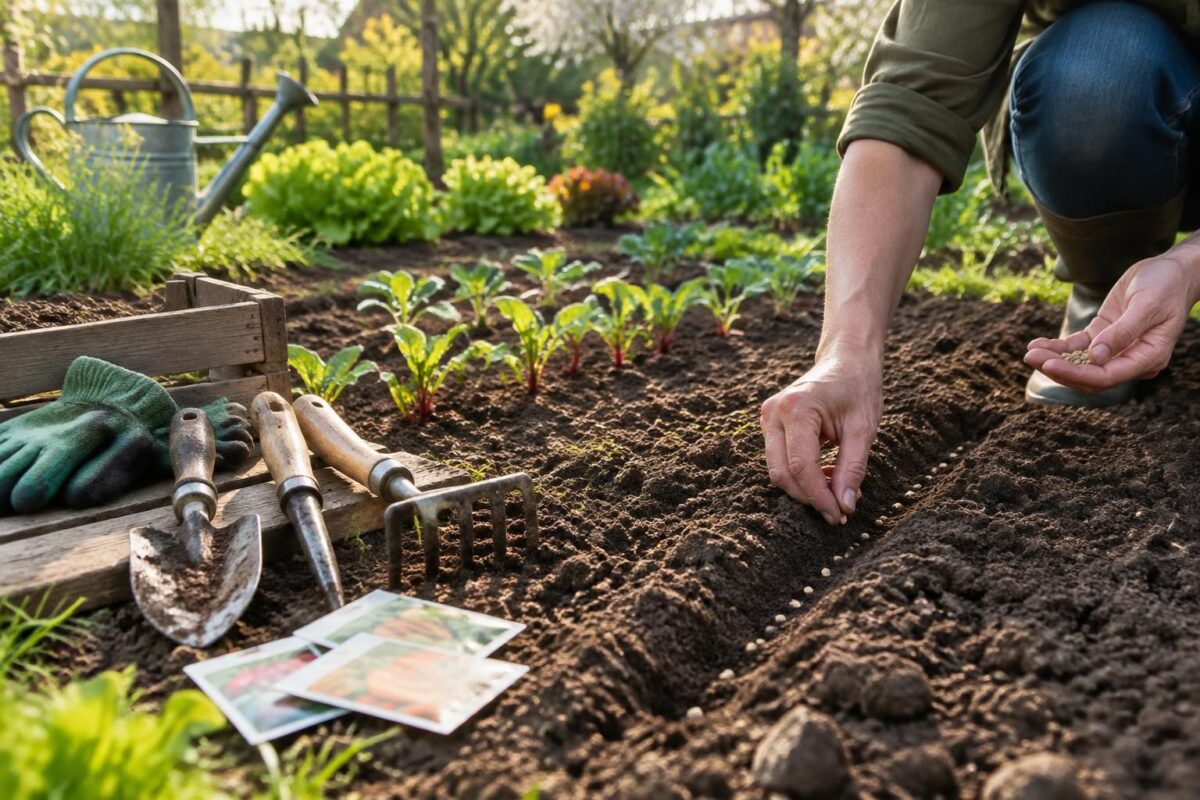
Garden tools: what’s the bare minimum you need to sow your vegetables?
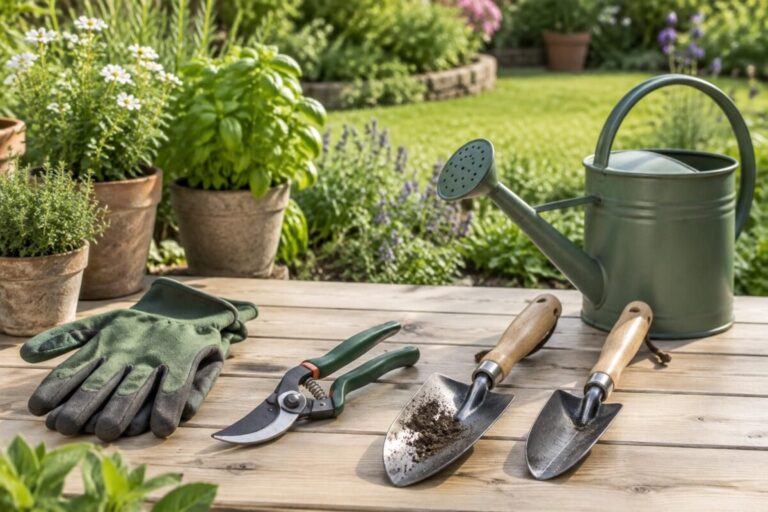
Hello, Solan here. To sow your vegetables, the bare essentials are three tools: a rake, a dibber and a watering can with a fine rose. If the soil is hard or overgrown with weeds, add a spade or a hand hoe. You don’t need to buy an electric seed drill to start a small vegetable garden: your fingers will do the job.
Things to get in place right away
- Choose a sunny spot with soil that doesn’t leave water sitting on the surface.
- Remove visible weeds and stones before marking out your rows.
- Keep the seed packet handy so you can check the depth and spacing.
- Get a watering can with a rose to avoid disturbing the seeds.
- Start with easy vegetables such as radishes, beans or spinach.
To compare useful tools before buying, check out my guide to equipment from sowing to harvest and my tips for equipping your first raised bed. The idea is simple: buy only what meets a real need in your garden.
The minimum garden tools you need for sowing
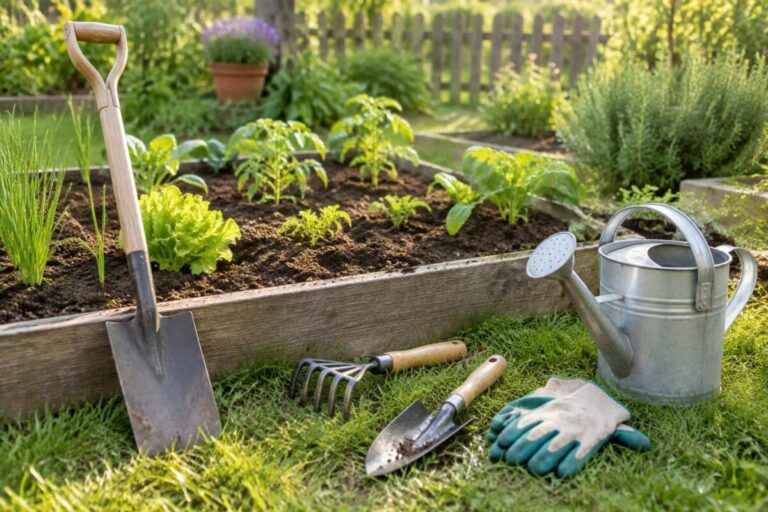
For a small space that’s already being cultivated, three essential tools are often enough. The rake levels the surface, the dibber or the end of a stick makes the furrows, and the watering can helps keep the soil moist without waterlogging it.
A spade isn’t essential for every sowing. It’s mainly useful if you need to break into compacted or weed-infested ground; in loose soil, a hand hoe or a cultivator is often enough to loosen the surface.
A hand seed drill can help distribute small seeds along a long row, but it’s optional. For a few rows of radishes or beans, sowing by hand is simple and saves you from adding a tool that might end up gathering dust in the shed.
What budget should you set aside for sowing tools?
Prices vary depending on quality, size and retailer. To get started, aim for sturdy but simple equipment: the important thing is that it’s comfortable to use and easy to clean.
| Tool | Purpose | Indicative budget |
|---|---|---|
| Rake | Level the soil and lightly cover the seeds | About €15 to €40, depending on the model |
| Dibber or small hand hoe | Make furrows or small holes | About €5 to €25, depending on the model |
| Watering can with rose | Water gently after sowing | About €8 to €30, depending on the model |
| Spade | Break up difficult ground | About €25 to €60, depending on the model |
| Hand seed drill | Distribute seeds evenly | About €10 to €50, depending on the model |
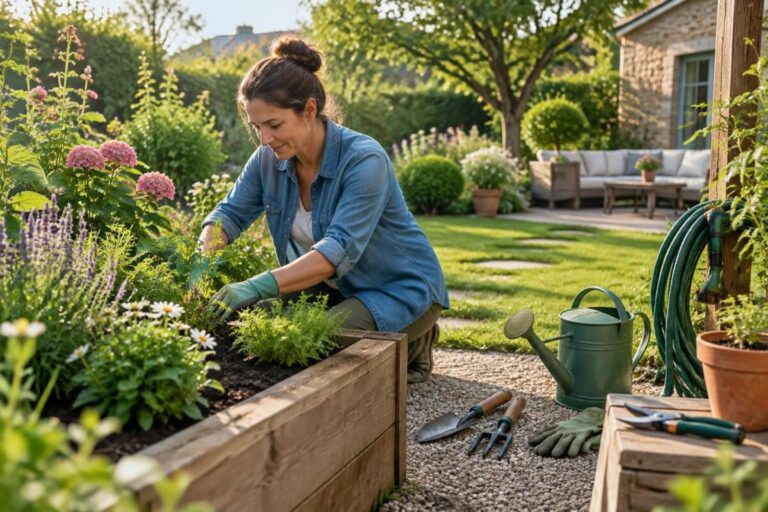
On a balcony or in a small planter, you can often do without a spade: a small hand trowel and a watering can are enough. For a new, hard patch of ground, start by loosening the soil, but avoid turning it deeply if it’s already full of life and well structured.
Soil preparation: three steps to successful vegetable sowing
Success depends less on the number of tools than on well-prepared soil, the right sowing depth and gentle watering. Here’s a quick routine to help you get things done without making it complicated.
- Step 1: prepare the surface. Remove the weeds, then loosen the top layer with the hand hoe. If the soil is very compacted, use the spade sparingly and mix in a little well-rotted compost.
- Step 2: mark out the rows and sow. Level the soil with the rake, make furrows with the dibber, then follow the instructions on the packet. Small seeds are generally covered with a thin layer of soil; don’t bury them too deeply.
- Step 3: water and observe. Water gently with the watering can and keep the soil slightly moist until the seeds germinate. Thin out the young seedlings if they’re too close together, then remove weeds around the rows.
If you’re sowing a few rows in loose soil, stick with the trio of rake, dibber and watering can. If you’re breaking into hard, root-filled ground, add a spade for the initial preparation.
A neighbor who was just starting out with a bed of radishes wanted to buy a seed drill before even preparing the soil. In the end, he marked out his rows with a stick and got an even germination: for a small area, the method matters more than the machine.
“A well-placed seed needs fewer adjustments later.” Keep this in mind when you sow: follow the spacing guidelines, water without compacting the soil, and give the plants room to grow.
When should you sow, and which vegetables should you choose?
The timing depends on the variety and your local climate. In spring, wait until the soil has warmed up enough for vegetables that are sensitive to the cold; the instructions on the packet and the weather conditions in your region are your best guides.
Radishes are often ready in just a few weeks, while carrots need more patience. Green beans prefer warm soil: don’t sow them too early if the nights are still cold.
“Little by little, the vegetable garden takes shape”: start with one or two easy crops, then add varieties once you’ve found your rhythm. Regular watering and good spacing are worth more than a long list of accessories.
A seed drill or machine: useful only in certain cases
On a large plot, a hand seed drill makes it easier to distribute seeds and saves time. Powered tools, such as a rototiller or electric cultivator, can be useful for working a large area, but they cost more, take up space and aren’t necessary for a few rows.
Before buying, ask yourself how often you’ll use the tool and whether you could borrow or rent one. For a small vegetable garden, investing in sturdy hand tools first leaves more of your budget for seeds, compost and protective covers.
Easy mistakes to avoid when sowing
- Burying seeds too deeply: check the instructions for each variety.
- Watering with a strong jet: it can displace the seeds and wash away the soil.
- Sowing rows too thickly: young plants compete with each other and then need to be thinned out.
- Sowing in waterlogged soil: it compacts and hinders germination.
Clean your tools after use and store them somewhere dry. It’s a quick task that helps prevent rust and means your equipment will be ready for the next sowing.
Useful questions before equipping your vegetable garden
What tools do you need to sow vegetables?
To get started, a rake, a dibber and a watering can with a rose are often enough. Add a spade if the soil is hard or you’re preparing a new plot.
Do you need a seed drill for a small vegetable garden?
No. You can distribute the seeds by hand for a few rows. A hand seed drill is mainly useful for sowing evenly over a larger area.
Can you sow vegetables in pots?
Yes. Many vegetables grow in pots if the container is deep enough, drains well and is placed in a sunny spot. A small hand trowel and a watering can are enough for everyday tasks.
Is a spade essential before every sowing?
No. It’s mainly used to break into or loosen difficult ground. In soil that’s already loose, a hand hoe may be enough to prepare the surface.
Thanks for reading; Solan