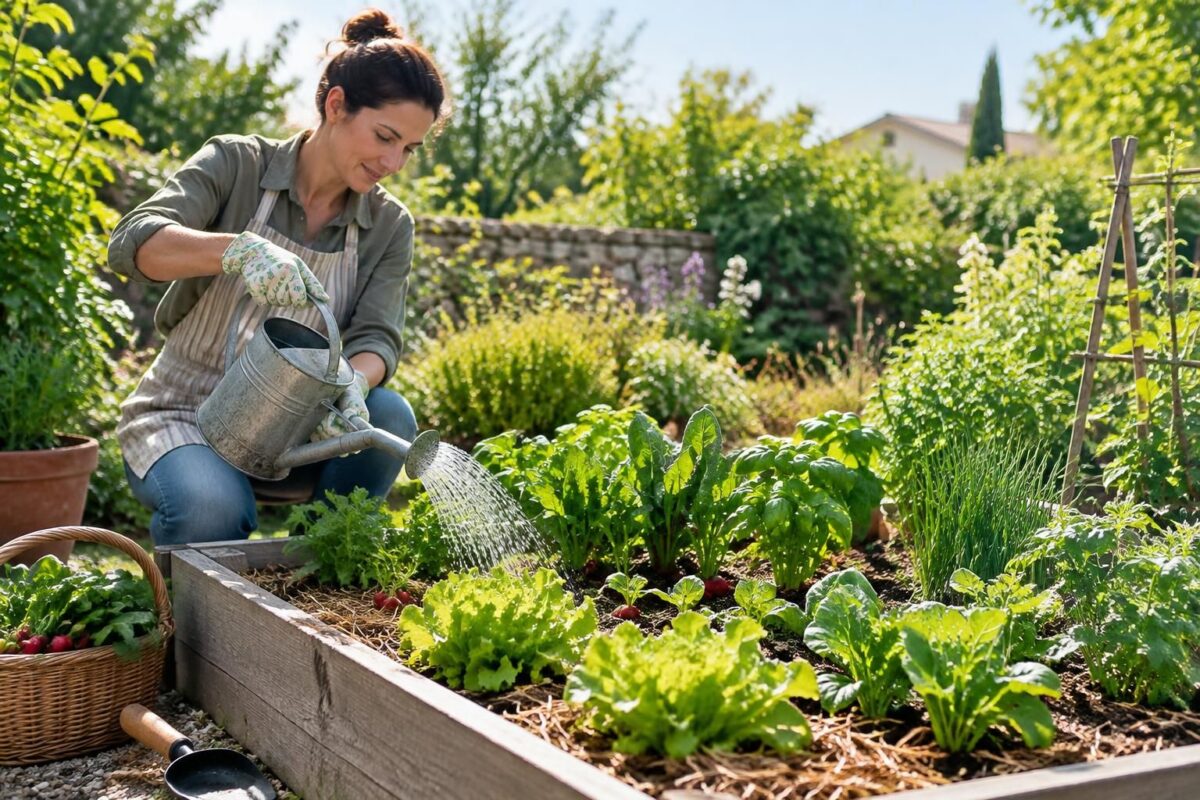
Garden care: what should you choose for a productive garden quickly?
Hi there, Solan here. To quickly create a productive growing space, choose a sunny spot, plant a few fast-growing vegetables, and protect the soil with mulch. Even a well-placed container can provide regular harvests if watering is simple and appropriate. Here are some practical steps to get started without taking on too much.
Things to set up right away
- Find an area that gets around 5 to 6 hours of direct sunlight, depending on the season and exposure.
- Start with radishes, lettuce, and cherry tomato seedlings.
- Improve the soil with mature compost, or choose potting mix suitable for containers.
- Water at the base of the plants and cover the soil to limit evaporation.
- Keep paths accessible and group crops according to their water needs.
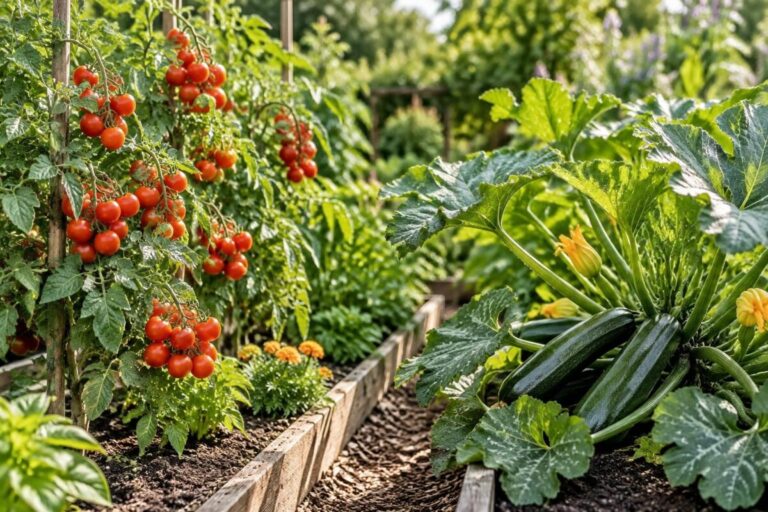
To get started without wasting space, organize your productive vegetable garden into small, easy-to-maintain areas. These tips for setting up a productive vegetable garden and these suggestions for keeping the soil moist for longer will help you lay a solid foundation.
Choose crops that produce quickly
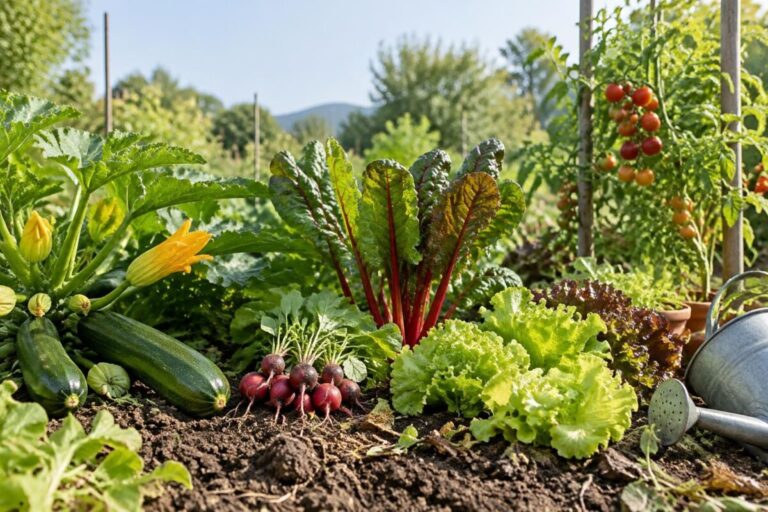
For a quick first harvest, try radishes, baby lettuce leaves, and arugula. These fast-growing vegetables take up little space and let you see the first results within a few weeks, depending on the varieties and conditions.
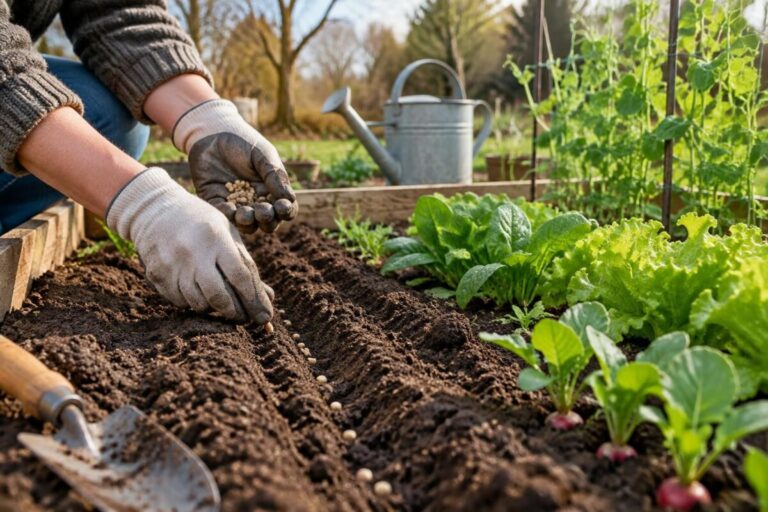
Cherry tomato, basil, or lettuce seedlings save time compared with starting seeds at home. Radishes, short carrots, and arugula can be sown directly where they will grow. This mix of quick-growing seeds and young plants makes getting started easier.
| Crop | A good choice to get started | What to watch for |
|---|---|---|
| Radishes | Sow directly in a container or in the ground | Keep the soil moist |
| Lettuce | Sow seeds or plant seedlings in a bright spot | Water without waterlogging |
| Cherry tomatoes | Plant in a deep pot or in the ground | Provide warmth and a stake |
| Basil | Plant near the tomatoes, in the sun | Protect from the cold |
If your spot is sunny, try cherry tomatoes and basil; if it is more partially shaded, go for lettuce, arugula, and spinach.
Prepare the soil and organize the space
Soil preparation can be simple: remove any troublesome weeds, loosen the surface without digging deep, and add a layer of mature compost. Living, well-aerated soil helps roots take hold and retains moisture better.
For a container, choose one with drainage holes and enough depth for the crop you plan to grow. On a terrace, also make sure the pots do not block the way and that their weight is suitable for the space. Easy gardening starts with a setup you can maintain every day without effort.
A neighbor started with two planters of radishes and lettuces near the kitchen. Because the harvests were within easy reach, she quickly got into the habit of checking the moisture and sowing again.
Water wisely and feed naturally
Effective watering moistens the soil around the base of the plants without soaking the leaves. Push a finger into the soil: if it is dry a few centimeters down, water gently. Pots often dry out faster than garden beds, especially in hot or windy weather.
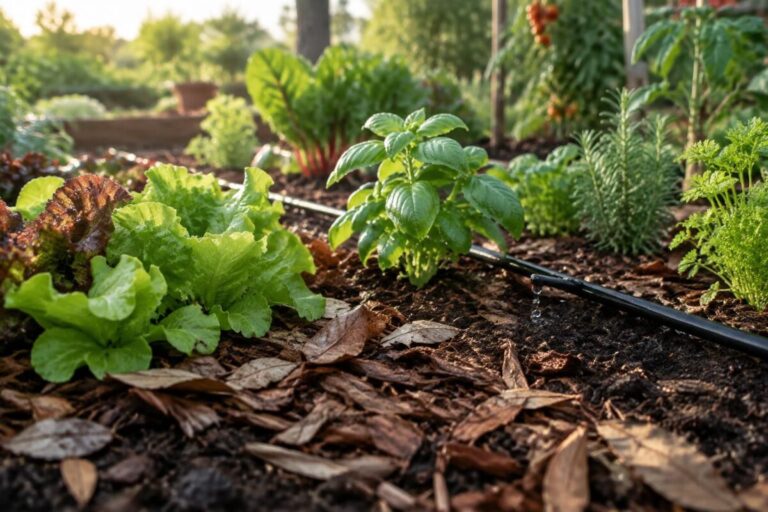
Mulching with dead leaves or well-dried grass clippings reduces evaporation and suppresses unwanted weeds. Add a small amount of mature compost as the season goes on; these natural fertilizers nourish the soil without making maintenance complicated. As a simple gardening principle goes: “Covered soil stays fresher for longer.”
To supplement your watering, a drip system works well for rows or numerous containers. On a small balcony, a watering can is often enough: the important thing is to check regularly rather than watering a lot but infrequently.
Take action in three steps
- Step 1: Observe the light throughout the day and choose the sunniest accessible spot.
- Step 2: Prepare a container or small plot with compost, then plant lettuce and cherry tomatoes or sow radishes.
- Step 3: Water at the base of the plants, add a light mulch, and note your sowing dates so you can stagger your next crops.
At first, stick to just a few crops. You can add more later, depending on what grows well where you are, without overcrowding the space or multiplying your chores.
Practical questions about starting a productive vegetable garden
Which vegetables grow fastest in a vegetable garden?
Radishes, arugula, and some types of lettuce generally provide quick harvests. The time it takes depends on the variety, temperature, and light.
Can you start a vegetable garden on a balcony?
Yes. Choose containers with drainage holes, compact varieties, and a bright spot. Lettuce, radishes, basil, and cherry tomatoes are all well suited to balcony growing.
How can you avoid watering too often?
Cover the soil with mulch, check its moisture before watering, and group plants with similar needs. However, pots may dry out faster than garden beds.
Thanks for reading; Solan