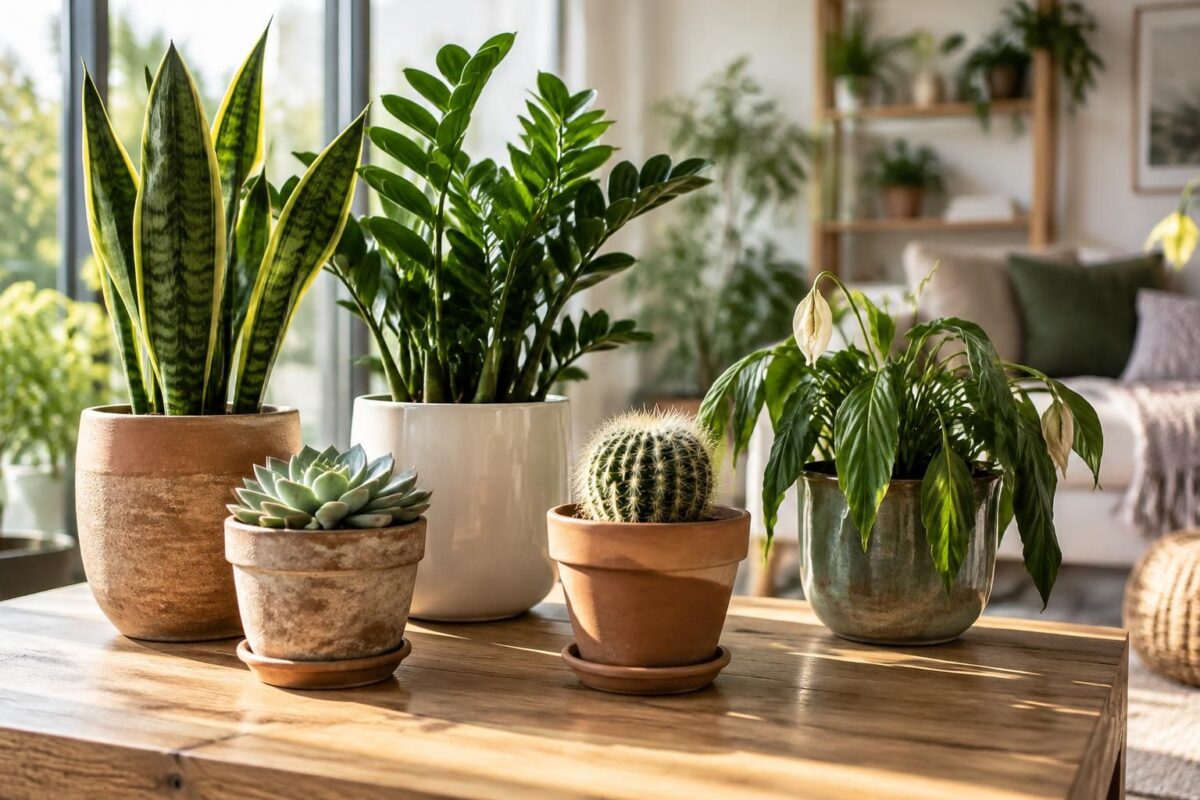
Plants: which ones can better withstand being forgotten when watering?
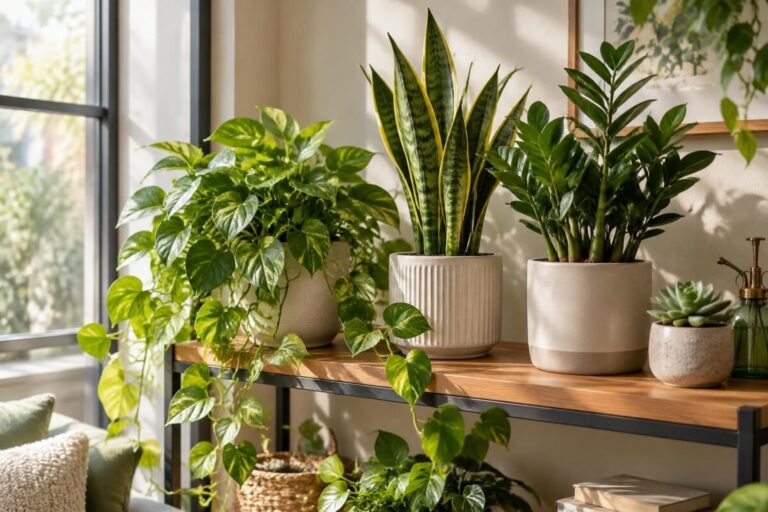
Hi, Solan here. Snake plants, ZZ plants, succulents and cacti generally cope best with missed waterings. Pothos, aloe vera and cast-iron plants also tolerate an irregular watering schedule, as long as you avoid letting water sit around. The best approach: choose a plant that suits your conditions, then let the potting mix dry out according to its needs.
Put these steps in place right away
- Choose a pot with a drainage hole.
- Lighten the potting mix with perlite, pumice or bark, depending on the plant.
- Check the soil with your finger before watering.
- Empty the saucer after watering.
- Keep plants away from direct heat sources.
Put these steps in place right away: adjust watering to suit the plant, not the calendar. For more ideas for easy-care plants, see this guide to plants that help you avoid common mistakes and this selection of plants that need little water and little effort.
Which plants cope best with missed waterings?
The most resilient plants often store water in their leaves, stems or roots. Others grow slowly and use little water. These drought-tolerant houseplants can go longer between waterings, but none can live without water indefinitely.
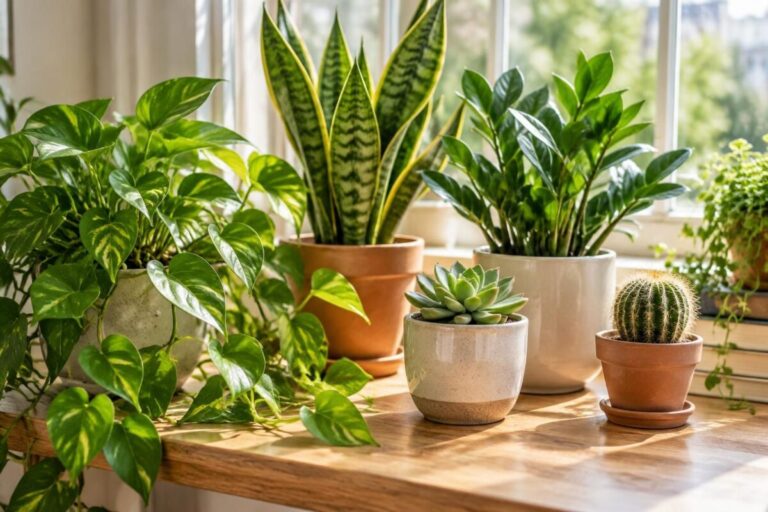
Snake plants and ZZ plants are good choices for beginners. Succulents, such as jade plants and aloe vera, also forgive missed waterings if they get enough light and grow in a well-draining mix.
Hardy houseplants
| Plant | Why it holds up | Care tip |
|---|---|---|
| Snake plant | Thick leaves that store water | Indirect light, a pot with drainage holes, and infrequent watering |
| ZZ plant | Fleshy rhizomes and slow growth | Let the soil dry out thoroughly |
| Pothos | It slows its growth when water is scarce | Water when the root ball has dried on the surface and partly in the center |
| Ponytail palm | A swollen base that serves as a water reserve | Place it near a bright window |
| Jade plant | Succulent leaves and limited water loss | Use a very well-draining cactus mix |
| Haworthia | Fleshy rosette and moderate growth | Avoid scorching sun and persistent moisture |
| Hoya | Thick, waxy leaves | Choose an airy mix and a pot with drainage holes |
| Cast-iron plant | Rhizomes and slow growth | It tolerates moderate light, but not extreme dryness |
Missing a watering once isn’t necessarily fatal. The trap is often trying to make up for it by pouring on too much water: a pot without drainage and compacted potting mix can deprive roots of oxygen within a few days.
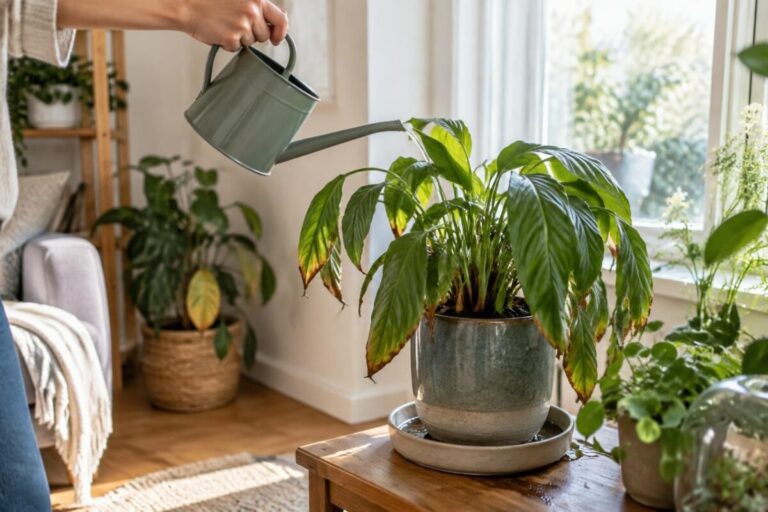
A plant that needs water often has limp or wrinkled leaves. It can perk up fairly quickly after suitable watering. Yellowing, a soft base or a fermented smell from the soil, on the other hand, can signal overwatering. If in doubt, check the weight of the pot: if it’s heavy, wait; if it’s light, water.
Drought-resistant plants for the garden
In the garden, some perennials and grasses tolerate dry soil well once established. Sedum, ice plant, garden valerian, yarrow, blue fescue and Mexican feather grass are options to consider for rock gardens and sunny borders.
These drought-resistant plants still need a suitable spot. Ice plant prefers heat and sun, while sedum is especially sensitive to waterlogged soil in winter. Well-draining soil is more helpful than frequent watering.
Two tips to help you choose wisely
For a dimly lit room, choose a ZZ plant or cast-iron plant, but don’t leave them in complete darkness. For a very bright window, consider a jade plant, aloe vera or cacti.
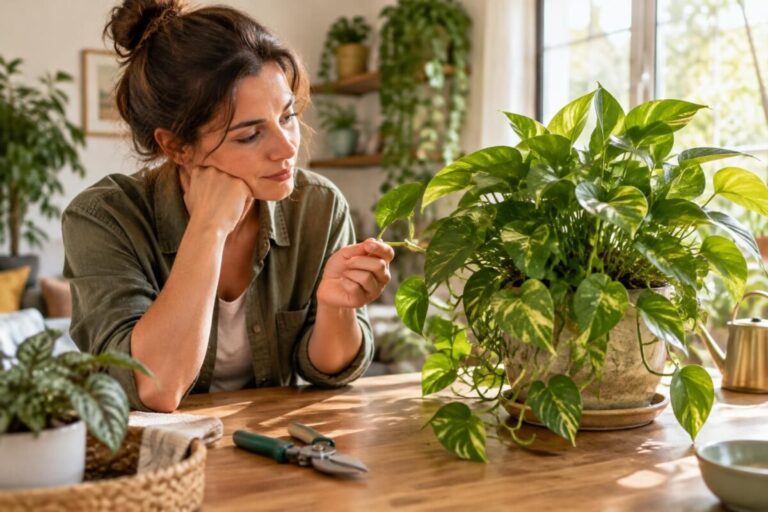
A familiar story: after a few days away, a pothos may have drooping leaves, then perk up again after a reasonable watering. This is a useful signal, but don’t turn waiting into a test of endurance: a completely dried-out root ball can be difficult to rehydrate.
“It’s better to water less often, but at the right time.” This simple rule helps prevent damaged roots, especially with succulents and cacti.
Rehydrate a neglected plant in three steps
- Step 1: Feel the potting mix and lift the pot. If it’s still heavy or damp deep down, don’t add water.
- Step 2: If the potting mix is dry and has pulled away from the sides, soak the pot for about 15 minutes, then let it drain. For an epiphytic orchid, limit soaking to a few minutes and drain it completely.
- Step 3: Resume a normal watering routine once you’ve checked that excess water has drained away. Don’t keep giving it small amounts of water if the water runs through the root ball without moistening it.
If the potting mix is only dry on the surface, bottom watering can help: let the root ball absorb the water, then empty the saucer that same day. After overwatering, by contrast, wait until the soil has dried out thoroughly before watering again.
The rule is the same for plants that need little water: water reserves, light and drainage work together. Easy-care plants don’t need automatic watering, but they do need a quick check before each watering.
Helpful questions about plants that tolerate missed waterings
Which houseplant should I choose if I often forget to water?
Snake plants and ZZ plants are good choices. Their water reserves allow them to tolerate longer periods between waterings, provided you use a pot with drainage holes.
Can cacti go a long time without water?
They generally tolerate dry periods, especially in winter, but their needs vary depending on light, temperature, pot size and potting mix. Check that the soil is dry before watering.
How can I tell if a plant needs more water or has had too much?
Wrinkled or drooping leaves can indicate a lack of water. Yellow leaves, a soft base or soil that stays wet for a long time are more likely signs of overwatering. Also check the moisture deep in the soil.
How should I water potting mix that has become very dry?
If water runs between the potting mix and the pot, soak the pot for about 15 minutes, then let it drain thoroughly. Avoid repeated waterings that leave water sitting around.
Thanks for reading; Solan