Plants: What beginner mistakes silently damage them?
Hi there, Solan here. To avoid silently damaging your plants, check the soil moisture, light and drainage before adding water or fertilizer. Overwatering and choosing the wrong spot are among the most common pitfalls. A few simple steps are often enough to set things right and keep your plants healthy.
Put these steps in place right away
Start small, choose plants suited to your space and observe how they respond before changing their care routine. For more information, check out these tips on common mistakes with houseplants and these suggestions for choosing easy-care plants for beginners.
- Push a finger into the soil before watering.
- Check that the pot has drainage holes.
- Place each plant according to its light requirements.
- Leave space between pots and plants.
- Regularly check the leaves, stems and soil.
Beginner mistakes that quietly damage plants
Damage isn’t always immediate. A plant can slowly lose its vigor because of poor drainage, insufficient light or a spot that doesn’t suit it.
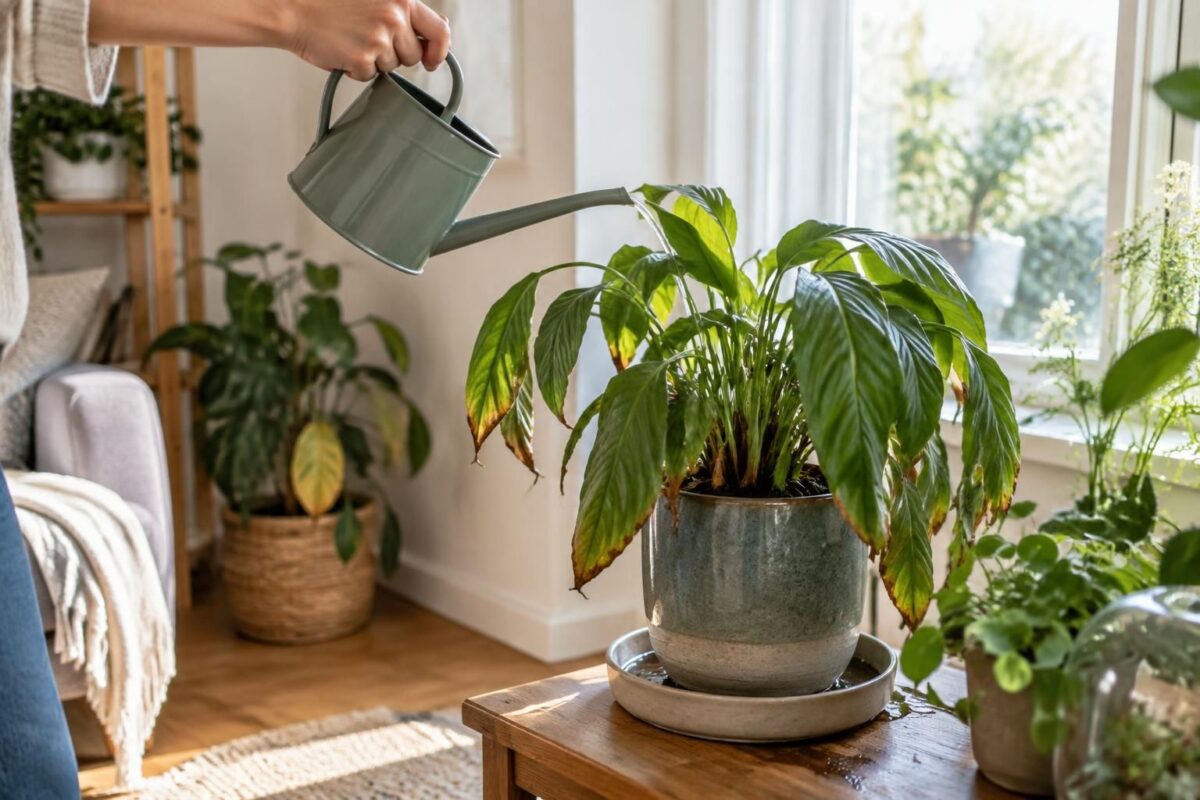
Overwatering is especially deceptive: the leaves turn yellow, the soil stays damp and the roots can eventually rot. Conversely, soil that is too dry weakens the plant. The best habit is to check the soil rather than water on a fixed schedule.
Watering, drainage and repotting: good habits to follow
A pot without a drainage hole traps water at the bottom, even if the surface seems dry. Choose a pot with drainage holes and a suitable potting mix; for plants that are sensitive to moisture, opt for a lighter mix.
Repotting incorrectly can also slow recovery: a pot that is much too large often keeps the soil damp for longer. Move up to a pot that is only slightly wider, and avoid disturbing the roots without good reason.
If the soil smells musty and stays waterlogged, stop watering and check the roots. If the leaves are dry and the root ball is pulling away from the pot, rehydrate it gradually without letting the plant sit in water.
A beginner had placed a decorative cachepot around a pot with drainage holes without emptying the water that had collected inside. The leaves started turning yellow; by removing the standing water and spacing out the watering, she prevented the problem from getting worse.
“It’s better to observe before taking action.” This simple rule often prevents you from adding water or fertilizer, or pruning a plant that doesn’t need it.
Light, placement and care: avoid well-intentioned mistakes
Choosing the wrong spot may show up as elongated stems, pale foliage or falling leaves. Move the plant to a brighter area if it is becoming leggy, but check its needs before exposing it to direct sunlight.
Drafts and sudden temperature changes can also weaken it. Avoid placing a pot next to a frequently opened door, a radiator or a cold window.
Too much fertilizer won’t make a plant grow faster: it can damage the roots and encourage weak growth. Follow the recommended amounts and feed mainly during the growing season, depending on the plant and the circumstances.
Forgetting to dust the leaves reduces their ability to absorb light. Gently wipe large leaves with a damp cloth, and also watch out for water with too much limescale, which can leave marks or be less suitable for some species.
Finally, inspect the undersides of the leaves and new shoots. Pests that are hard to spot at first glance, such as tiny mites, can take hold before the damage becomes obvious.
A three-step method for correcting mistakes
- Step 1: Observe the plant and note any visible signs: limp leaves, spots, leaf drop or elongated stems.
- Step 2: Check the soil, drainage, light and placement before changing several habits at once.
- Step 3: Fix one problem, then observe how things change over a few days to a few weeks, depending on the plant and the circumstances.
If you’re a beginner, start with a few easy-care plants. If you already have several pots, group them according to their water and light requirements to make care easier.
| Sign observed | Possible cause | What to try |
|---|---|---|
| Yellow leaves and damp soil | Watering too often or poor drainage | Let the soil dry out and empty the water from the cachepot |
| Long stems and pale foliage | Insufficient light | Choose a brighter spot that suits the plant |
| Dry edges or white marks | Dry air or water with too much limescale | Check the water quality and the species’ needs |
| Small spots or fine webs | Possible pests | Inspect the leaves and isolate the plant if necessary |
To see the basic care steps and spot common mistakes, this video search focuses on plant care for beginners.
Helpful questions for keeping your plants healthy
How can you tell if a plant has been overwatered?
Soil that is constantly damp, yellow or limp leaves, and sometimes a musty smell can indicate overwatering. Also check that the pot drains water properly.
Should you water all your plants on the same day?
No. Their needs vary depending on the species, season, light and type of pot. Check the soil moisture before each watering.
Can you save a plant that isn’t getting enough light?
Often, yes. Gradually move it to a brighter spot that suits its needs, then watch for signs of recovery without changing all its care routines at once.
How often should you fertilize a plant?
It depends on the plant and its growing season. Follow the product instructions and avoid fertilizing a weakened plant or soil that is already waterlogged.
Thanks for reading; Solan