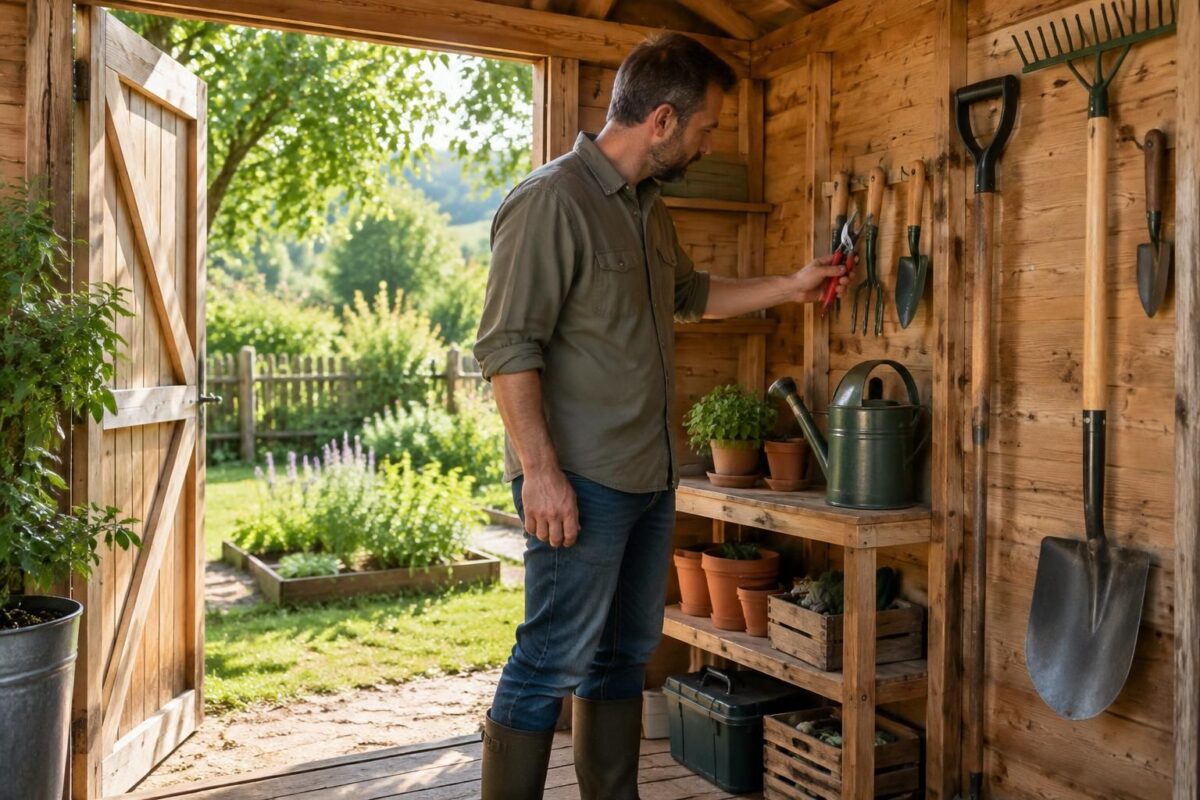
Garden tools: how to equip yourself without filling the shed for no reason?
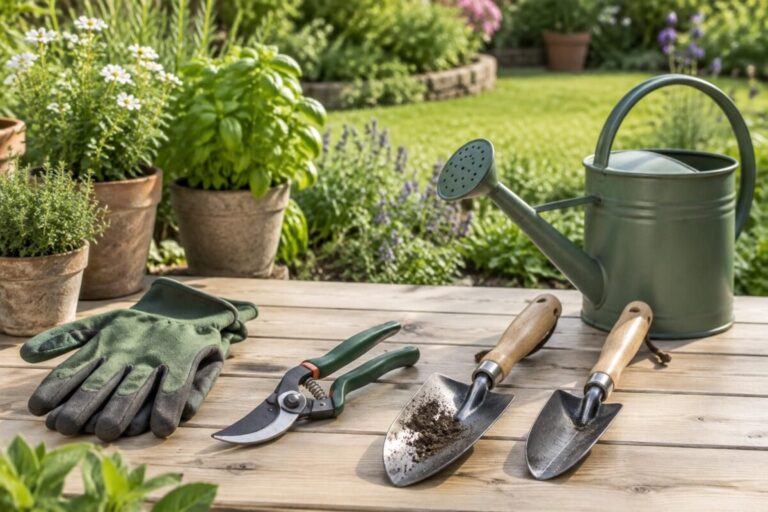
Hello there, Solan here. To equip yourself without cluttering the shed, choose a few tools suited to your tasks, avoid duplicates, and keep small accessories in a mobile caddy. Pruners, a hand cultivator, a trowel, a watering can, and gloves already cover many needs. The best approach: buy according to the size of your garden and how often you’ll use each tool, not according to what’s available on the shelves.
Things to do right away
- Take inventory of your tools before buying anything.
- Identify the ones you use every week and keep them within easy reach.
- Get rid of broken items and duplicates that take up space.
- Choose just one mobile storage option, such as a bag or a caddy.
- Hang long-handled tools to free up floor space in the shed.
To compare tool-holder styles and put together a gardening kit without buying duplicates, these two guides may help: practical tool holders for every space and tips for choosing tools without unnecessary duplicates.
Choose your garden tools based on your actual needs
Start with the tasks you do most often: pruning, planting, weeding, or watering. The essential tools vary depending on the terrain, but a few versatile items are often enough to maintain a small garden.
A well-suited pair of pruners, a small trowel, a hand cultivator, and gloves make an effective basic kit. Add another tool only if it meets a regular need. Multifunction tools can be useful when space is limited, provided they’re comfortable to use and easy to clean.
If you garden on a balcony, opt for compact tools and a small bag. If you maintain a large vegetable garden, consider a compartmentalized caddy that’s easy to carry from one bed to another.
Compare styles before you buy
| Style | Suitable for | What to check |
|---|---|---|
| Tool belt | Small tasks and balconies | Comfort and sufficiently deep pockets |
| Canvas bag | Family gardens | Strong seams and ease of cleaning |
| Rigid caddy | Carrying tools together | Sturdy handle and useful compartments |
| Wall-mounted rack | Narrow sheds or long-handled tools | Mounting suited to the wall and the load |
A model advertised as holding around 7 to 9 kg may suit several tools, depending on the model and the situation. But a large capacity isn’t always an advantage: if the caddy is heavy when empty or full, it’ll end up at the back of the shed.
Organize tool storage without overcrowding the shed
Before installing shelves, measure the space and check that the door can open freely. Keep the floor as clear as possible, then install hooks or racks on the walls for spades, rakes, and brooms. An organized garden shed should let you grab a tool without having to move an entire pile.
Set aside one area for everyday tools and another for seasonal accessories. Pots, ties, and labels can be kept in a clearly marked box or bin; products and items sensitive to moisture should be stored in sealed containers raised off the floor.
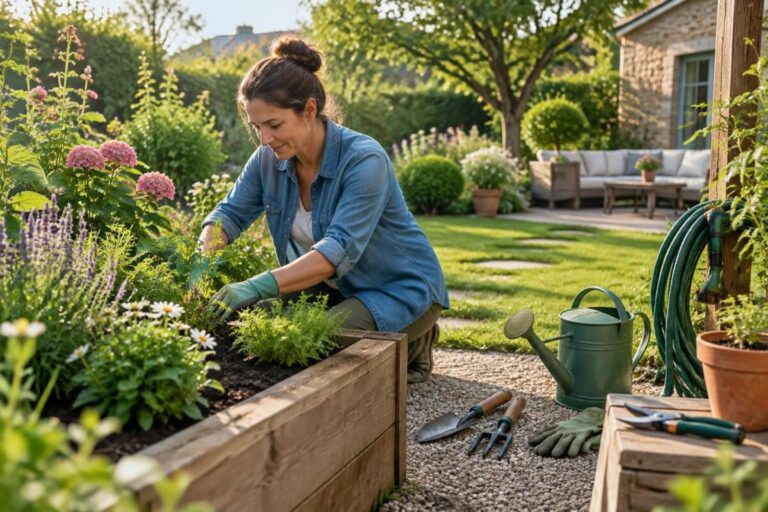
A local gardener used to leave her pruners in a different pot after every gardening session. By grouping her gloves, ties, and tools in a small bag hung near the door, she was able to find everything without adding a single shelf.
A simple three-step method
- Step 1: Clear an area and sort each tool according to its condition, usefulness, and frequency of use. Set aside duplicates and equipment that needs repair.
- Step 2: Group tools by task, then choose suitable storage: a caddy for portable accessories, hooks for long handles, and a box for small items.
- Step 3: Put everything back in its place after use and do a quick sort at the start of each season. This small habit keeps the shed from filling up again.
“A tool put away is a tool ready to use.” This simple rule also helps you identify what you actually need, instead of buying things just in case.
Make responsible purchases and keep your equipment in good condition
Before paying, check that the new tool complements the ones you already own. A comfortable handle, a replaceable part, and easy storage often matter more than an extra feature. Responsible shopping also means choosing a tool you’ll use regularly.
After each session, remove the soil, dry the metal parts, and store the tools away from moisture. A quick clean helps protect your equipment and makes the next session more enjoyable. To save space, opt for compact tools when they meet your needs just as well.
Practical questions about garden tools
What tools should I buy to get started in the garden?
Start with pruners, a small trowel, a hand cultivator, gloves, and a watering can. Add to this basic kit according to the tasks you actually do.
How can I avoid duplicates in the shed?
Take inventory before each purchase and keep one working tool for each use, unless the size of your garden calls for something different.
What storage should I choose for a small space?
A compact bag or small caddy for everyday tools, supplemented by a few wall hooks for long-handled tools, is often enough.
How can I keep my tools in good condition?
Remove the soil after use, dry the metal parts, and store the equipment somewhere dry. Check the handles and fittings regularly.
Thanks for reading; Solan