Beginner’s vegetable garden: which vegetables inspire confidence quickly?
Hello there, Solan here.
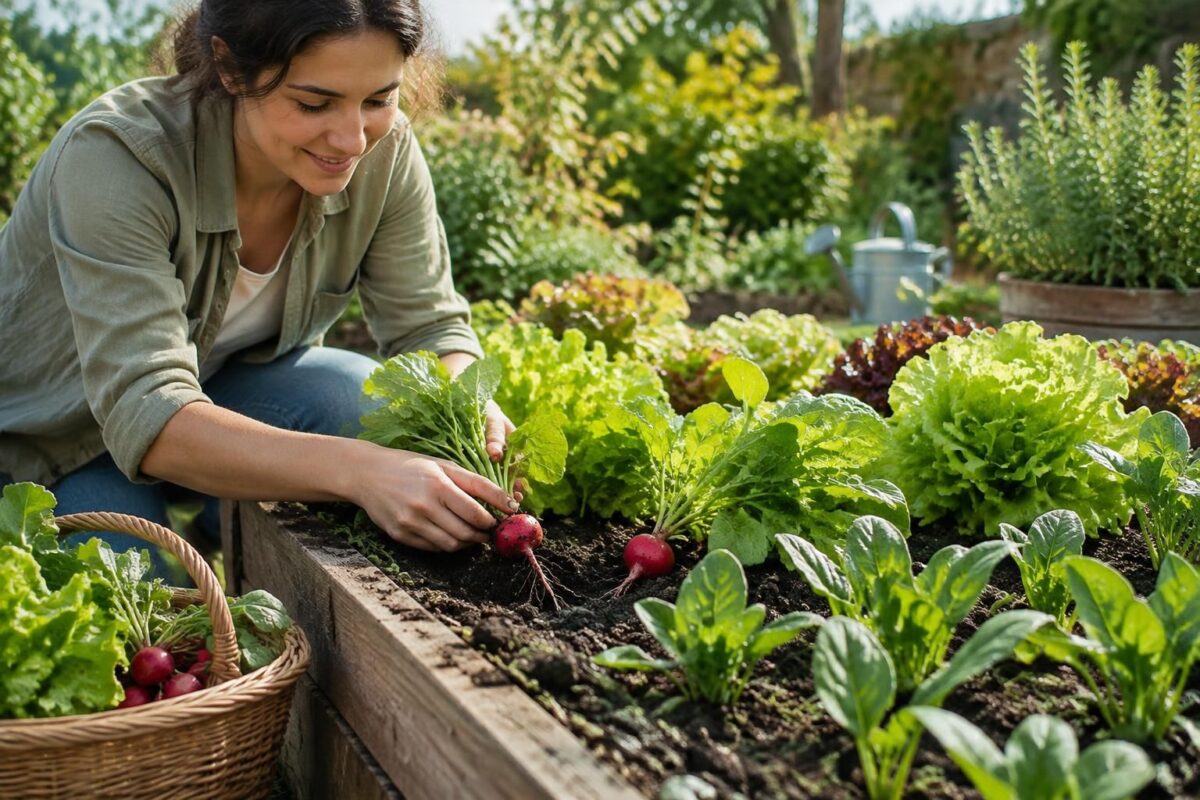
To build confidence, start with radishes, arugula, and cut-and-come-again lettuce: they often produce a harvest in just a few weeks.
These easy vegetables need little space and forgive the occasional lapse in care.
With a few simple sowings and regular watering, your beginner’s vegetable garden can soon yield its first results.
Fast-growing vegetables for a successful beginner’s vegetable garden
Get started right away
- Sow a short row of radishes in loose soil.
- Plant arugula or cut-and-come-again lettuce so you can harvest leaf by leaf.
- Choose a sunny spot, with a little afternoon shade if summers are hot.
- Water gently when the soil surface starts to dry out.
- Stagger sowings every two or three weeks to extend the harvest.
You only need a modest space to get started: a few pots or a well-prepared raised bed are enough to try growing some crops. For more guidance, check out these tips on first steps in the vegetable garden and this selection of vegetables suited to beginners.
“It’s better to sow a little regularly than to sow everything at once.” This approach reduces waste and makes each small harvest encouraging.
Which vegetables should you choose for a quick harvest?
Radishes are often the first to reward your efforts: depending on the variety and the weather, allow about three to five weeks from sowing to harvest. Arugula and cut-and-come-again salad greens are close behind, while spinach does best in the cool periods of spring and fall.
| Vegetable | Approximate time | Helpful tip |
|---|---|---|
| Radishes | 3 to 5 weeks | Keep the soil moist to prevent the roots from becoming too pungent. |
| Arugula | 3 to 5 weeks | Harvest the young leaves, which are more tender. |
| Cut-and-come-again lettuce | 4 to 6 weeks | Cut the leaves, leaving the heart in place. |
| Spinach | 5 to 8 weeks | Sow when temperatures remain mild. |
| Dwarf green beans | 7 to 9 weeks | Sow after the last frosts, in warmed soil. |
| Early beets | 7 to 9 weeks | Thin the seedlings to give the roots room to grow. |
| Early carrots | 8 to 10 weeks | Choose light soil without stones or large clumps. |
These time frames are estimates: temperature, exposure, and variety can all affect them. For a quick first harvest, radishes and arugula make an easy pairing to try; for a more generous summer crop, dwarf green beans are a good choice.
How to succeed with your first sowings without making things complicated
Success often comes down to three things: loosened soil, shallow sowing, and consistent moisture. There’s no need to prepare a large plot; start with a few rows that are easy to keep an eye on.
- Prepare the soil: remove weeds and loosen the soil to a depth of about six inches. Add a little well-rotted compost if the soil is poor.
- Sow thinly: follow the spacing instructions on the packet and cover the seeds with a thin layer of soil. Sowing too densely makes it harder for plants to grow and for you to thin them out.
- Water and observe: use a fine spray so you don’t displace the seeds. Keep the soil slightly moist, especially while the seeds are germinating.
If you have a balcony, grow radishes, arugula, and salad greens in containers with drainage holes. If you have a sunny plot, add green beans and a few zucchini plants, making sure to leave them enough space.
A beginner in the neighborhood had sown her radishes too close together in a planter. After thinning the seedlings, she was able to enjoy the first ones a few weeks later. That small harvest inspired her to try cut-and-come-again salad greens.
Easy vegetables, but not all equally fast-growing
Zucchini plants are productive, but they take up a lot of space and need regular watering. Cherry tomatoes can also be grown in pots, but they need warmth, sunlight, and more time than radishes.
To get started without taking on too much, choose two fast-growing vegetables and one summer vegetable. A quick harvest gives you an initial boost, while cherry tomatoes or zucchini keep the pleasure going over time.
Simple steps to extend your harvests
A single sowing often leads to one large harvest all at once. By sowing a small amount every two or three weeks, you can spread out your harvests and avoid ending up with too many vegetables at once.
- Water in the morning if possible, at the base of the plants.
- Protect young seedlings with row cover if cold weather returns or insects become numerous.
- Harvest young leaves and pods to keep them tender.
- Keep an eye on the soil: it should stay moist, but not waterlogged.
Radishes and cut-and-come-again lettuce are great allies for learning to observe the soil. Too much water can hinder root growth and encourage problems; it’s better to water according to the weather than to follow a fixed schedule.
Helpful answers for your first vegetable garden
Which vegetable should you sow first as a beginner?
Radishes are an accessible choice and often grow quickly. Sow them in loose soil and keep the soil slightly moist while they germinate.
Which vegetables grow well in pots?
Radishes, arugula, and cut-and-come-again lettuce grow easily in sufficiently deep containers with drainage holes. Cherry tomatoes are also suitable, but need more sun and watering.
How often should you sow to keep harvesting for longer?
You can repeat small sowings every two or three weeks, adjusting the schedule to the season and the space available.
Are zucchini suitable for a beginner’s vegetable garden?
Yes, they are generally productive and easy to grow, but they take up space. Choose a sunny spot and water regularly.
Thanks for reading; Solan