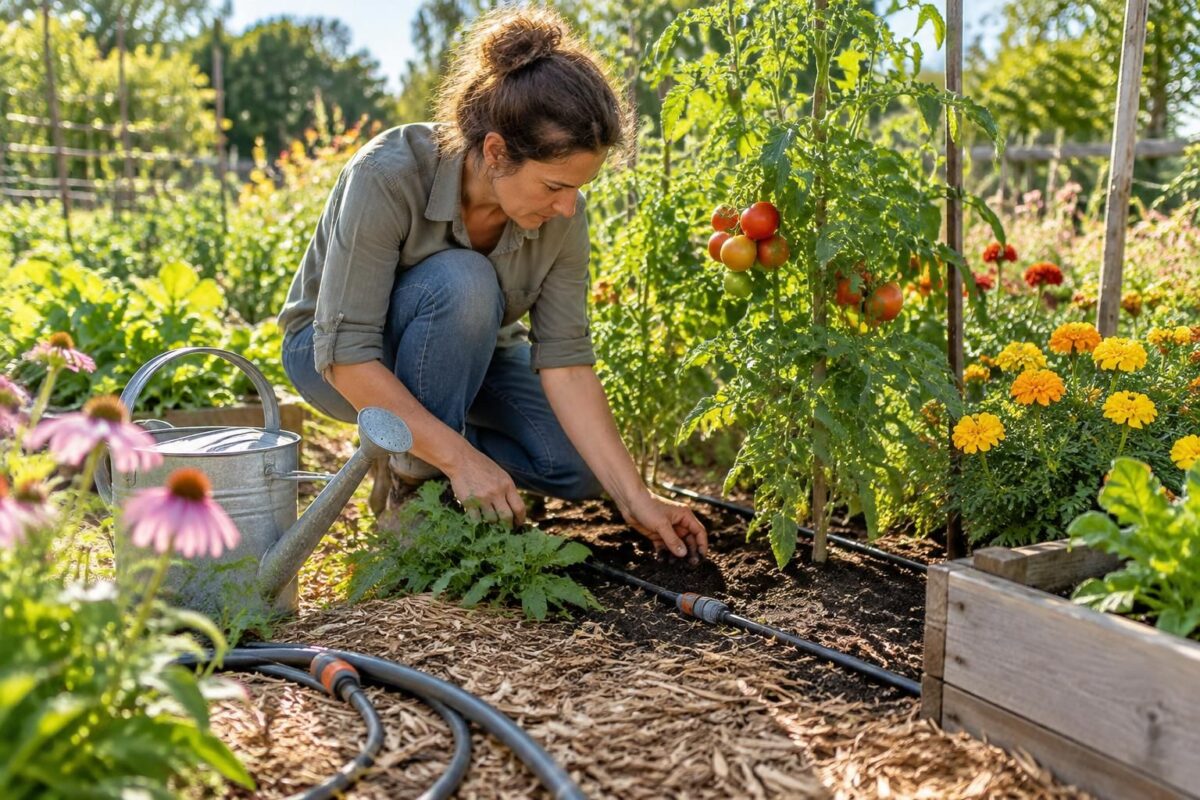
Garden care: what should you check before a week of hot weather?
Hi there, Solan here. Before a week of hot weather, check the soil moisture, prepare targeted watering, add mulch, and protect delicate plants with shade. Also check the weather forecast to identify the hottest days and take action before the garden shows signs of water stress. A few simple steps are often enough to protect your plants without wasting water.
Things to do without delay
- Check the soil a few centimeters deep: if it is dry, water slowly at the base of the plants.
- Spread a layer of mulch around your crops to slow evaporation.
- Identify potted plants and young plants, which dry out more quickly.
- Prepare shade cloth for plants that are sensitive to direct sunlight.
- Postpone heavy pruning, repotting, and transplanting.
To complement these steps, you can check out this advice on mulching before a heatwave and this method for keeping a garden healthy in hot weather.
Check watering and soil moisture
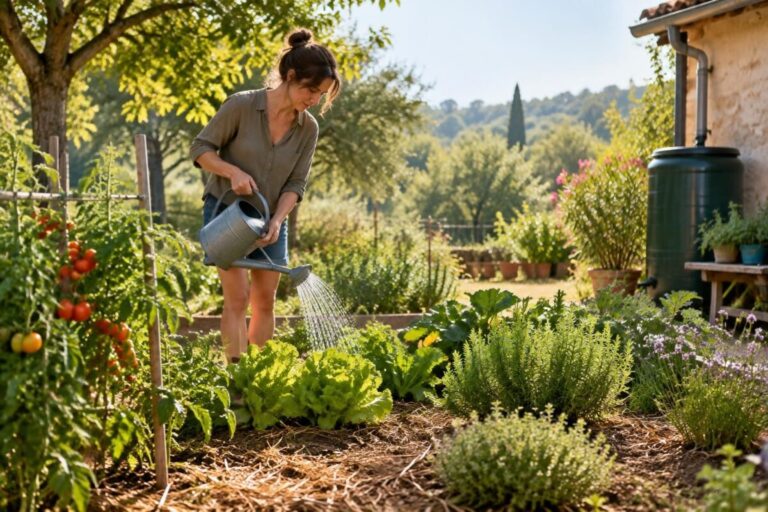
Water early in the morning or in the evening, when the sun is lower. Pour the water at the base of the plants: wetting the foliage in full sun encourages evaporation and can weaken some leaves.
A thorough, less frequent watering is often more useful than small amounts every day. However, adjust the frequency according to the weather, soil type, and the needs of your crops. Potted plants, recent seedlings, and the vegetable garden need more regular monitoring.
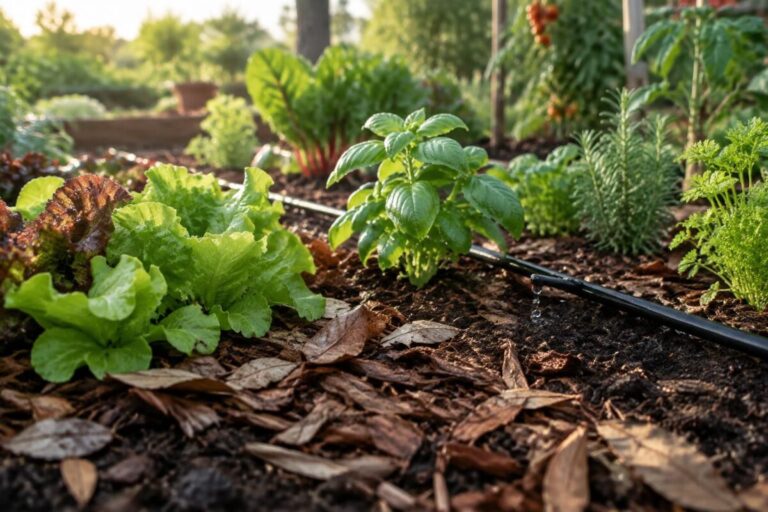
If you use a drip irrigation system, check that the outlets are not blocked and that the water is reaching the soil. A water reserve can also come in handy, provided you keep it clean and follow local rules during periods of water restrictions.
| Area of the garden | What to check | Helpful action |
|---|---|---|
| Vegetable garden | Dry soil, wilted leaves | Water at the base of the plants and mulch |
| Potted plants | Potting mix that dries out quickly | Check in the morning and evening, depending on the heat |
| Lawn | Parched soil, yellowing grass | Avoid mowing too short and leave about 6 cm |
| New plantings | Drooping leaves, dry soil | Water gently and set up temporary shade |
The rule is simple: check the soil before adding water. A dry surface does not always mean the roots are already short of moisture.
Protect plants from the sun and reduce water stress
Mulch made from straw, dead leaves, or wood chips helps keep the soil cool and suppresses competing weeds. Leave a small clear area around the stems to prevent them from staying constantly damp.
For young vegetables, shade cloth or an offset parasol provides temporary shade during the hottest hours. Covered soil and well-positioned protection reduce water stress without preventing plants from receiving the light they need.
Avoid tasks that add to the strain on plants already under stress: heavy pruning, repotting, and transplanting can wait until conditions are milder. A common story from the vegetable garden: after leaving her tomatoes unshaded during a scorching afternoon, Nadia found their leaves drooping. Mulch and watering at the base of the plants early in the morning helped them perk up again.
Two situations to tell apart
If your soil is light and dry, water slowly and deeply, then cover it. If your plants are in pots exposed to the sun, move them to light shade and check their potting mix every day during hot weather.
A simple three-step plan before a hot week
- Step 1: check the weather forecast and identify the days when temperatures are expected to rise.
- Step 2: check soil moisture, pots, new plantings, and that the watering system is working properly.
- Step 3: water at the right time, spread mulch, and set up protection for the plants most exposed to the sun.
“It’s better to water less often, but let the water penetrate deeply.” This approach helps roots explore the soil and limits evaporation losses. Also harvest ripe fruit and vegetables in the morning, and postpone strenuous tasks until the cooler hours.
When gardening early or in the evening, protect yourself from the sun too: a hat, water close at hand, and regular breaks are good habits. Preparing the garden starts with careful observation, not with taking action at all costs.
Practical questions before a hot week
When should you water the garden before a hot spell?
Water early in the morning or in the evening after sunset. Water at the base of the plants and adjust the frequency to the soil, crops, and weather.
Should you water every day when it is hot?
Not necessarily. Deep, less frequent watering is often better, but potted plants, seedlings, and new plantings may need more frequent checks.
What mulch should you use to protect against heat?
Straw, dead leaves, or wood chips can protect the soil and retain its moisture. Choose a material that is readily available and keep the base of the plants clear.
Can you prune before a week of very hot weather?
Avoid heavy pruning just before or during a hot spell. It can add stress to plants; wait for cooler conditions if pruning is not urgent.
Thanks for reading; Solan