Plants: which varieties thrive without complicated care?
Hi, it’s Solan here. Lavender, sedums, echinaceas, rudbeckias and yarrows are easy choices if you plant them in the right place. These hardy varieties cope better with drought and missed waterings than delicate flowers. For shade, opt for hostas or heucheras. The key: choose according to your soil and sun exposure, not just the color of the flowers.
Things to do right away
- Identify the areas in full sun and those that stay in the shade.
- Choose plants suited to your soil rather than trying to change its conditions.
- For dry spots, opt for hardy plants such as lavender, yarrow or sedum.
- Plant new additions in fall or spring, outside periods of frost and intense heat.
- Water regularly during the first season, while the roots become established.
An easy-care garden starts with a few well-chosen varieties: also check out these tips for growing plants with minimal effort and these ideas for dealing with missed waterings more effectively.
Which easy-care plants should you choose for your garden?
In sunny spots, lavender thrives in heat and soil that drains well. Once established, it needs little watering and attracts pollinators. A light trim after flowering helps keep it compact.
Echinaceas and rudbeckias produce flowers all summer, sometimes into fall. They tolerate a range of soil types and cope fairly well with dry spells once established. Yarrow is another hardy option, especially in a sunny flower bed with relatively poor soil.
To cover a dry spot or a rock garden, consider sedum and succulents. Their fleshy leaves retain water, but waterlogged soil can cause them to die back. Cacti are best suited to very sunny, well-drained pots, and should be protected from the cold depending on the variety.
In the shade, hostas add broad, decorative leaves, while heucheras offer colorful foliage. Ferns and astilbes prefer soil that stays moist: they’re easy to care for in the right spot, but aren’t suitable choices for dry areas.
Two quick scenarios to help you choose with confidence
If you have a hot, dry flower bed, plant lavender, yarrow and sedum. If you have a shady area, try hostas and heucheras, with ferns if the soil retains a little moisture.
Hardy houseplants that can handle missed waterings
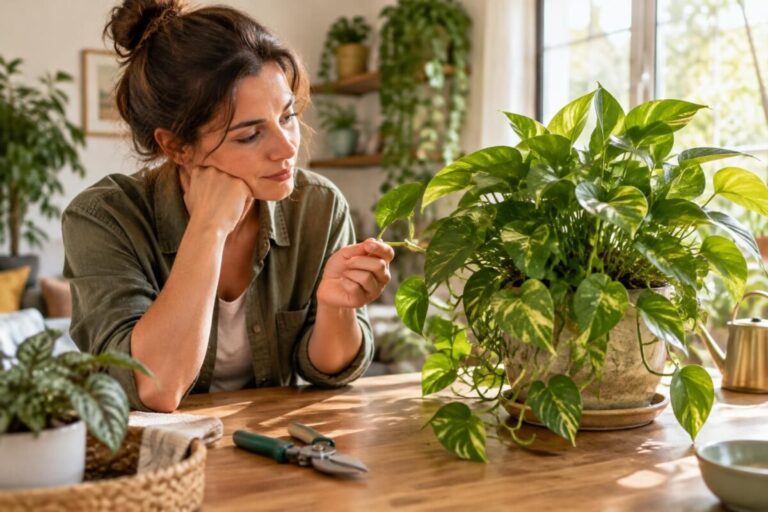
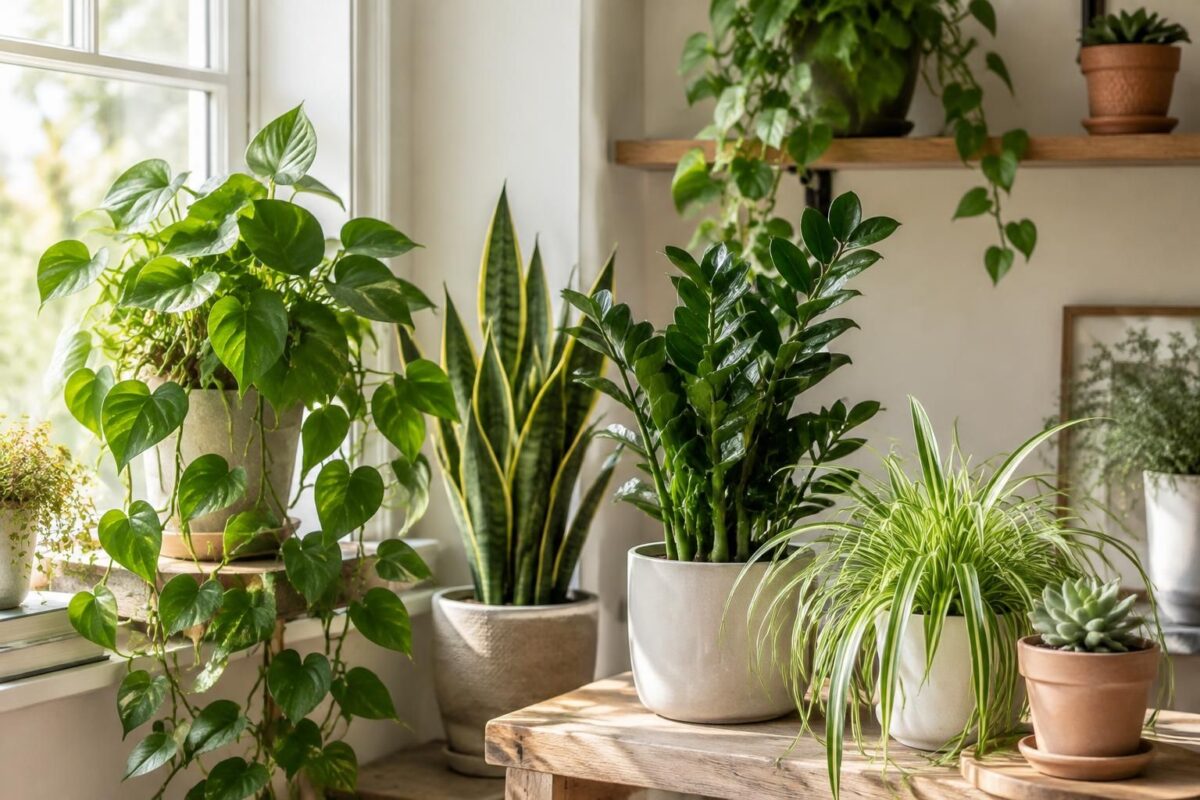
Indoors, pothos and snake plants are among the hardy houseplants often recommended for beginners. Pothos tolerates moderate light, while snake plants prefer bright, indirect light and infrequent watering.
Wait until the surface of the soil has dried before watering, then empty any water left in the saucer. These beginner-friendly plants forgive the occasional missed watering, but they still need light and a pot with drainage holes.
A simple chart for comparing low-maintenance plants
| Plant | Location | Care required |
|---|---|---|
| Lavender | Sun, well-drained soil | Light trim after flowering |
| Echinacea | Sun or light partial shade | Regular watering while establishing |
| Sedum | Sun, dry, well-drained soil | Very little watering once established |
| Hosta | Shade or partial shade | Water if the soil gets too dry |
| Snake plant | Bright indoor spot, away from harsh direct sun | Infrequent watering, pot with drainage holes |
Plant in three steps to minimize maintenance
- Step 1: observe the light throughout the day and check whether the soil dries quickly or stays moist.
- Step 2: prepare the soil by loosening it. For plants that thrive in dry conditions, improve drainage by choosing a suitable spot rather than watering frequently.
- Step 3: plant with enough space between each plant, then water at the base during their first season.
A simple example: Nadia planted lavender in a very sunny border, but the first planting struggled in compacted soil. After choosing a better-drained spot, the plants established themselves more successfully and needed less watering. As a useful gardening rule reminds us: “The right plant in the right place needs less care.”
How to keep your garden easy to care for
Low-maintenance plants still have some needs. During the first year, pay close attention to soil moisture and water when the soil around the roots dries out. After that, adjust watering to the weather: a hot, dry summer calls for a different approach than a rainy spring.
Remove faded flowers if you want to extend the blooming period, but leave a few seed heads for the birds. Also avoid over-fertilizing: many hardy perennials flower beautifully in ordinary soil. Good care should be light and targeted.
Which garden plants need the least water?
Lavender, sedum and yarrow tolerate dry spells well once established. For best results, plant them in a sunny spot with well-drained soil and water them during their first season.
Which easy-care plants should you choose for a shady garden?
Hostas and heucheras often do well in shade or partial shade. Ferns and astilbes are good options if the soil retains more moisture.
Which houseplants can handle irregular watering?
Pothos and snake plants can tolerate the occasional missed watering, provided they get enough light and are planted in a pot with drainage holes. Let the soil surface dry out before watering again.
Can easy-care plants grow in pots?
Yes. Lavender, sedum and succulents can grow in pots as long as they have drainage holes. Soil in pots dries out faster than garden soil: check it regularly, especially during hot weather.
Thanks for reading; Solan