Vegetable garden: how can you prevent holes in your leaves?
Hello there, Solan here. To limit holes in your vegetable garden leaves, first identify the clues: small round holes, large sections missing, notches along the edges, or slime trails. Also look at the undersides of leaves and check the plants in the evening. A few old holes on a vigorous plant do not necessarily require action; focus on protecting young plants if new damage appears.
A holey leaf cannot be repaired. To find out whether your action is working, monitor new leaves rather than old marks. Look for the pest or another cause before choosing a protective measure: insect netting and a measure against slugs do not address the same problem. A product described as natural is neither a universal solution nor a guarantee of safety.
Put these measures in place without delay
- Examine both sides of the leaves and note which crops are affected.
- Look for the culprit before choosing an intervention.
- Install insect netting as soon as you sow vegetables that are susceptible
- Practice crop rotation to limit the proliferation of pests
- Check young shoots under the mulch: it is not a guaranteed barrier against slugs.
Identify the most common pests that cause holes in your vegetable garden leaves
On radishes, arugula, or cabbages, numerous small holes may point to flea beetles, small beetles that jump when disturbed. Leaves that have been heavily chewed, with droppings, may point to caterpillars. Repeated notches along the edges may suggest an adult vine weevil. These patterns provide clues: confirm them by checking the affected plant and observing the animal.
If the culprits are slugs or snails, you will often see silvery slime trails and obvious damage overnight.
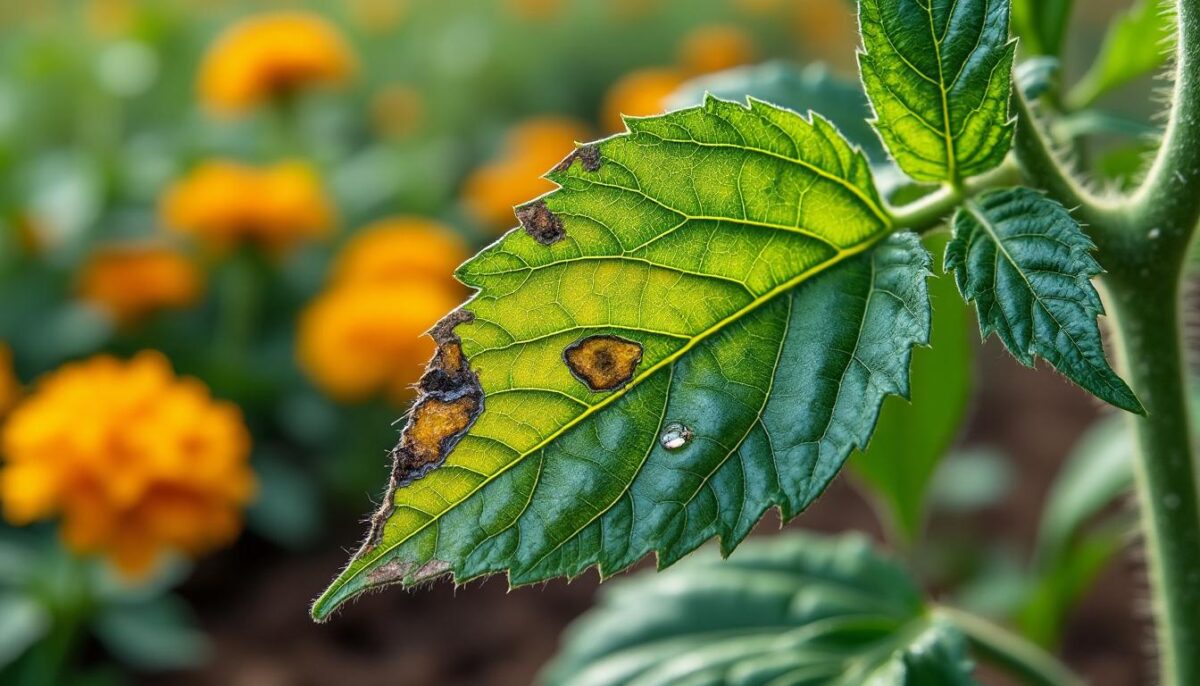
Brown areas that dry out and then fall away can also leave holes. This is not enough to conclude that it is rust or another fungus: disease, injury, and weather damage can look alike. Photographing the progression and identifying the plant is more useful than spraying a fungicide at random.
3 simple steps to act quickly
- Inspect your plants with a magnifying glass, during the day and sometimes in the evening, to detect hidden pests.
- Identify the animals you observe before taking action, without handling an unfamiliar caterpillar.
- Protect and monitor: choose a targeted measure and check whether new damage appears.
Compare new leaves over a few days
Photograph a reference leaf and note which plants are affected. Check whether the damage is limited to older leaves or also affects young shoots. If newly emerged leaves remain intact, the culprit may already have moved on. If a seedling quickly loses almost all its foliage, protect it and have the cause confirmed without delay.
Prevent fungal diseases that cause holes in leaves
Do not classify all holes as fungal diseases. First look for spots that appear before the holes, the extent of the problem, and the condition of the new leaves. An accurate diagnosis can help determine whether removing some parts is useful; routinely stripping leaves weakens a plant that may still be able to grow.
Avoid regular sprays of copper, black soap, or homemade preparations without an identified cause. Start with measures suited to the observed culprit: netting for a crop susceptible to flea beetles, night-time monitoring for slugs, and observing caterpillars before taking any action. The Jardiner Autrement guide to caterpillars can help you recognize signs of their presence.
How can you care for your vegetable garden to limit holes in leaves?
- Water regularly, not too much or too little, preferably at the base of the plants.
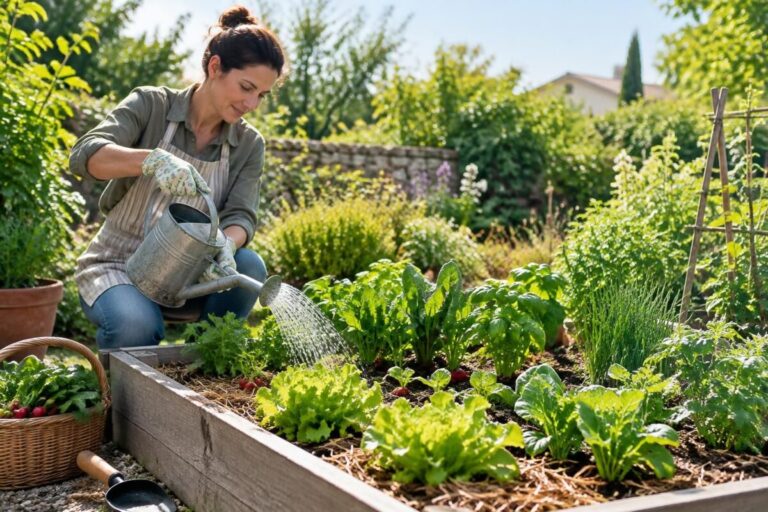
- Maintain suitable mulch to retain moisture, while keeping an eye on young plants.
- Practice crop rotation and space plants far enough apart to prevent stagnant moisture.
- Follow the seasons and prune or remove dead leaves to improve air circulation.
- Encourage biodiversity: maintain sheltered areas for beneficial organisms, without trying to eliminate every animal from the garden.
| Cause | Symptom | Quick action |
|---|---|---|
| Caterpillars | Large holes in leaves, small black droppings | Identify the species and protect vulnerable plants |
| Flea beetles | Small round holes in young leaves | Install suitable netting before the insects arrive |
| Vine weevils | Half-moon notches along the edges, weakened leaves | Confirm the presence of adults and check the plant’s vigor |
| Slugs and snails | Irregular holes and slime trails | Monitor at night and provide targeted protection for young plants |
| Fungal diseases | Yellow, red, or orange spots with holes | Have the disease identified before taking action |
How can I tell whether the holes are caused by insects or disease?
Insects often leave clean-cut holes, sometimes with the insect itself or traces (slime, droppings) nearby. Fungal diseases cause colored spots that dry out before falling away, forming holes.
What natural treatments should I use against caterpillars?
There is no universal treatment. Identify the species and the extent of the damage before choosing a measure; do not handle an unfamiliar caterpillar. A biocontrol product is not automatically risk-free.
How can I prevent flea beetle attacks in my vegetable garden?
Suitable insect netting can protect susceptible crops if it is installed before flea beetles arrive, with the edges properly sealed. Check that no pests are trapped underneath.
Does mulching really help against pests?
Mulch protects the soil and retains its moisture, but does not guarantee protection against pests. It can provide shelter for slugs: monitor young plants rather than making the layer thicker to repel them.
Should I always treat plants if a few leaves have holes?
Not necessarily. If the attack is minor, good care and vigilance are often enough. Take action especially if the holes are increasing rapidly.
Thank you for reading; Solan