Garden tools: Do you need a lot to start a vegetable garden?
Hi there, Solan here. No, a few well-chosen tools are enough to get a vegetable garden started. To begin, focus on simple equipment suited to your soil and the size of your crops. You can add to your garden tools as the seasons go by, without cluttering up the shed.
Garden tools: what to get started with right away
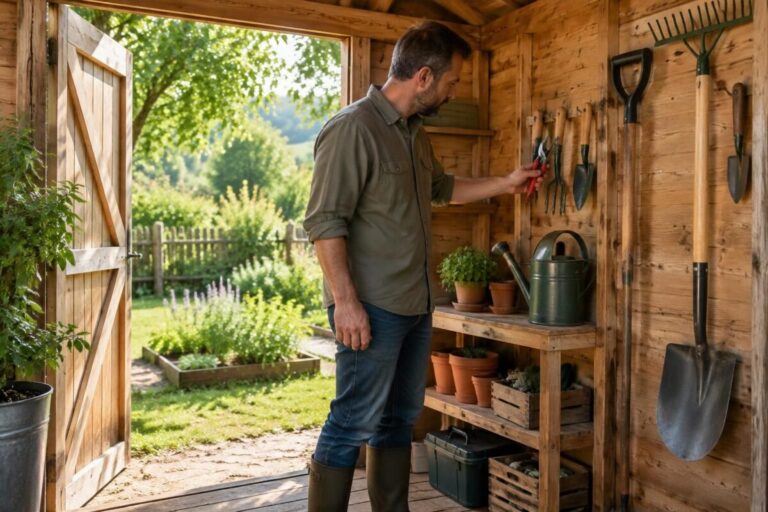
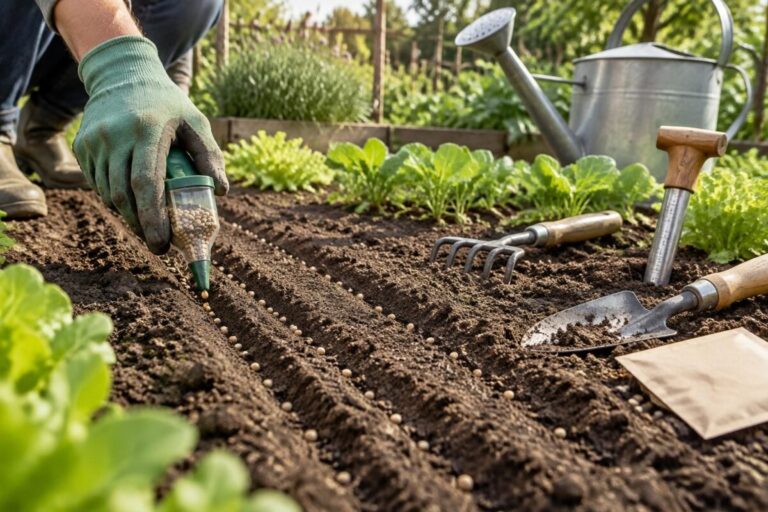
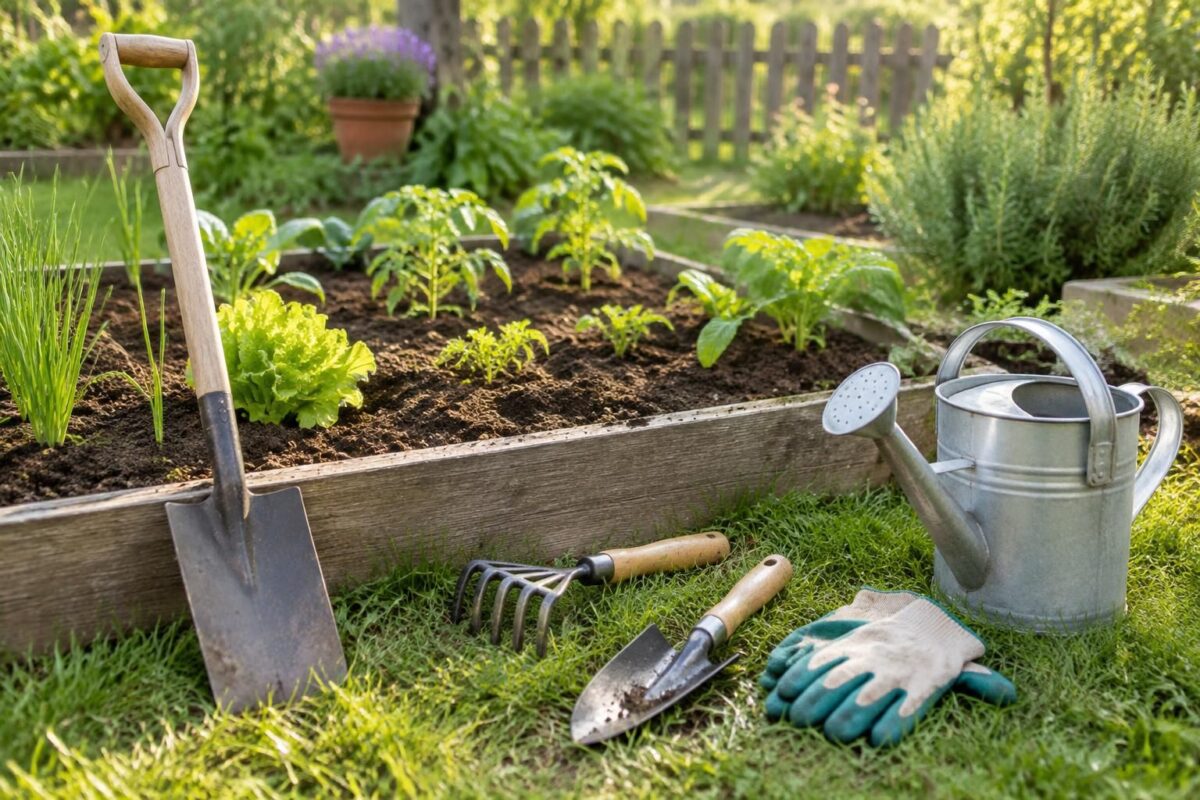
Start by gathering the tools you’ll actually use to prepare the soil, plant, maintain your garden, and water it. To compare the essentials, also see this guide to choosing your first tools and these tips for getting equipped without needlessly filling up the shed.
- A spade or digging fork for working the soil and preparing the ground.
- A rake for leveling the surface and removing debris.
- A hand trowel for planting seedlings and seeds.
- A hoe for weeding and loosening the top layer of soil.
- A watering can for gentle watering, especially around the base of young plants.
A pair of pruning shears is a useful addition to this first kit for cutting stems and harvesting. If the soil is light, a regular spade may be enough; if it’s compacted, a digging fork or broadfork may require less effort.
Essential tools for different vegetable garden tasks
There’s no need to buy a tool for every task. Start by choosing sturdy equipment that’s comfortable to hold and suited to your strength: a handle that’s too heavy or an awkward blade often ends up at the back of the shed.
| Tool | What it’s for | What to consider when choosing |
|---|---|---|
| Spade or digging fork | Preparing the soil and breaking ground | The type of soil and how much effort you’re willing to put in |
| Rake | Leveling the ground and collecting debris | The width of the area being cultivated |
| Hand trowel | Planting and transplanting with precision | How comfortable it is to hold and how sturdy it is |
| Hoe | Cutting weeds and loosening the surface | The width of the rows |
| Watering can | Watering crops at their base | Its weight when full and its capacity |
| Pruning shears | Pruning stems and harvesting | The diameter of the branches and how comfortable they are to use |
A watering can with a capacity of around 8 to 12 liters may be suitable, depending on the model/situation: choose a size you can carry without tiring yourself out. A removable rose helps you gently water seedlings with a fine spray, while a plain spout directs water to the base of plants.
A familiar story among beginners: after buying several specialized tools, they realize they mostly use their rake and hand trowel. So the best way to save money is to buy tools for the tasks you actually do.
Budget-friendly gardening: buy gradually
A decent starter kit can cost around 50 to 150 euros, depending on the model/situation, the quality of the materials, and the number of tools. For a beginner vegetable garden, start with the essentials, then add a cultivator, garden shears, or a shovel only if your tasks call for them.
“The right tool is the one that makes the job easier.” A comfortable handle and a well-maintained blade are often worth more than a large assortment of cheap tools.
After use, remove the soil, dry the metal parts, and store the tools away from moisture. This simple habit helps prevent rust and keeps the blades clean for your plants.
A simple way to choose and use your tools
- Step 1: assess the ground. Note its size and texture, and identify compacted areas before choosing a soil-preparation tool.
- Step 2: get the basic kit. Check the weight, handle strength, and how easy the tools are to clean in the store.
- Step 3: try each tool on a small area. Then add to your equipment based on the tasks you actually do regularly.
If you’re growing plants in a few containers, a hand trowel, a small rake, and a watering can may be enough to start. If you’re setting up a plot in the ground, choose a digging fork or spade, then add a hoe for maintenance.
Simple tools to keep gardening enjoyable
Hand tools already cover most of the needs of a small vegetable garden. They’re easy to use and help you avoid buying power tools too soon; you’ll know you’ve made the right choice mainly by how comfortable they feel after a few rows of weeding or planting.
To get started with confidence, keep this rule in mind: buy first for the essential tasks, then let your vegetable garden show you what’s missing. A small, well-maintained set of tools suited to your ground is more than enough to get started harvesting.
What tools do you need to start a vegetable garden?
A spade or digging fork, a rake, a hand trowel, a hoe, and a watering can make a good basic set. Pruning shears are also useful for pruning and harvesting.
Do you need to buy electric tools right from the start?
No. For a small vegetable garden, hand tools are generally enough and let you get started without a major investment.
What budget should you set aside for a basic set of tools?
Plan on around 50 to 150 euros, depending on the model/situation, the quality of the tools, and what you already have.
How can you make your garden tools last?
Remove the soil after each use, dry the metal parts, sharpen the blades if needed, and store the tools in a dry place.
Thanks for reading; Solan