Garden care: what should you plant if you have little time?
Hello, it’s Solan.
For a garden that takes little time to maintain, go for hardy perennials, ground-cover plants, and a few low-maintenance shrubs.
The right choice depends mainly on your climate, sun exposure, and how often you can water. With suitable plants, you can cut down on chores without giving up a lively garden.
What to do now for an easy-to-maintain garden
- Observe the sun exposure: note the sunny and shady areas, as well as places where water collects.
- Choose plants suited to your climate, rather than varieties that need constant care.
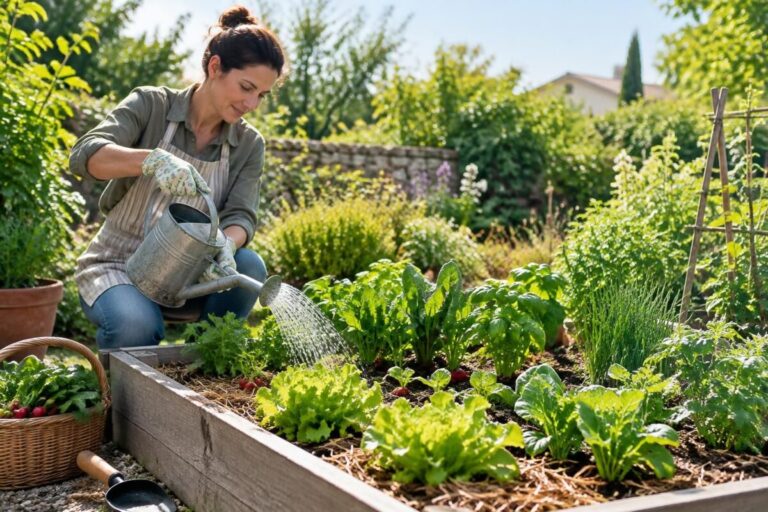
- Add a layer of mulch 5 to 8 cm thick to limit weeds and slow evaporation.
- Group plants according to their water needs to make watering easier.
- Start with a few easy-care species, then add to the garden after observing how they grow.
To find easy-to-grow plants, choose varieties suited to your soil; if your watering is sometimes irregular, this selection of plants that can handle missed watering can also help you choose.
Perennials or shrubs: which plants should you choose when you’re short on time?
Perennials come back year after year, so you don’t have to replant every season. Lavender, daylilies, and coneflowers are good choices if their location suits them.
Low-maintenance shrubs, such as some cinquefoils or spireas, add structure to the garden without needing frequent pruning. Slow-growing plants are practical too: they spread less quickly and need less trimming.
| Plant type | Examples | Care required |
|---|---|---|
| Perennials | Lavender, coneflower, daylily | Watering while getting established, occasional tidying |
| Ground cover | Creeping thyme, hardy geranium | Limited weeding once established |
| Shrubs | Cinquefoil, spirea | Light pruning depending on the variety |
| Drought-resistant plants | Cotton lavender, sedum | Less watering once established |
The most effective choice isn’t necessarily the hardiest plant: it’s the one that suits the soil and light conditions in your garden. Lavender in wet soil, for example, will need more attention than a variety planted in a sunny, well-drained spot.
Ground-cover plants reduce repetitive chores
Once established, ground-cover plants fill the space and discourage unwanted weeds from appearing. Creeping thyme is suitable for dry, sunny spots, while some hardy geraniums prefer cooler soil.
When aiming for a garden that needs no maintenance, it’s important to be realistic: no planting can go completely without care. However, a dense, mulched flower bed made up of hardy plants can significantly reduce weeding and watering.
Easy gardening with drought-resistant plants
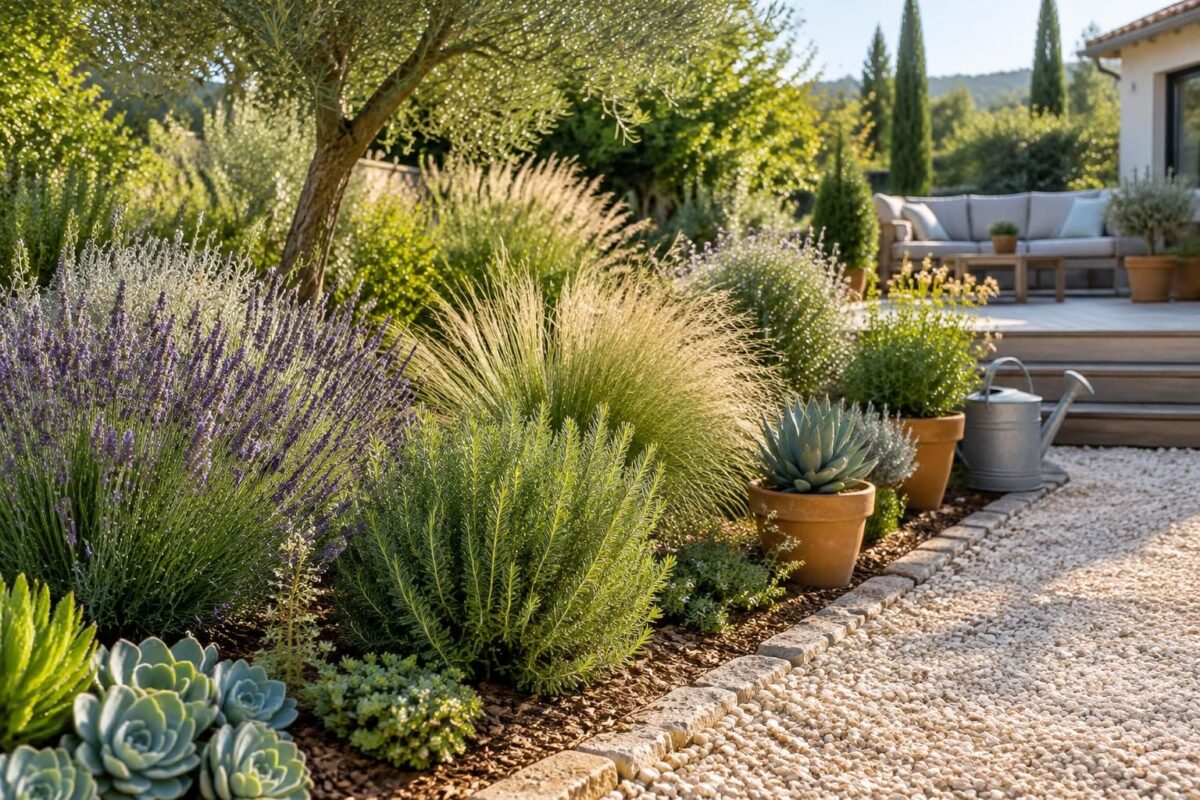
If your garden is hot and sunny, consider drought-resistant plants such as sedums, cotton lavender, or lavender. They need regular watering at first, while their roots develop, then become more self-sufficient.
By contrast, a shady or cool area calls for different choices. Matching plants to each part of the garden means you won’t have to make up for a poor location with repeated watering or pruning.
A practical example to save time
Imagine a small 4 m² flower bed that you can only visit once a week. If it’s sunny and well drained, it can accommodate a few lavender plants, sedums, and creeping thyme, with suitable organic or mineral mulch.
In a cooler spot, replace these species with perennials that thrive in moderate moisture. This simple approach of dividing the garden by growing conditions turns irregular maintenance into a more predictable routine.
Planting in three simple steps
- Prepare the ground: remove perennial weeds, loosen the soil, and improve drainage if water collects.
- Plant in groups: group species with similar needs and allow enough room for them to reach their mature size.
- Water and mulch: water after planting, then keep an eye on young plants during the first few weeks.
This initial establishment phase is essential: even hardy plants need time to take root. After that, minimal maintenance becomes more realistic, with occasional checks instead of daily attention.
Mistakes that waste time
Planting too close together may seem like a good way to cover the ground quickly, but plants compete with one another and may need to be pruned early. Follow the recommended spacing and give slow-growing plants time to fill out.
Also avoid choosing a species solely because it’s said to be easy to grow. Check the sun exposure, soil type, and water needs: these three factors often make the difference between a self-sufficient planting and a flower bed that needs constant care.
Practical questions about choosing easy-care plants
Which plants need the least watering?
Once established, sedums, lavender, cotton lavender, and creeping thyme tolerate dry spells well if the soil is suitable and well drained.
Which plants should I choose to reduce weeding?
Ground-cover plants and fairly dense planting reduce the space available for weeds. Mulch also helps limit their growth.
Can a garden really be maintenance-free?
No garden is completely maintenance-free: at the very least, you need to check on the plants, water new plantings, and carry out occasional tasks. However, suitable species make these chores much less frequent.
When should I plant perennials so they establish easily?
Spring and early fall are often suitable, as temperatures are milder. Avoid periods of extreme heat or frost whenever possible.
Thanks for reading! If this topic resonates with you, share your experience in the comments. — Solan