Gardening tools: what equipment do you need to sow without waste?
Hello, this is Solan.
To sow without wasting seeds, choose a seed dispenser suited to the seeds, prepare fine soil, and carefully measure out each row.
The right equipment prevents overcrowded sowing and endless thinning. A few simple tools are enough to help you sow more evenly, even in a small vegetable garden.
The secret lies as much in your technique as in your equipment: move slowly, sow at the right depth, and mark each row.
Things to do right away
- Sort the seeds and check the depth instructions on the packet.
- Break up the soil with a rake to create a level surface without large clumps.
- Mark the rows with a row marker or a string stretched between two stakes.
- Test the seed rate in a small area before sowing the entire row.
- Keep a seed catcher handy, such as a folded sheet of paper or a small container, to catch any seeds that fall.
To choose tools for your vegetable garden, also see this guide to equipment for sowing neatly without wasting seeds and these tips for sowing straight and quickly.
Seed dispenser or hand sowing: which tool helps reduce waste?
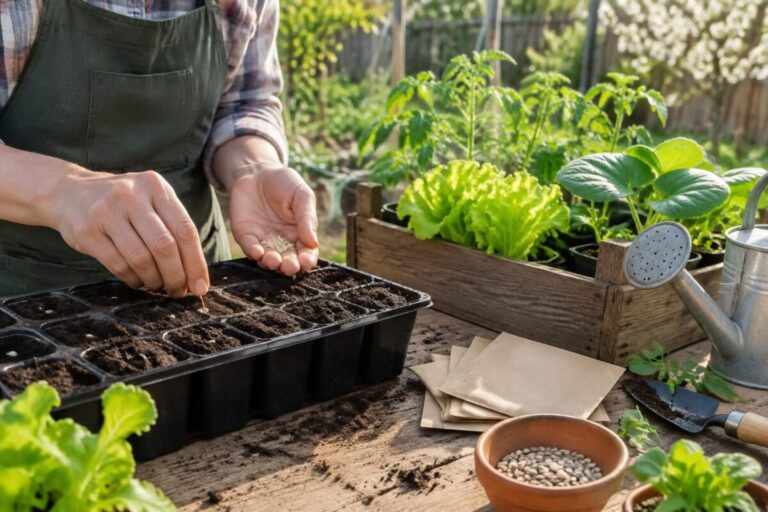
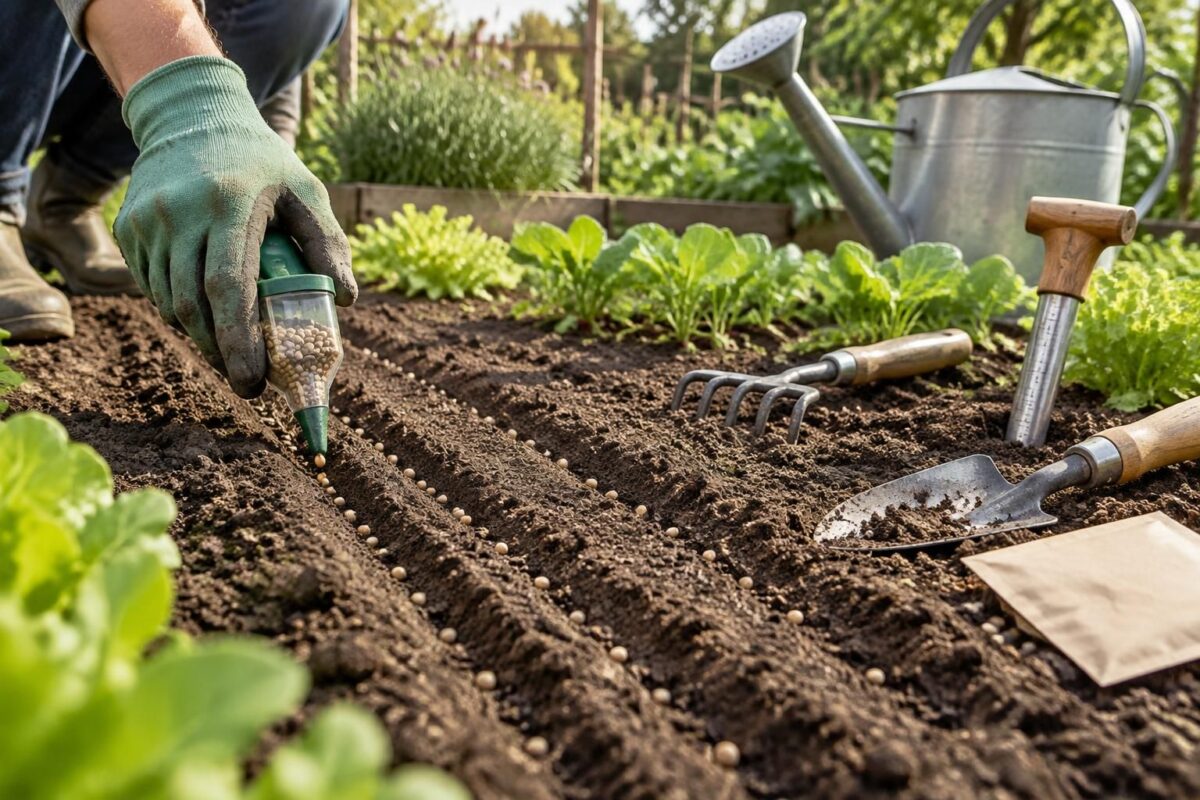
For fine seeds, such as carrot or lettuce seeds, an adjustable seed dispenser helps control the flow and distribute seeds more evenly. It is particularly useful if you are sowing several rows or want to avoid overcrowded patches.
For small-scale sowing, doing it by hand is still practical. Dropping a pinch of seeds from a folded sheet of paper gives you more control than letting them trickle through your fingers.
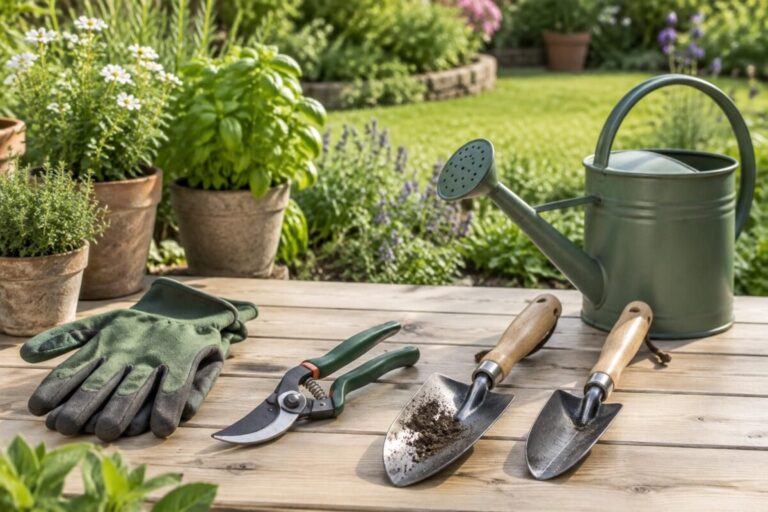
| Equipment | Useful for | What to watch out for |
|---|---|---|
| Hand seed dispenser | Fine seeds and evenly spaced rows | Adjust the opening to suit the seed size |
| Rake | Preparing the soil and lightly covering seeds | Do not bury the seeds too deeply |
| Row marker | Maintaining the spacing between rows | Adjust the spacing to suit the variety being grown |
| Dibber | Seeds sown in clusters or seedlings to transplant | Keep the depth consistent |
A dibber is not essential for every type of seed, but it makes evenly spaced holes for cluster sowing. For rows, a marker is often more useful: it helps you maintain consistent spacing and weed without trampling your crops.
Preparing the soil to make sowing easier
Soil that has been worked too roughly leaves small seeds liable to fall into hollows, where they germinate unevenly. Rake the surface, remove clumps, and level the seedbed before making the furrows.
Sowing depth depends on the seed size and the instructions on the packet. Very small seeds are placed close to the surface, while larger ones can be covered more deeply: gentle watering afterward helps firm the soil without moving the seeds.
A practical example: sowing carrots without overcrowding
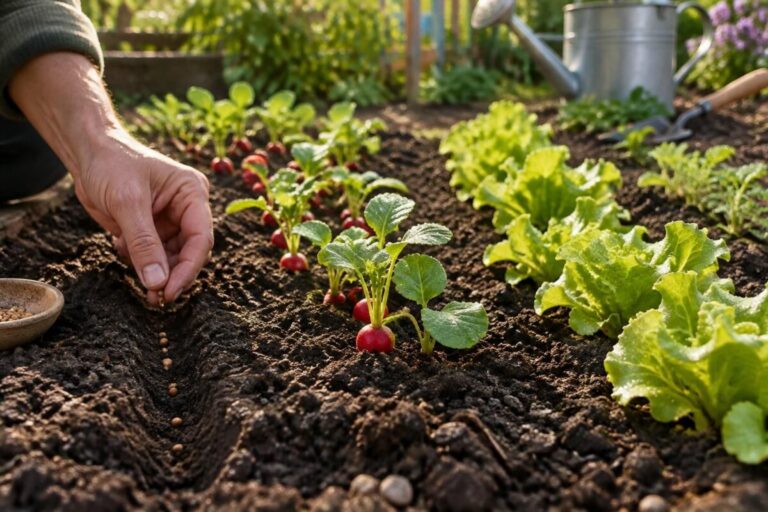
Camille is sowing a row of carrots in a vegetable bed. With the seed dispenser set to release too many seeds, she first drops a few onto a plate to check the flow: the test reveals that they fall in small clumps.
She reduces the opening, marks the furrow with a row marker, and moves slowly. The result is more even, with fewer seeds used and fewer seedlings to thin out.
The 3-step method for measuring out seeds
- Prepare the row: loosen and level the surface with a rake, then make a furrow at the appropriate depth.
- Do a test: drop a few dry seeds to adjust the seed dispenser or your technique and check the spacing.
- Sow and cover: distribute the seeds, lightly close the furrow, then water with a fine spray without shifting the soil.
If a few seeds fall to the side, collect them right away in a clean, dry container. This simple habit prevents waste and lets you save the remaining seeds for another row.
What equipment should you keep close at hand for sowing?
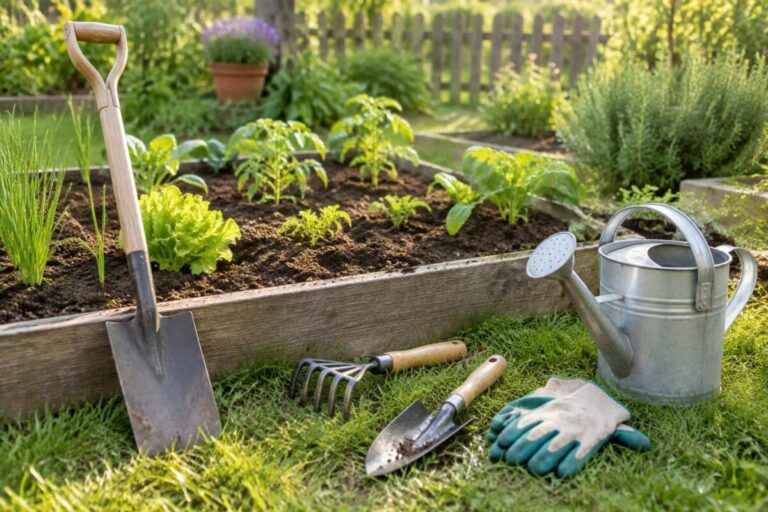
To get started, a rake, a marking tool, and a simple seed dispenser will cover most needs. Add a dibber if you sow in clusters, and keep the seed catcher near the bed so you can collect any seeds that slip from your hand.
There is no need to accumulate lots of accessories: clean tools that are well suited to the seeds and used methodically already make a real difference. Well-measured sowing means less waste and rows that are easier to maintain.
Is a seed dispenser essential for sowing?
No. It makes it easier to measure out small seeds and sow rows evenly, but a folded sheet of paper or hand sowing works for a few seeds.
How can you avoid sowing too densely?
Test the flow in a small area, move slowly, and follow the spacing recommended for the variety. Then adjust the seed dispenser setting or the amount you drop by hand.
What is a row marker used for?
It marks even rows and helps maintain the spacing between them. It also makes weeding and accessing the crops easier.
Can seeds that have fallen on the ground be reused?
Yes, if they are collected promptly and are clean and dry. Put them in a dry container, and avoid saving seeds that are damp or dirty.
Thanks for reading! If this topic resonates with you, share your experience in the comments. — Solan