Vegetable garden: easy-to-grow vegetables to get you motivated from the start
Hello there, Solan here. Radishes, lettuce, green beans, and cherry tomatoes are easy choices for a successful first harvest. Start with three or four crops suited to your space and the season. Succession sowing and regular watering are often enough to keep things on track. In the vegetable garden, every harvest makes you want to keep going.
Get started right away
To get started without spreading yourself too thin, choose vegetables that grow quickly and need little equipment. These easy crops for beginners thrive both in the ground and in well-drained containers. To narrow down your choices, also check out this guide to planning a simple first vegetable garden and this selection of vegetables suited to beginners.
- Sow a few radishes and some arugula for quick harvests.
- Plan for lettuce or cut-and-come-again lettuce, which is easy to grow in a planter.
- Set aside a sunny spot for cherry tomatoes and zucchini.
- Wait until the soil has warmed up before sowing green beans.
- Water at the base of the plants when the soil starts to dry out, without waterlogging it.
Which easy vegetables should you choose for your first garden?
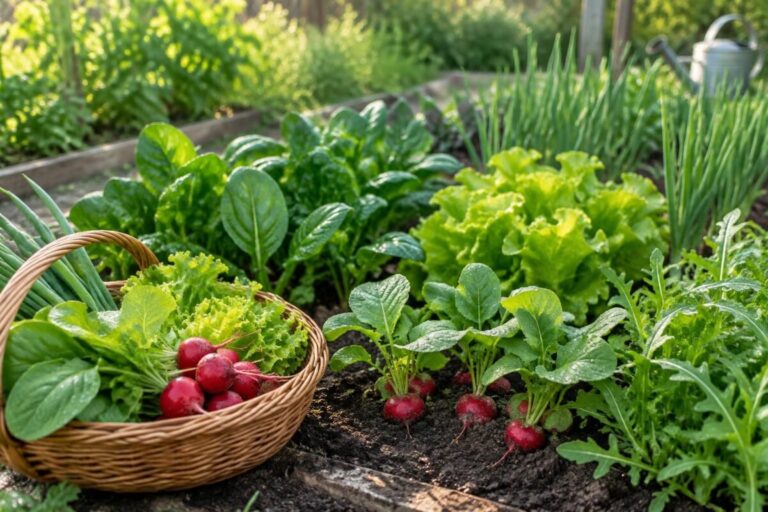
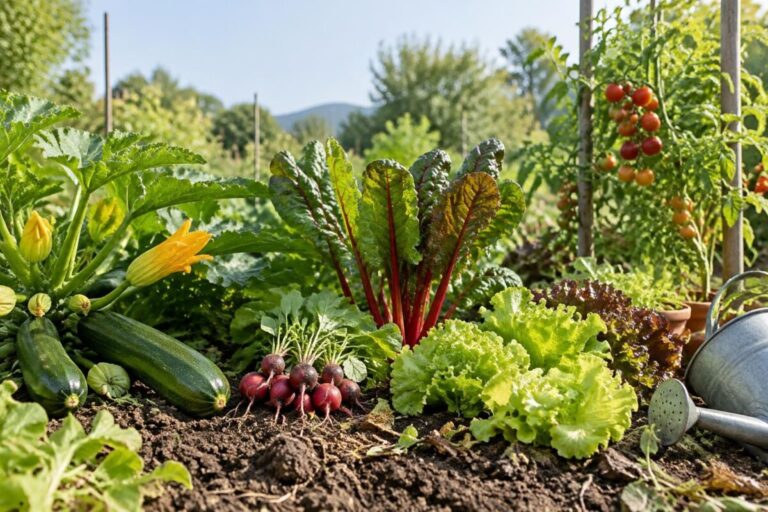
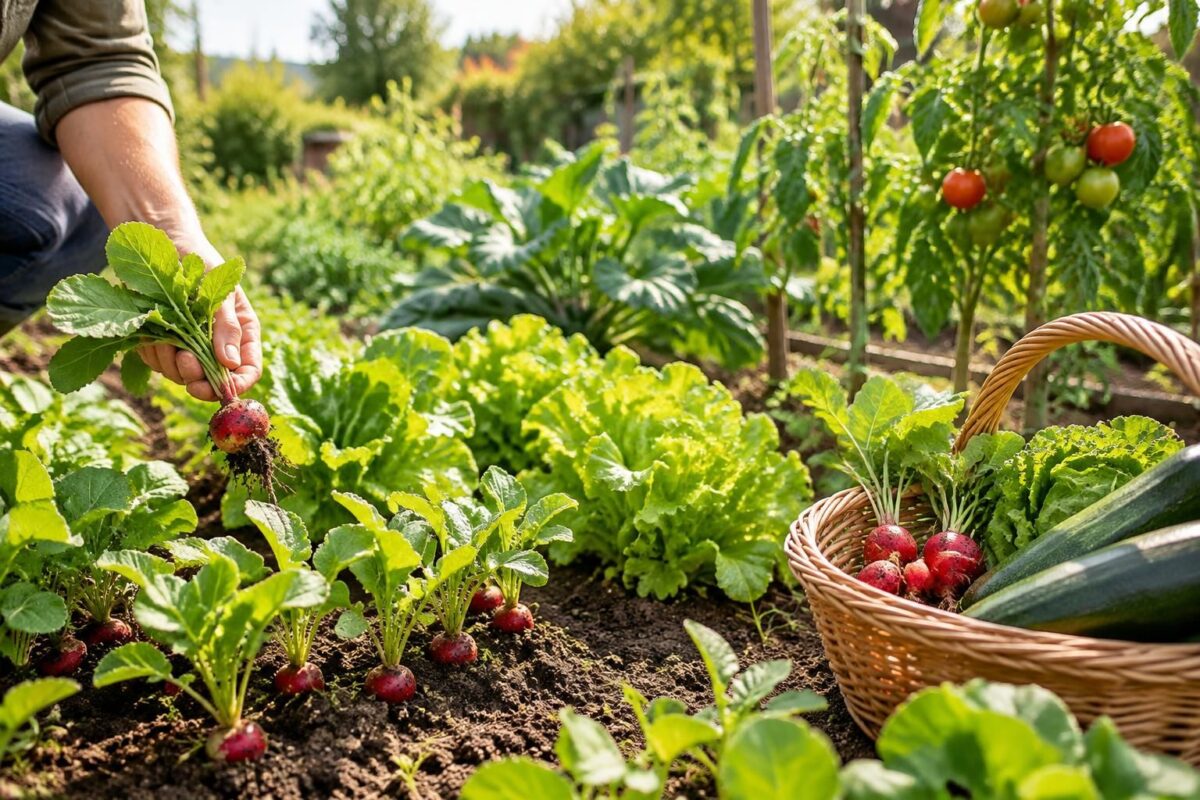
Radishes are quick to motivate you: depending on the variety and conditions, they are often ready to harvest in three to five weeks. Sow them directly in the ground and repeat every two weeks to stagger your harvests.
Lettuce, cut-and-come-again lettuce, and arugula are handy in containers. Harvest the outer leaves and leave the center in place: the plant can keep producing. Succession sowing means you won’t have to harvest everything on the same day.
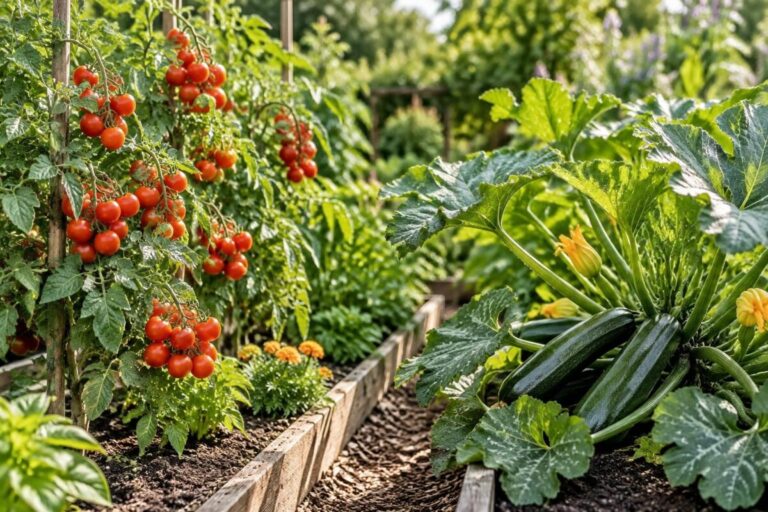
Cherry tomatoes love warmth and sunshine. Plant one after the last frost in your area, with a stake for support and water at its base. They need a little more attention than radishes, but their fruit makes your efforts very rewarding.
Zucchini is prolific, but it takes up space. If possible, leave about a meter around the plant, add compost, and pick the fruits while young to encourage new growth. Depending on the variety and conditions, a single plant can produce plenty for a small family.
Green beans are sown directly outdoors once the soil has warmed up, generally after the risk of frost has passed. Bush varieties don’t need support. Peas, on the other hand, prefer the coolness of spring and may need netting if they climb.
Spinach grows well in spring or late summer, while carrots mainly need loose soil without large stones. Swiss chard is hardy, and its leaves can be harvested as needed. These crops are useful for diversifying your vegetable garden without adding lots of extra work.
| Vegetable | Why it’s rewarding | Essential task |
|---|---|---|
| Radishes | Quick harvest | Sow small amounts at regular intervals |
| Lettuce and arugula | Well suited to containers and small spaces | Harvest the outer leaves |
| Cherry tomatoes | Abundant in warm weather | Plant in the sun and water at the base |
| Zucchini | Generous yield | Give it space and pick the fruit while young |
| Green beans | Direct sowing and minimal maintenance | Wait until the soil has warmed up |
| Peas | Delicious when freshly picked | Sow in cool weather and provide support if needed |
| Spinach | Harvest leaves as needed | Avoid hot weather |
| Carrots | Easy to grow if the soil is well prepared | Sow in fine, loose soil |
| Swiss chard | Leaves can be harvested over a long period | Keep the soil moist but not waterlogged |
| Herbs | Useful in pots as well as in the garden | Keep mint in its own pot |
A beginner’s vegetable garden in three steps
- Step 1: Choose three or four vegetables based on the available space and hours of sunshine. Most need around four to six hours of direct light, depending on the crop and climate.
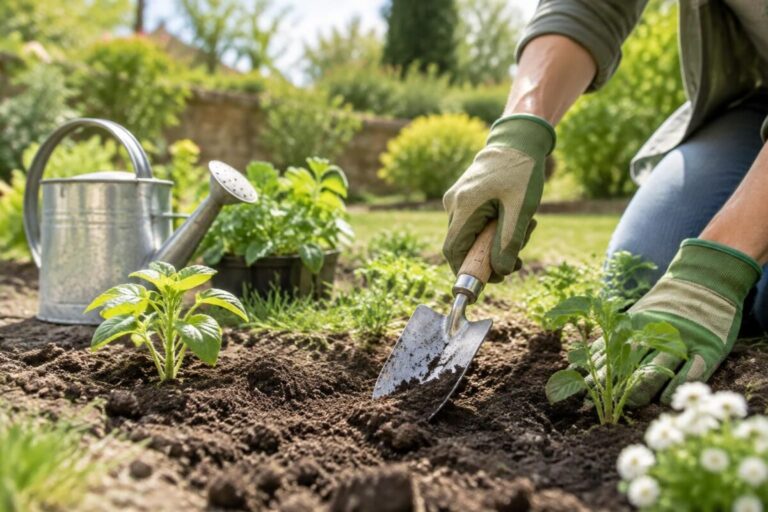
- Step 2: Prepare loose soil enriched with compost, or fill a sufficiently deep container with suitable potting mix. Sow radishes, carrots, and green beans directly.
- Step 3: Check the soil before watering and harvest regularly. Keep track of what went well and what was difficult so you can adjust your next sowings.
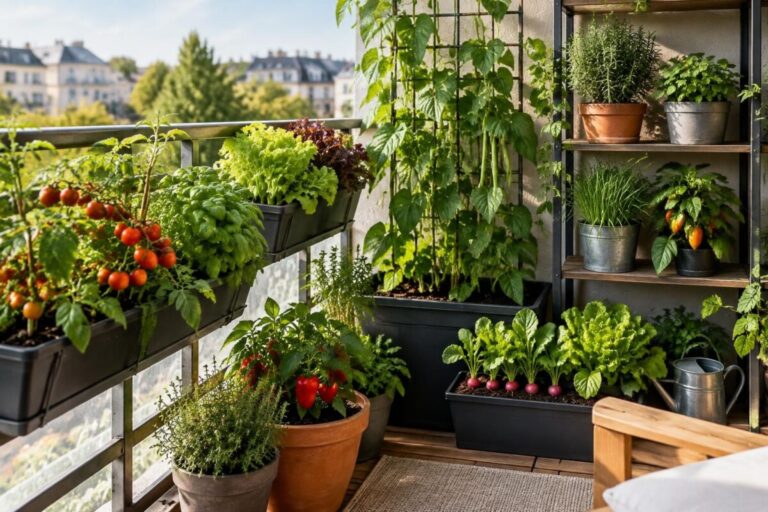
If you have a balcony, start with radishes, lettuce, and herbs in pots. If you have a garden, add zucchini, peas, or beans, which appreciate having room to grow.
A planter of lettuce was sown too densely during an early attempt: the leaves stayed small. The next time, the sowings were spaced out, and the harvest was more consistent. A small adjustment can change the whole season.
As a gardener’s saying goes: “Sow a little, and you’ll harvest more than if you spread yourself too thin.” Keep this in mind, and add new crops once the first ones are well underway.
Simple tasks that help avoid disappointment
A common pitfall is sowing too early or watering too much. Check the instructions on the seed packet and take local frosts into account: timing varies by region and weather.
In pots, choose a container suited to the roots and make sure water can drain away. Cherry tomatoes and herbs do well in containers, while zucchini needs a large container or a spot in the ground.
Parsley tolerates less light than tomatoes, while basil prefers warmth. Mint spreads easily, so keep it in a separate pot to stop it from taking over.
Helpful questions for starting your vegetable garden
Which vegetables can beginners harvest quickly?
Radishes are often ready in three to five weeks, depending on the variety and conditions. Arugula and some cut-and-come-again lettuces also produce leaves quickly.
Can you grow vegetables on a balcony?
Yes. Radishes, lettuce, arugula, and herbs grow well in pots or planters, provided they have good drainage and enough light.
How many vegetables should you choose for your first season?
Three or four crops are enough to get started. You can add more later, depending on the time you have and the results you get.
How often should you water?
It depends on the heat, wind, soil, and container. Check the soil before watering, and water at the base of the plants when it starts to dry out.
Thanks for reading; Solan