Garden tools: Which tool makes all the difference for beginners?
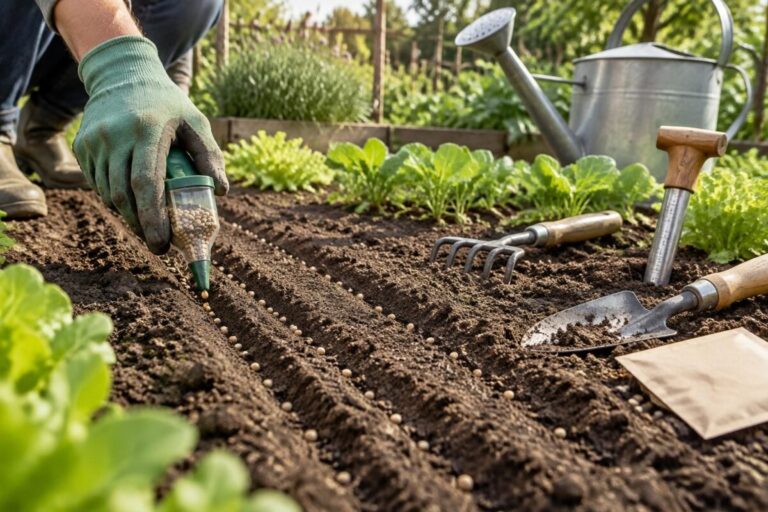
Hello, this is Solan. To get started, the hand trowel is the tool that makes the biggest difference in a small garden. It’s used to plant, move young seedlings, and work the soil around roots. With a few simple steps, you can get started without filling your shed with equipment.
Things to do right away
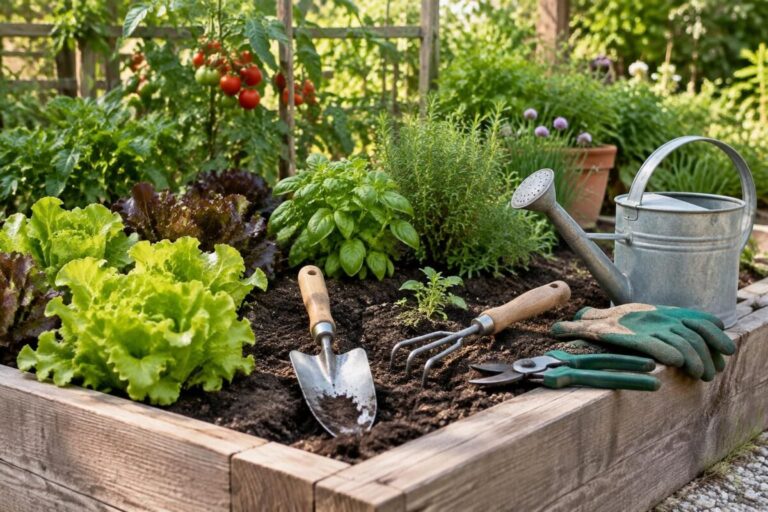
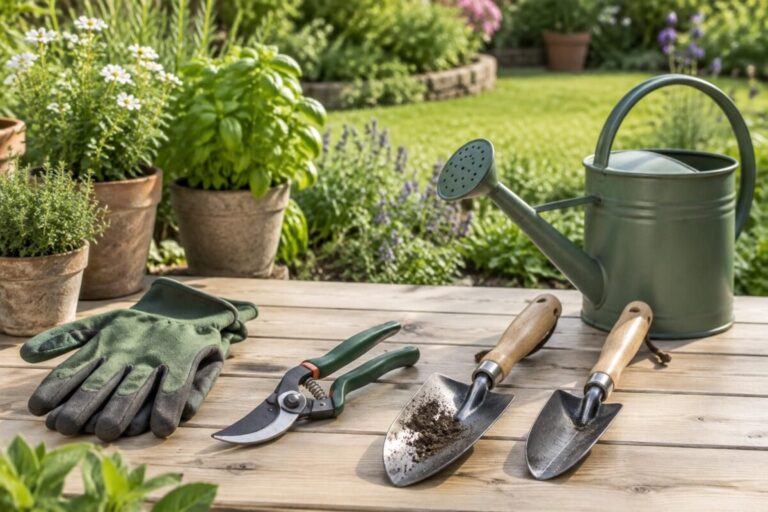
- Choose a sturdy hand trowel with a comfortable handle.
- Get well-fitting gardening gloves to protect your hands.
- Start by preparing a small area rather than the whole plot.
- Water gently after each planting, without soaking the soil.
- Clean and put away your tools after use to keep them in good condition.
To plan your first purchases, also see this guide to the useful tool for getting started and these tips for choosing the essentials for sowing.
Which gardening tool should a beginner choose first?
A hand trowel is especially handy if you have pots, planters, or a small vegetable garden. Its narrow blade digs planting holes without disturbing the whole plot, and its size makes it easy to handle.
It doesn’t replace every tool. A spade is useful for turning or loosening a large area, while pruning shears are used to trim stems and remove dead branches. So the right tool mainly depends on what you want to do this week.
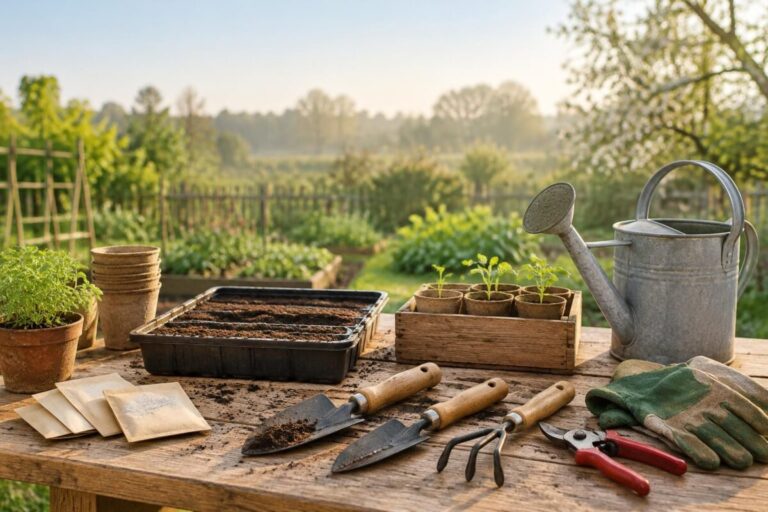
Hand trowel, pruning shears, or spade: comparing their uses
Imagine Lina, who is starting with three pots of tomatoes and a few herbs. Her hand trowel helps her plant the seedlings, while a spade would be too large for this small space. If her garden grows, she can add more garden tools as needed.
| Tool | Useful for | Choose it if… |
|---|---|---|
| Hand trowel | Planting and moving young seedlings | You grow plants in pots or in a small area |
| Pruning shears | Trimming stems and small branches | You have shrubs or plants to maintain |
| Spade | Working a large area of soil | You’re preparing a plot or a larger vegetable garden |
| Rake | Leveling soil and collecting plant debris | You maintain a garden bed or lawn |
| Watering can | Watering plants at the base | You grow plants in pots or don’t have a hose nearby |
A multi-purpose garden tool may seem handy, but it’s often less comfortable to use than a tool designed for a specific task. When choosing your first garden tool, it’s better to go for something sturdy, easy to clean, and suited to the size of your space.
How to use your first gardening tool
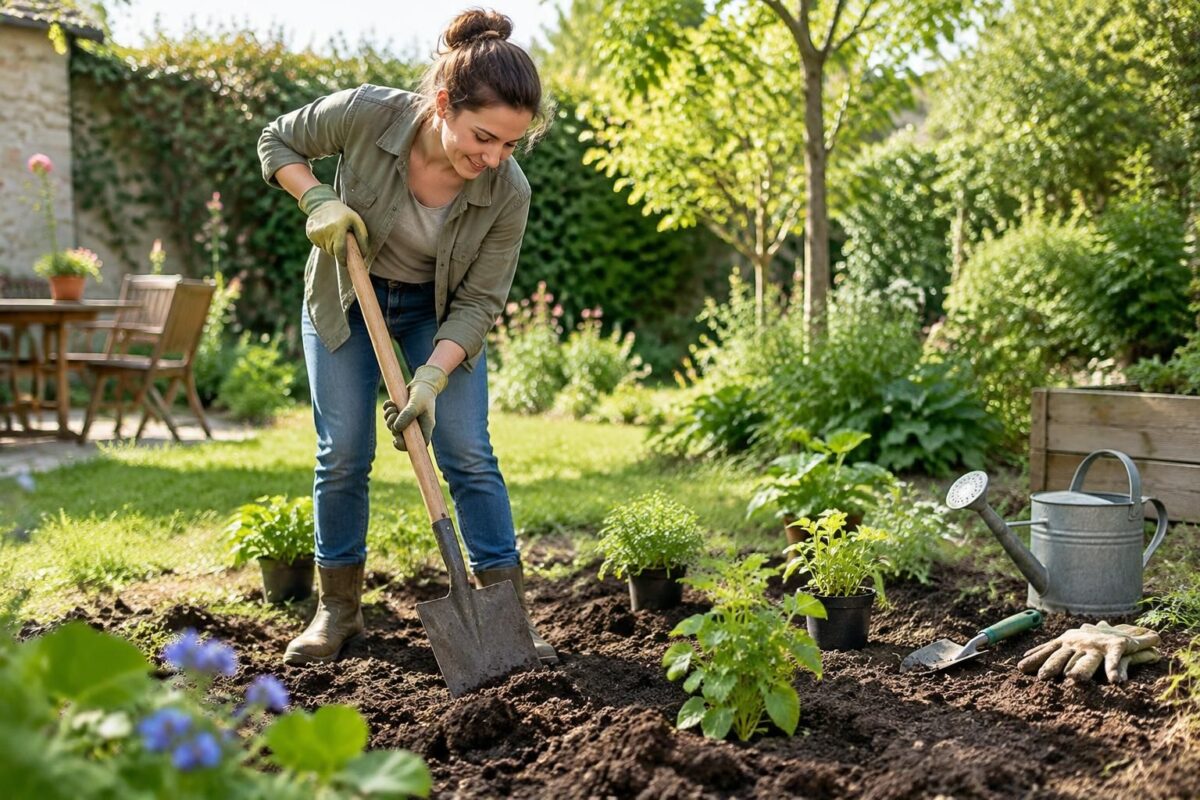
Using a hand trowel properly helps minimize damage around the roots. Push it into the soil beside the plant, gently lift the soil, then fill the hole back in without pressing down too hard. Keep the movement light: the soil should hold the plant in place, not excessive pressure.
A simple three-step method
- Prepare the soil. Remove stones and weeds, then loosen the small area with the tip of the hand trowel.
- Plant the seedling. Dig a hole wide enough for the roots, place the root ball in it, and bring the soil back around it without crushing it.
- Water and observe. Pour water at the base of the plant, then check over the following days that the soil remains slightly moist.
This routine is enough to get started under good conditions. If the soil is compacted or the plot is larger, add a spade and a rake rather than forcing a small tool to do the job.
Is a hand trowel enough to start a vegetable garden?
For a few pots or a small plot, yes: it lets you plant and move young seedlings. A spade and a rake become useful if the area or the amount of soil work increases.
Which hand trowel should I choose as a beginner?
Choose one with a sturdy blade, a comfortable handle, and a size that fits your hand. A simple, sturdy model is generally more practical than a multi-purpose tool that is difficult to handle.
Do I need to buy pruning shears right away?
Not necessarily. They become a priority if you need to prune shrubs, rose bushes, or thick stems. For planting a few vegetables or herbs, a hand trowel will often be more useful at first.
What accessories should I add later?
Gardening gloves and a watering can are good additions. Add a rake or a spade when your tasks and the size of your space call for them.
Thanks for reading! If this topic speaks to you, share your experience in the comments. — Solan