Plants: Should you remove dead leaves right away?
Hello, it’s Solan here. Remove dead leaves that are rotting in a pot or making a path slippery, but keep some healthy leaves in the garden. A leaf that is still yellow or partly green is not necessarily dead: observe the plant before cutting it off. The right approach therefore depends on the condition of the foliage and where it is.
What to do right away
- Remove dead leaves that are soft, spotted, or affected by rot.
- Leave a thin layer of leaves around the base of shrubs and in flower beds.
- Gather leaves that form a thick blanket on the lawn.
- Sweep paths and the patio to reduce the risk of slipping.
- Reuse healthy leaves as mulch or in compost, and remove any that fall into a pond.
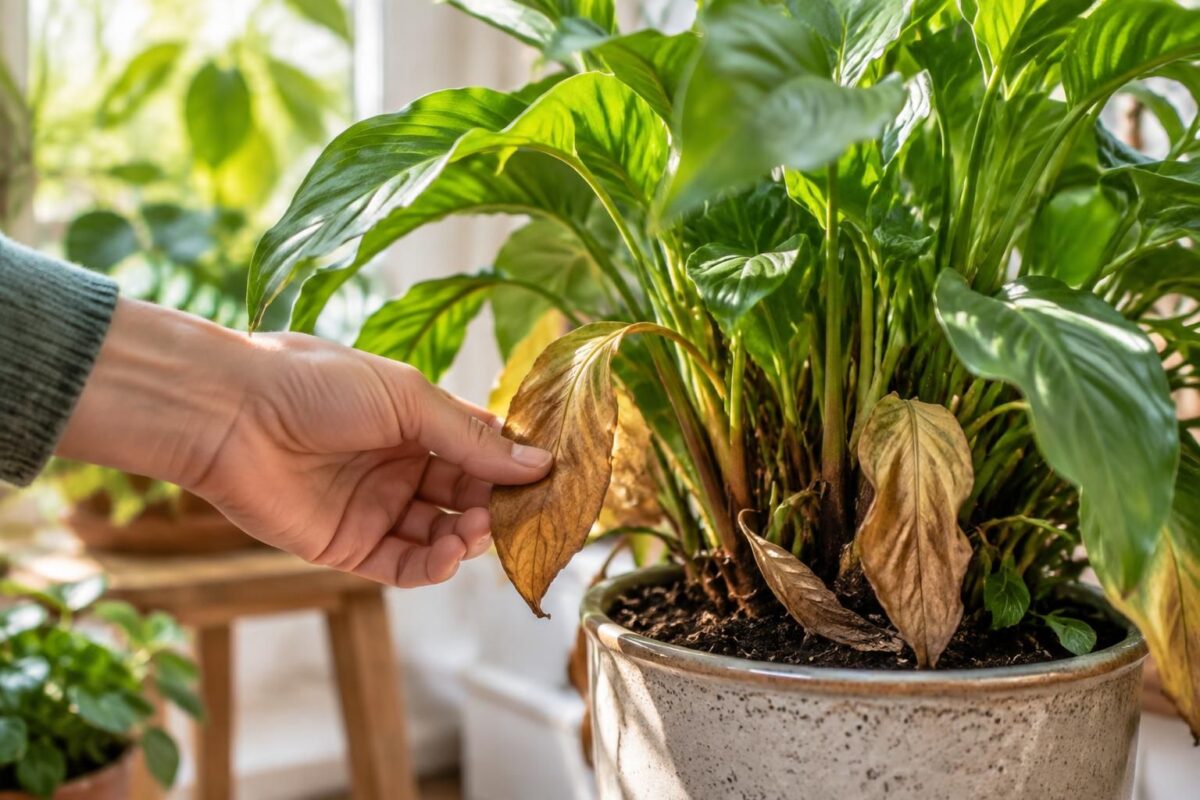
For a potted plant, carefully cut off damaged leaves without nicking the stems or removing too much foliage at once. These tips on cutting off dead leaves from plants complement good plant care practices. In the garden, leaving some leaves on the ground also helps preserve the soil and beneficial wildlife.
Dead leaves: when to remove them and when to leave them
A dry leaf that falls naturally is not necessarily a problem. In flower beds, it forms a natural mulch: it retains moisture, protects roots from the cold, and gradually decomposes into organic matter.
It’s different on the lawn. A thick layer blocks light and keeps the grass damp. A few scattered leaves can stay, but a dense blanket should be raked up or shredded to support lawn growth.
“A dead leaf isn’t always waste: it all depends on where it falls.” At the base of a shrub, it nourishes the soil; on a wet path, it mainly becomes a slipping hazard.
The right approach for each area of the garden
| Area | Recommended action | Why |
|---|---|---|
| Lawn | Gather leaves if they form a thick layer | The grass gets more light and air |
| Flower beds and beneath hedges | Leave a thin layer | It protects the soil and provides shelter for small wildlife |
| Paths and patio | Sweep regularly | Wet leaves can make surfaces slippery |
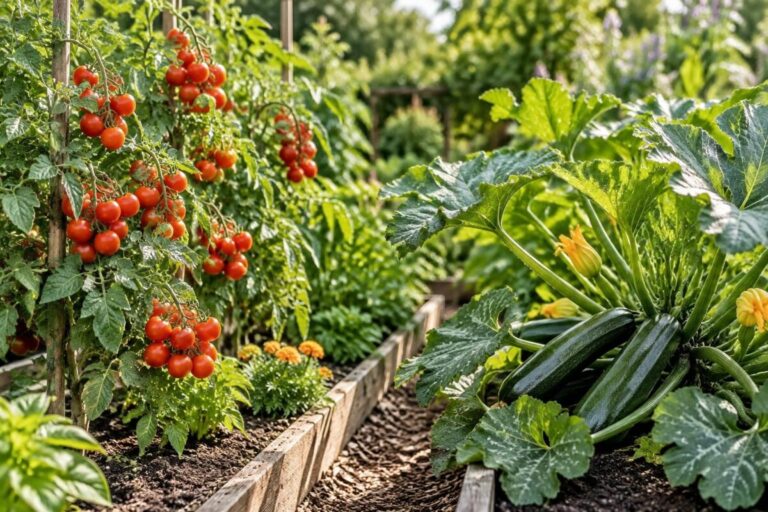
| Vegetable garden | Use healthy leaves as mulch or in compost | They protect and gradually enrich the soil |
| Pond | Remove floating leaves | This limits their accumulation at the bottom and the formation of sludge |
You can set aside a quiet spot beneath a hedge for healthy leaves, taking care not to cover small plants or pile leaves against tree trunks. Check the pile before moving or shredding it: it may be home to small wildlife. Gardena’s guide to gathering leaves distinguishes between areas to clear and those where a layer of leaves remains beneficial.
Dead leaves on plants: three steps to take
- Step 1 — Observe. Distinguish leaves that have fallen to the ground from those still attached. Look for spots, soft areas, and signs of disease.
- Step 2 — Sort. Remove diseased leaves and those smothering the lawn. Leave healthy leaves in flower beds, without piling them against stems.
- Step 3 — Put them to use. Spread healthy leaves as ground cover or mix them into compost; check for animals and debris before shredding.
Avoid compact piles around the crowns of plants, and spread any excess in a suitable area. Leaves showing signs of a diagnosed disease need to be handled according to that disease: don’t automatically spread them around the base of susceptible plants. Decomposition depends on the type of leaf, moisture, and the mix; there is no single timeframe for producing well-decomposed material.
For a potted plant: don’t mistake yellow for dead
An old lower leaf may turn yellow naturally, but several leaves changing color quickly may indicate a care problem. If a leaf is completely dry, remove it without pulling on the stem; if you need to cut it, use a clean tool. Keep the parts that are still functioning, and check watering, light, and roots if the problem spreads.
Appropriate care protects plant health
Good gardening doesn’t mean cleaning everything up: it means choosing where to intervene. Diseased foliage should be removed to limit the spread of disease, while healthy leaves can support soil life. Pruning should be limited to dead or damaged parts, and kept moderate so as not to hinder the plant.
By keeping some leaves in useful areas and clearing surfaces where they pose a risk, you make plant care easier while reducing green waste. This simple sorting helps support plant health without depriving the garden of its natural shelters.
Should you remove dead leaves from a potted plant immediately?
Quickly remove leaves that are soft, spotted, or rotten. A dry leaf that falls naturally can be removed during cleanup, without cutting off healthy parts.
Can you leave dead leaves on the lawn?
Yes, if there are only a few and they are scattered. Gather or shred them as soon as they form a thick layer that covers the grass.
How can you use dead leaves in the vegetable garden?
Healthy leaves can be used as a light mulch or composted with more nitrogen-rich materials, such as vegetable peelings.
Why remove dead leaves from a path?
When wet, they become slippery. Regular sweeping improves safety and prevents them from accumulating on the surface.
Thanks for reading; Solan