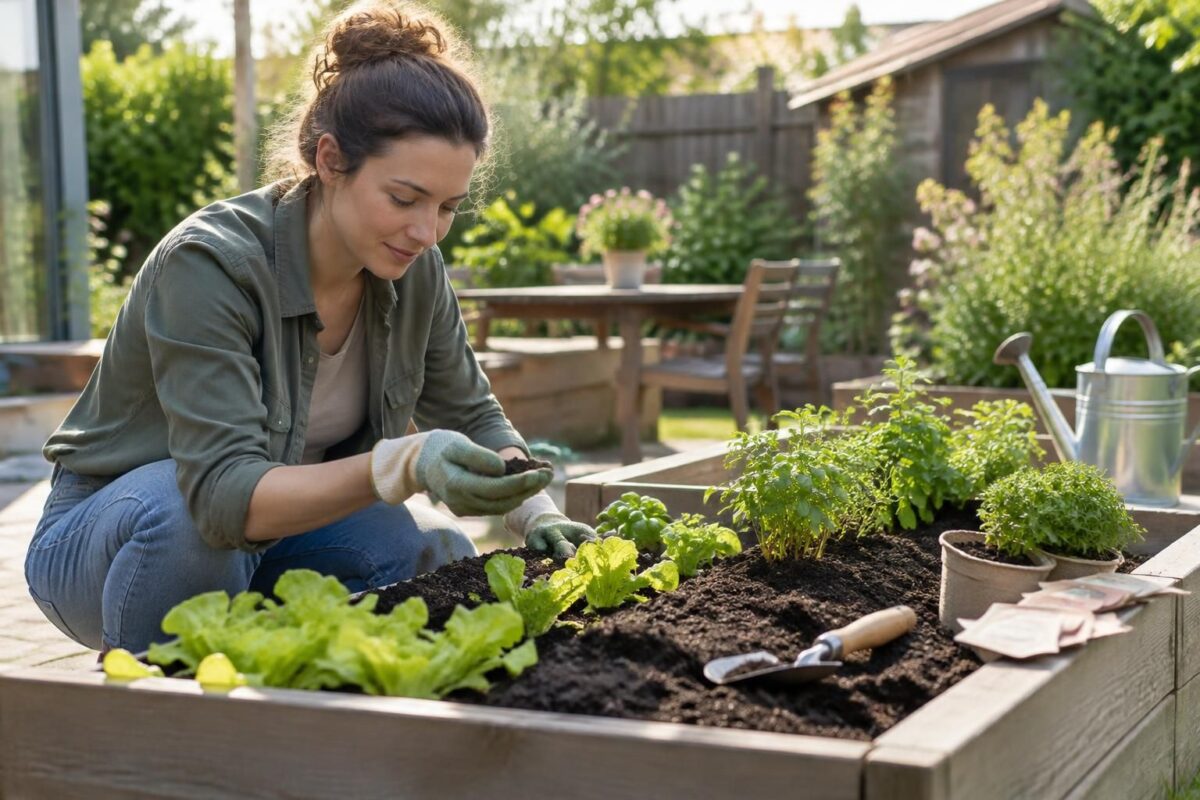
Gardening: where to start without ending up disappointed?
Hello there, Solan here. To start gardening without disappointment, start small, observe your plot and choose a few easy plants suited to your climate. Covered soil, sowing at the right time and regular watering are better than rushing into a large vegetable garden. Each season will teach you what to adjust.
Things to put in place right away
To avoid beginner mistakes, keep your project simple and proceed according to your garden’s actual needs. These tips on knowing what to do first and these steps for getting started in the garden can help you lay a good foundation.
- Start with a small vegetable garden: a few containers or a plot of 10 to 20 m² are enough to learn without overwhelming yourself.
- Observe the sun, the wind and the areas that stay damp after rain.
- Prepare the soil gently by adding mature compost and covering the ground with mulch.
- Choose easy plants such as radishes, lettuce, bush beans or chives.
- Follow the seasons and note your sowing dates so you can make better choices the following year.
Get started with gardening by observing your plot
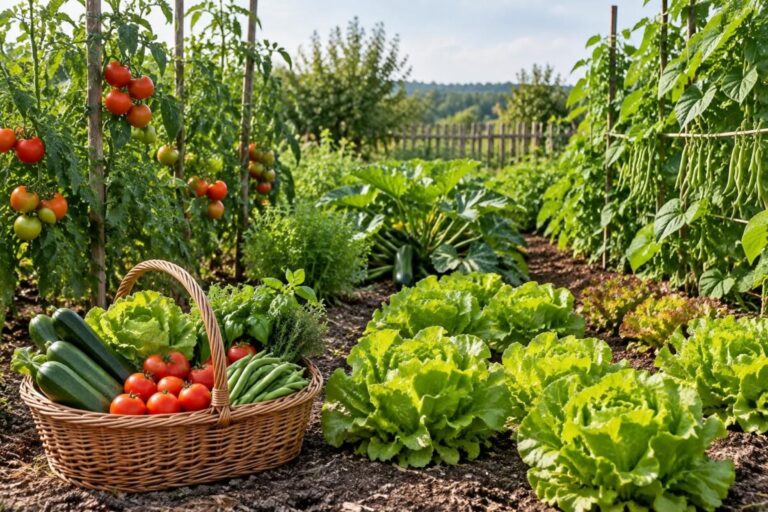
Before buying seeds, take a few days to get to know your climate and identify sunny or shady spots. Tomatoes and zucchini generally appreciate sunshine, while some lettuce varieties tolerate lower light levels.
For most fruiting vegetables, it’s best to choose a sunny spot sheltered from the strongest winds. If your plot is shady, focus instead on crops that tolerate cooler conditions and check the recommendations on the seed packets.
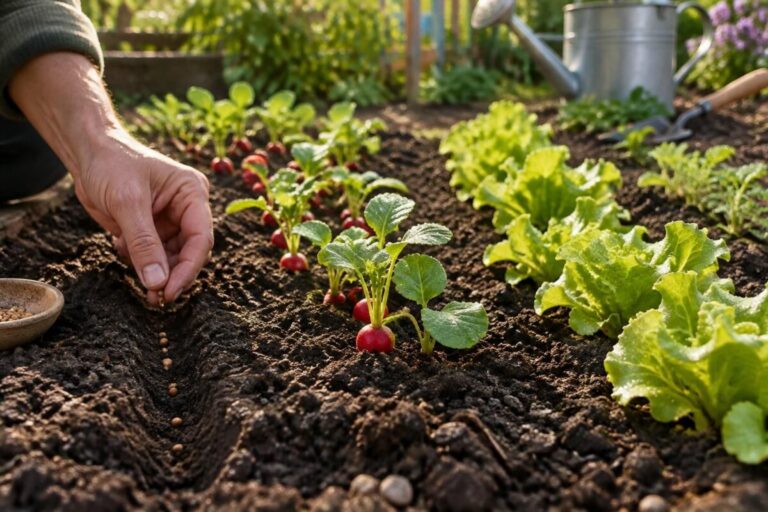
A simple story: a beginner gardener had sown radishes in a very dry spot near a south-facing wall. After moving them to a cooler area and watering regularly, he finally got tender roots.
Prepare the soil without turning it upside down
Living soil helps plants get established. If it sticks together and forms a compact ball, it is probably clayey; if it crumbles quickly, it is more likely sandy. In either case, mature compost and a plant cover can gradually improve its structure.
Avoid deeply turning over the entire plot. Cut the grass, spread unprinted brown cardboard if needed, then add compost, dead leaves or straw. “Covered soil is protected soil.” This method also limits unwanted weeds and slows evaporation.
Mulching doesn’t mean you can stop observing: adjust its thickness according to the season and leave a little space around the stems. The right approach is to nourish the soil without overusing fast-acting fertilizers.
Choose easy plants and sow at the right time
For your first season, choose a variety of easy crops. Radishes grow quickly, bush beans often produce a good harvest, and lettuce is easy to plant. A few flowers, such as cosmos, also attract pollinators and make the vegetable garden more enjoyable.
You can sow radishes, beans and some annual flowers directly in the ground. For tomatoes or zucchini, locally purchased seedlings can make getting started easier. Remember to leave enough space: plants that are too close together compete for light, water and nutrients.
| Crop | Why choose it | Starting point |
|---|---|---|
| Radishes | Quick to germinate, useful for learning | Sow in short rows |
| Lettuce | Easy to plant and harvest | Space about 25 to 30 cm apart |
| Bush beans | An accessible crop that often produces generously | Sow once the soil has warmed up |
| Zucchini | Abundant production when given enough space | Allow about 80 to 100 cm between plants |
Plant and care for your garden in three steps
- Step 1: prepare the spot. Remove unwanted weeds, lightly loosen the surface and add a little mature compost.
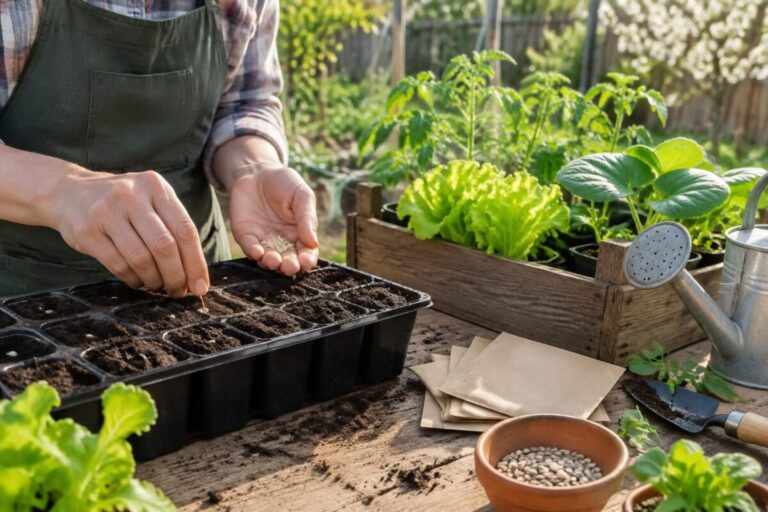
- Step 2: sow or plant. Follow the instructions on the packet, water after planting and leave enough space between young plants.
- Step 3: observe and adjust. Check the moisture, remove weeds early and add mulch once the plants are well established.
To adjust your watering, check the soil with a finger: if it is still cool a few centimeters down, wait before watering. In hot weather, watering thoroughly at the base of the plants in the morning or evening is often better than giving them small amounts repeatedly.
If you’re gardening on a balcony, choose deep containers with drainage holes and check the moisture more often. If you’re gardening in an in-ground plot, cover the soil and water less often, but more generously.
Care for your garden regularly without wearing yourself out
Caring for your garden regularly doesn’t mean spending hours on it. Ten minutes of observation and weeding a week may be enough to spot a yellowing plant, a slug invasion or a lack of water before the problem gets worse.
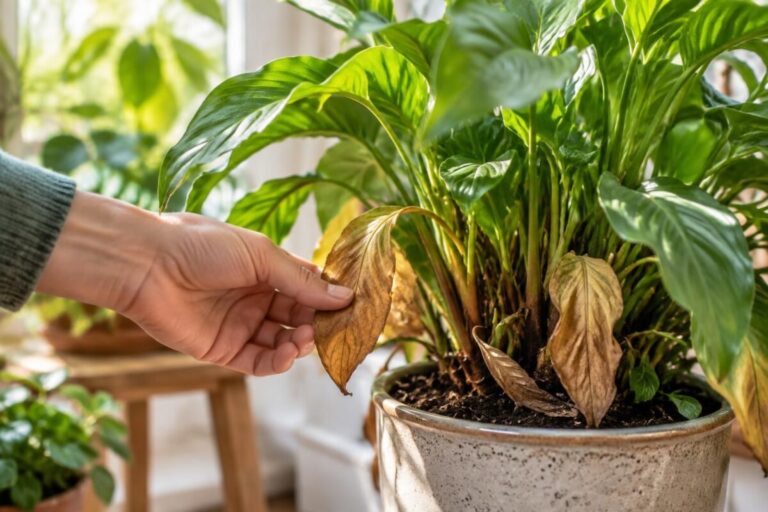
If leaves turn yellow, first check the watering, drainage and condition of the soil. Remove badly affected leaves, space out the plants if air isn’t circulating well and avoid watering the foliage. A measured response is often more helpful than rushing into treatment.
At the end of the season, note what grew well and what didn’t work as well. Gardening is learned through observation and adjustment: even a modest harvest is a good opportunity to prepare for the next one.
Helpful questions for getting started with gardening
When should I start my first vegetable garden?
Spring is suitable for many crops, but the right time depends on your region and temperatures. You can also prepare the soil in autumn with compost and mulch.
Do I need to buy a lot of tools to get started?
No. A watering can, a rake, a hoe and a tool for loosening the soil are often enough to start with. Add to your equipment according to your garden’s actual needs.
Can I garden on a balcony?
Yes. Lettuce, radishes, herbs and cherry tomatoes can grow in containers. Choose containers with good drainage and keep an eye on watering, which may need to be more frequent than in the ground.
How can I make progress after my first season?
Note your sowing dates, harvests and any difficulties you encountered. The following season, adjust the varieties, location or watering rather than changing everything at once.
Thank you for reading; Solan