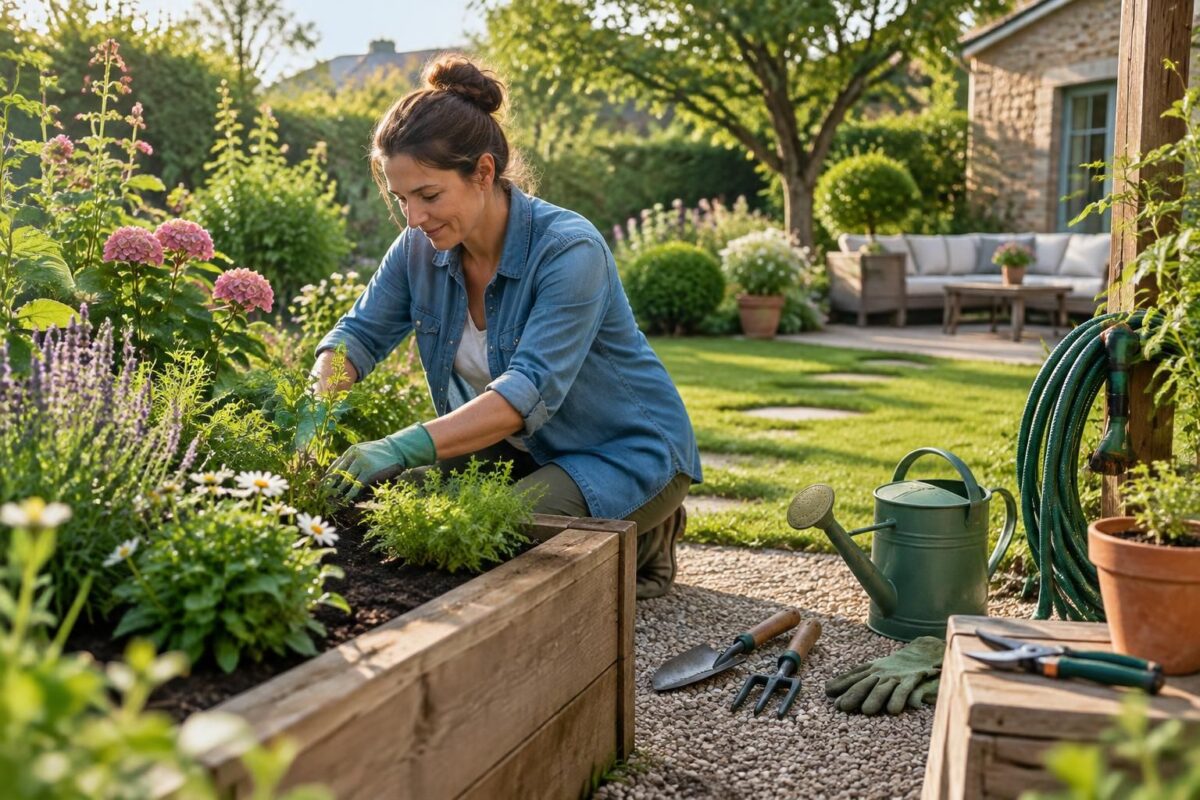
Garden tools: What essentials do you need to maintain your garden without tiring yourself out?
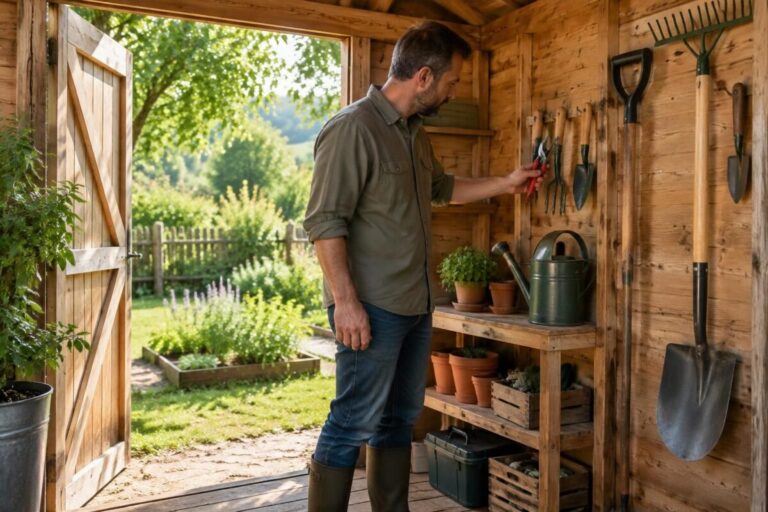
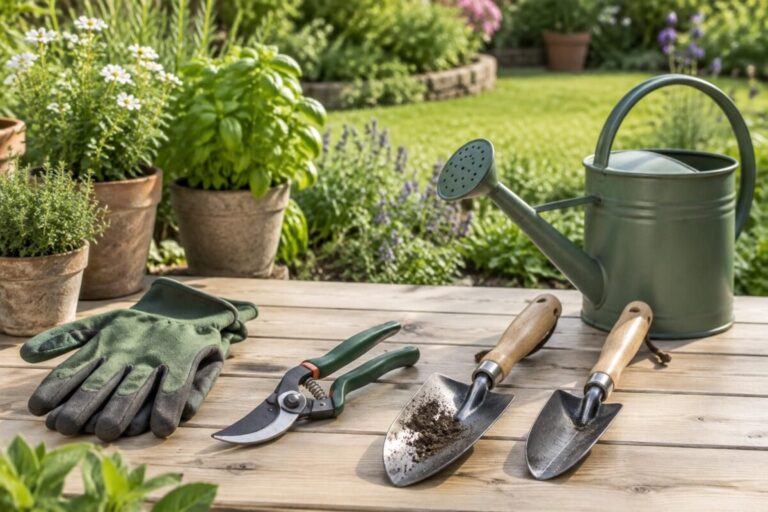
Hello there, Solan here. To garden without tiring yourself out, rely on a spade or digging fork, a rake, a hoe, a hand trowel, pruning shears, gloves and a watering can suited to your strength and your plot. This small set of tools covers the essentials without filling up the shed. Choose comfortable handles and work at a steady pace: your technique matters just as much as your tools.
Things to do right away
- Choose a spade or a digging fork, depending on the type of soil you have.
- Choose a rake suited to the task: a metal one for levelling, a lightweight one for gathering leaves.
- Keep a hoe and a hand trowel close at hand for weeding and planting.
- Protect your hands with well-fitting gloves and choose ergonomic tools.
- Have pruning shears and a watering can on hand, then add a garden hose if the area calls for it.
To round out this selection without accumulating equipment, compare these tips on the three tools that are really useful and choosing a handle that saves your back.
Prepare the soil with the right gardening tools
A spade is used to dig, turn the soil or incorporate compost. If your ground is heavy or stony, a digging fork loosens the soil without turning over all its layers. A broadfork can also aerate the soil deeply, often with effort better distributed.
After this work, a rake levels the surface and removes debris. For a small garden, one model is often enough; if you have a large lawn, a lightweight leaf rake lets you gather leaves without damaging the grass. A cultivator then breaks up the soil, while a hoe breaks the surface crust and cuts young weeds.
A long handle helps you work standing up. A swan-necked shovel can also make it easier to move compost or potting soil. A good rule of thumb: you should be able to push the tool without bending over with every movement.
Gloves and comfort: small choices that make all the difference
Well-fitting gloves protect against thorns, cuts and irritation, while giving you a good grip on tool handles. Look for a durable model on the outside and thin enough in the palm to handle seedlings.
If you have a small balcony, prioritize a hand trowel and short-handled tools; if you have a large vegetable garden, add a digging fork, an ergonomic wheelbarrow and a leaf rake. This approach helps you avoid unnecessary purchases and tiring back-and-forth trips.
Plant and maintain your garden without multiplying your tools
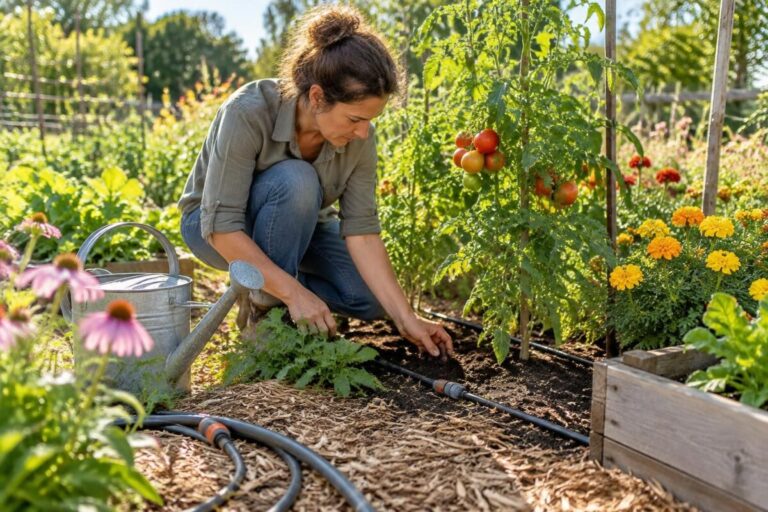
A hand trowel is handy for digging holes for plants in root balls, planting bulbs and mixing potting soil in containers. For fine seeds or young plants, a dibber makes uniform holes. A watering can fitted with a removable rose distributes water gently without flattening the shoots.
| Tool | Main use | Practical tip |
|---|---|---|
| Hand trowel | Planting root balls and working in pots | About 5 to 15 cm, depending on the model and plant |
| Seed dibber | Planting seeds and young plants | Depth varies depending on the crop |
| Bulb planter | Planting bulbs and onions at a consistent depth | Adjustable, depending on the model |
| Watering can with rose | Watering seeds and plants | Gentle flow to avoid displacing the soil |
A hoe-cultivator often combines a hoe blade for weeding with a pointed tine for opening furrows. It can replace several small tools in a compact vegetable garden. For weeds between paving slabs, a manual weed remover lets you pull them out by the root without using chemicals.
A wheelbarrow comes in handy as soon as you regularly transport compost, leaves or branches. A single wheel offers greater manoeuvrability in narrow spaces; two wheels often provide more stability, depending on the model and load.
A simple three-step method
- Step 1: loosen only the area you are going to plant, using a spade or digging fork. Avoid working soil that is waterlogged.
- Step 2: level the soil with a rake, then make holes with the hand trowel or appropriate dibber.
- Step 3: water gently and weed as soon as the first weeds appear, before they become established.
A beginner gardener started by preparing just two vegetable beds. With a digging fork and a hand trowel, she finished without turning the whole plot into a worksite. “The best tool is the one that lets you keep your movements relaxed.”
Prune your plants with the right tool
Pruning shears are suitable for dead flowers and small branches, often up to about 3 cm in diameter, depending on the model and the wood. For live plants, bypass blades generally make a cleaner cut. Anvil-style shears are better suited to dead, hard wood.
Check the weight, handle opening and grip, especially if you will be pruning for a long time. A rotating handle can reduce finger fatigue. If a branch resists or exceeds the capacity specified by the manufacturer, switch to loppers rather than forcing it.
For hedges, a hedge trimmer helps create even surfaces; hand shears are suitable for small touch-ups. A folding saw is useful for thicker branches or those that are hard to reach. Clean and dry the blades after use to limit rust and keep cuts clean.
Protect your garden from heat and water
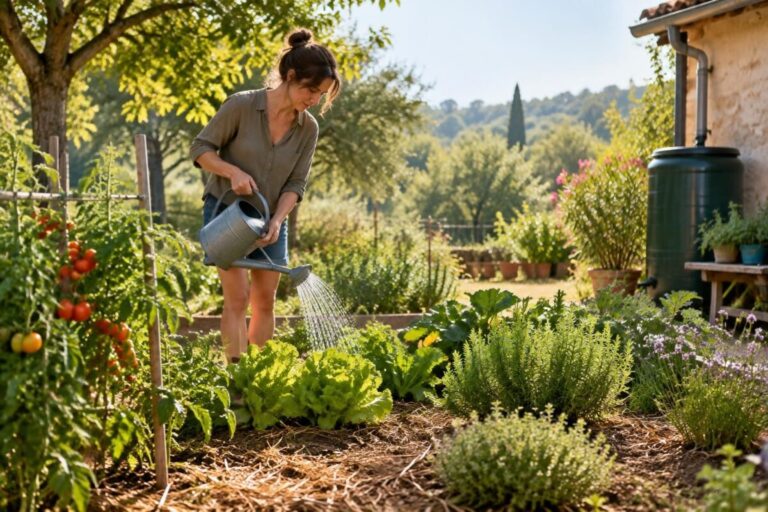
A garden hose makes it easier to water a large area, but a watering can is more precise around young plants. Water plants at the base whenever possible and adjust the frequency to the weather, soil and needs of each plant.
In hot weather, shade netting can protect exposed crops while allowing air to circulate. After heavy rain, check that water is not pooling near roots or garden structures. Reusable solutions, such as absorbent jute bags, can help limit the effects of localised runoff, depending on the layout of the garden.
Frequently asked questions about gardening tools
Which tools should you choose to get started in the garden?
Start with a spade or digging fork, a rake, a hoe, a hand trowel, gloves, pruning shears and a watering can. Add a wheelbarrow if you often transport soil or garden waste.
What is the difference between bypass pruning shears and anvil-style shears?
Bypass blades are generally suitable for live branches and make a clean cut. Anvil-style shears provide more force on dead, hard wood, but can crush the fibres of live wood.
How can you avoid getting tired while gardening?
Choose lightweight tools suited to your height, opt for a handle long enough to let you work with your back straight, and alternate tasks. Take short breaks rather than pushing yourself through a long session.
How should you care for your tools after use?
Remove the soil, dry the metal parts and clean the cutting blades. Store the tools away from moisture and sharpen the blades when they no longer cut cleanly.
Thank you for reading; Solan