
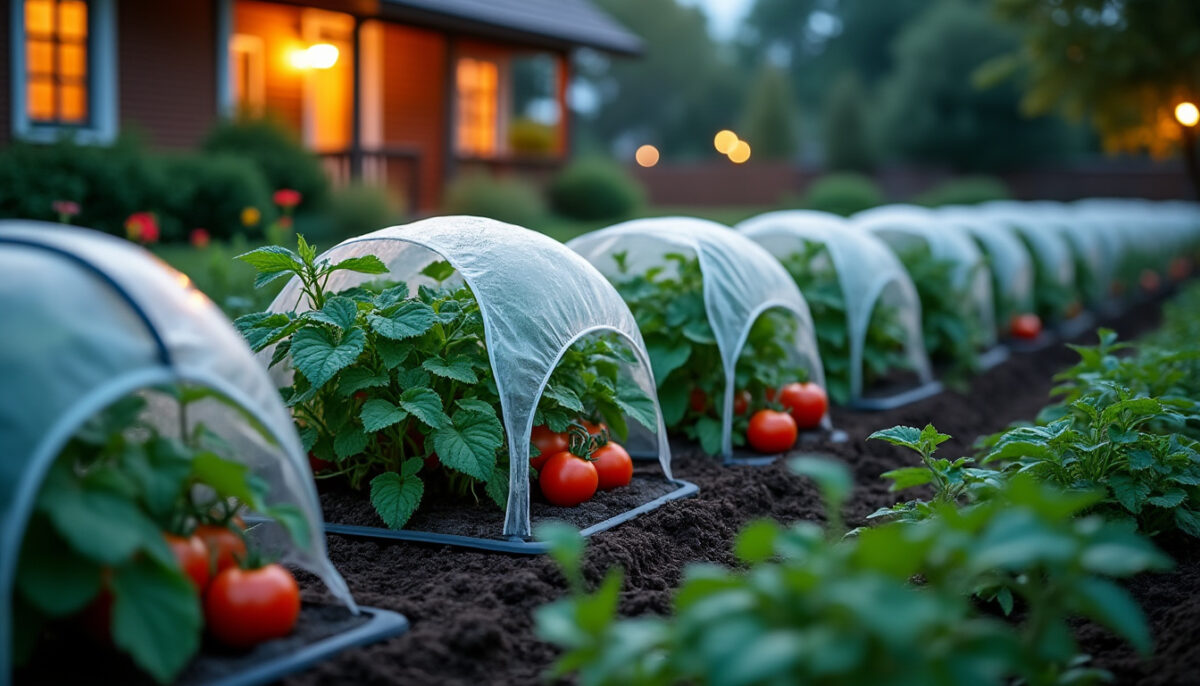
Garden care: how to protect your tomatoes from a cold night?
Hello, Solan here. To protect your tomatoes from a cold night, bring pots into a frost-free shelter if possible and cover plants in the ground with suitable fleece, secured היט before evening. Light protection does not guarantee their survival if the frost becomes severe or prolonged. In spring, delaying planting is safer than relying on an improvised collection of covers.
Check the forecast lows and the conditions in your garden, not just the mild afternoon weather. The RHS notes that tomatoes grow best with nights above 10 °C. This growth guideline should not be confused with the freezing temperature.
- Keep an eye on the lows and prepare a frost-free shelter for pots.
- Stretch frost-protection fleece so it does not touch the foliage directly.
- Use a cloche or an upturned plastic bottle to protect young shoots from frost.
- Group fragile pots near a stone wall that gives off stored solar heat.
- Ventilate the next day depending on the temperature, especially under a plastic cloche.
Why a cold night is especially threatening to tomatoes in spring
A cool night can slow tomatoes down even without frost. Frost, however, can damage or kill these sensitive plants. A forecast above-zero low does not necessarily describe the exact temperature of the foliage: take extra care in an exposed area. A thermometer near the crops can help you understand your microclimate.
For example, young plants still in pots can be left outside for a few hours during the day to acclimatise, then brought in at night. Once the nights are consistently mild and the risk of frost has passed, you can plant them out. An unheated greenhouse also requires temperature monitoring.
Which vegetables and garden plants should you prioritise saving?
Focus your protection on newly transplanted summer vegetables: tomatoes, courgettes, aubergines, peppers, basil. Young plants with shallow roots are more fragile, as are citrus trees and flowers in pots. These plants need special attention because they are very sensitive to night-time cold and sudden temperature shocks.
Simple 3-step procedure to protect your tomatoes from frost
- Step 1: In the late afternoon, put non-woven frost-protection fleece over supports so it does not touch the foliage directly. Secure the edges well to prevent cold air from getting in.
- Step 2: Place cloches, cut-up plastic bottles or upturned pots around young plants, especially those that have not yet rooted well.
- Step 3: Check the temperature under the covers the next day and ventilate whenever necessary. Mulching the soil alone does not protect the leaves.
Do not count on a guaranteed 8 °C increase. How much protection you get depends on the fleece weight, how it is fitted, the wind and how long the cold lasts. The RHS guidance on fleece mentions around 2 °C of protection from some thick fleeces: this is still limited help, not heating.
If this is the first frost of the season…
If a hard frost is forecast, prioritise moving pots into a frost-free shelter and check the covers on plants left outside. The next day, ventilate or remove the covers depending on the temperature and sunshine to prevent overheating. A closed cloche can heat up quickly, even after a cold night.
If your tomatoes are in pots…
Choose a genuinely frost-free shelter for the night. A sheltered wall can reduce exposure to the wind, but it is no substitute for shelter when frost is expected. Move the pots before they become difficult to handle, and return them to a bright spot in suitable conditions during the day.
Comparison table of methods for protecting tomatoes from night-time cold
| Method | Advantages | Disadvantages |
|---|---|---|
| Frost-protection fleece | Lightweight, easy to put on, retains heat | Can stick to leaves if not stretched properly |
| Cloche / plastic bottle | Targeted protection, creating a mini greenhouse | Sometimes lacks ventilation |
| Thick mulch | Limits fluctuations and retains soil moisture | Does not protect the foliage |
| Grouping pots near a stone wall | Stores solar heat, no equipment needed | Depends on the garden location |
| Bringing plants indoors | Best possible protection against frost | Not always practical or possible |
Keep an eye on the weather and prepare your frost-protection kit
Have fleece in good condition, fasteners, supports and a thermometer ready. Check the root ball before watering: do not let a plant dry out just to follow a blanket rule against evening watering. When watering is needed, water at the base without waterlogging the soil or unnecessarily wetting the foliage.
At the end of the season: harvest before a forecast frost
If the cold sets in for a prolonged period, pick ripe tomatoes before they are damaged. The simple recipes for using your harvest offer ideas for using them in a sauce, salad or everyday dish. As for green fruit, whether it can ripen later depends on its stage of development: do not expect all the small fruits to ripen successfully.
At what temperature do tomatoes begin to suffer from the cold?
Tomatoes prefer nights above 10 °C. A cool night can slow their development; frost can damage or kill the plants. The duration of the cold, their growth stage and exposure also matter.
Can you water tomatoes before a cold night?
Check the moisture of the root ball first. If the plant needs water, water at the base without waterlogging the soil; do not confuse appropriate watering with frost protection.
How do you remove frost-protection fleece without shocking the plants?
Wait until the temperature is above freezing at daybreak and the sun is already out so as not to shock the plants.
What is the best way to protect tomatoes in pots?
When frost threatens, bringing pots into a genuinely frost-free shelter is more reliable than simply grouping them against a wall.
What materials should you use for effective plant protection?
Non-woven frost-protection fleece, natural mulch (hemp, straw), cloches or cut-up plastic bottles are the most common and effective options.
Thanks for reading; Solan