Garden care: how to avoid choosing something too difficult?
Hi there, it’s Solan.
To avoid a garden that’s too difficult to maintain, choose plants suited to your climate, your soil, and the time you can devote to them.
An enjoyable garden doesn’t necessarily take hours of work. A few simple decisions at the outset make watering easier, reduce upkeep, and help plants get established.
Things to do right away
- Observe the light in each area: direct sun, partial shade, or shade.
- Choose plants suited to your climate and soil type.
- Start small: a few pots or a flower bed are easier to manage.
- Group plants according to their water needs to make watering easier.
- Plan for essential gardening tools, such as a watering can, pruning shears, and a small shovel.
To refine your choices, explore these easy-to-grow plants and these tips for identifying plants that need a lot of care.
The pitfall of a high-maintenance garden: choosing without considering your daily routine
A plant can look magnificent at the garden center and become demanding once it’s at your home. Some need frequent watering, regular pruning, or a very specific location: all those tasks add up when several varieties have the same requirements.
For example, a beginner gardener might buy full-sun flowers for a shady courtyard. They struggle to thrive, and replacing them can end up costing more than making a thoughtful choice in the first place. Choosing the right plants therefore starts with observing the garden, not with their appearance.
Low-maintenance plants, in the right place
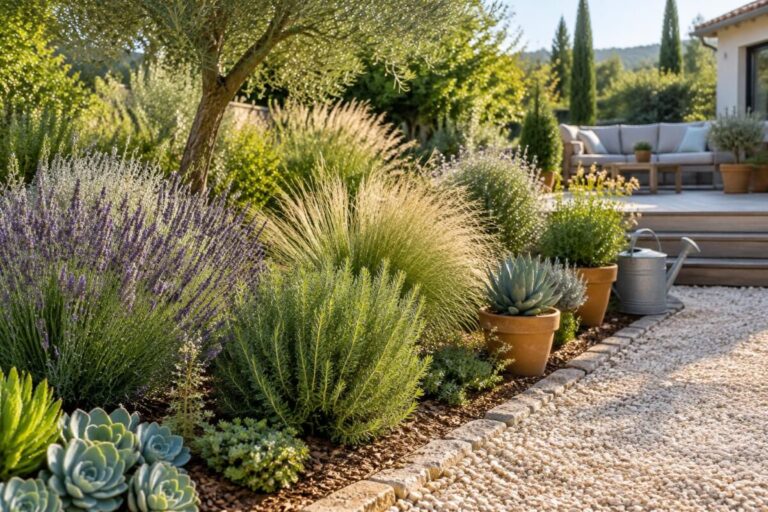
For easy gardening, choose hardy plants that suit your exposure and climate. Robust perennials, herbs suited to the region, or shrubs that need little water can reduce the amount of work once they’re established.
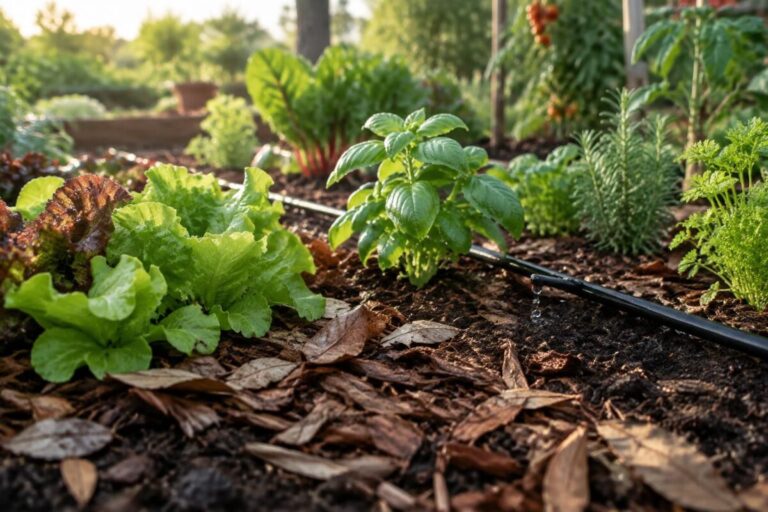
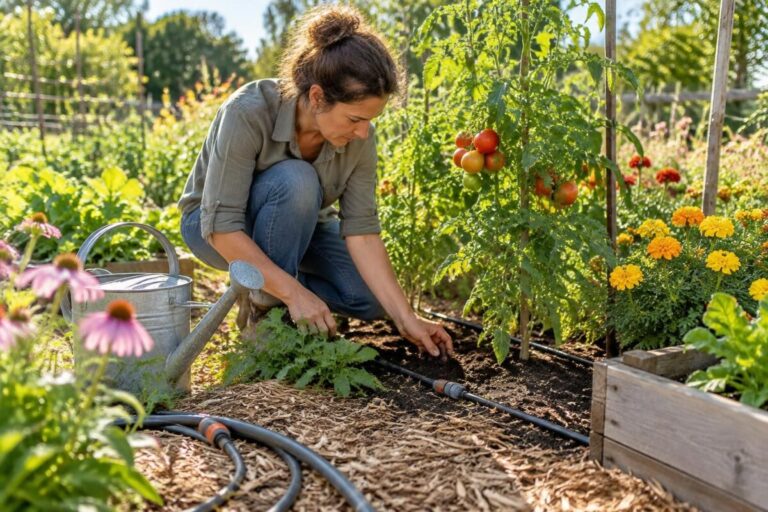
Easy-care plants are not all “care-free.” They still need a suitable location, watering when planted, and a little follow-up care. Choosing an easy watering solution, such as mulching to retain moisture, makes garden maintenance simpler afterward.
Compare requirements before buying
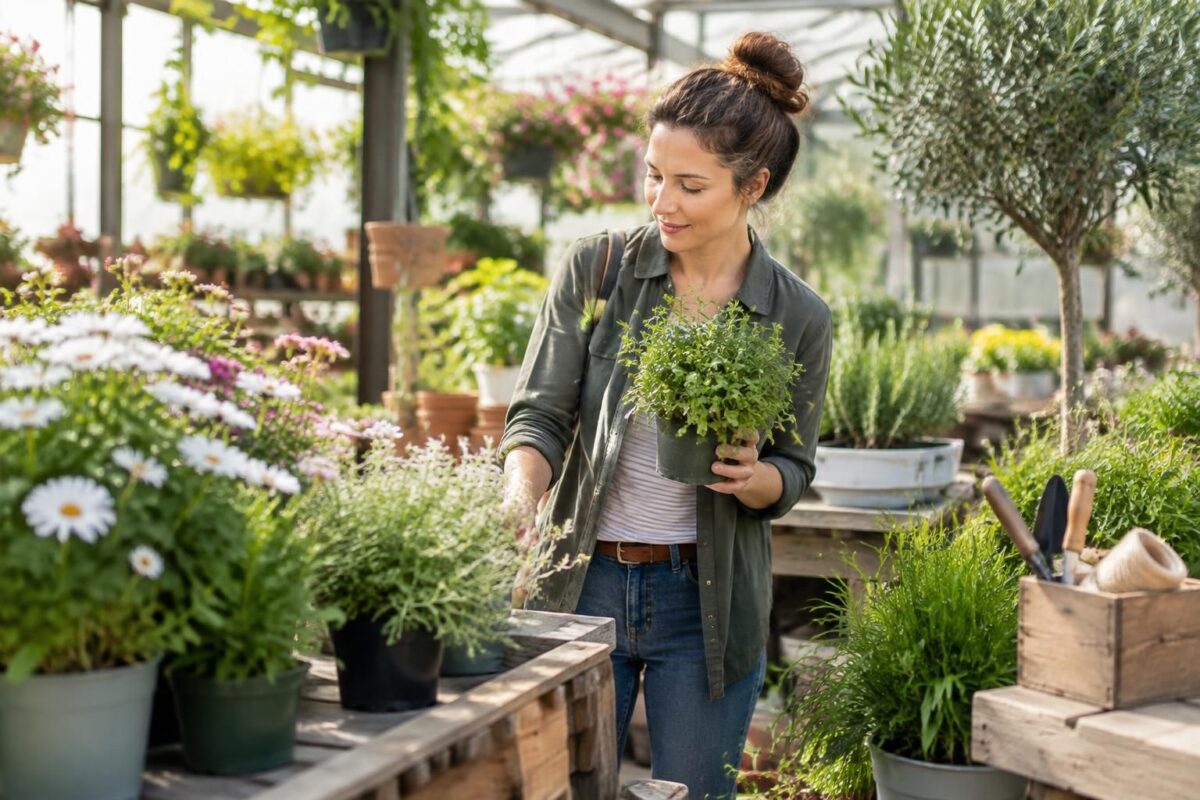
Before filling your cart, check the plants’ light, water, and space requirements. Here are some simple guidelines to help you choose; exact needs vary depending on the variety and local conditions.
| Plant type | What to check | How to simplify care |
|---|---|---|
| Hardy perennial | Exposure and soil | Choose a variety suited to your region |
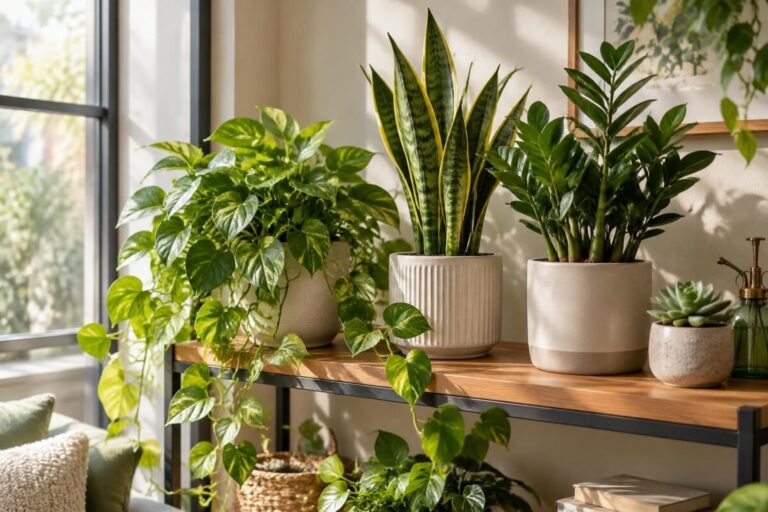
| Potted plant | Watering frequency and container size | Use a pot that’s large enough and group plants with similar needs |
| Herb | Sunlight and drainage | Avoid mixing species with very different water requirements |
| Shrub | Mature size and available space | Choose a permanent location before planting |
A plant suited to your space often takes less work than one chosen solely for its appearance. This check also helps avoid surprises as the plants grow.
A three-step method to make garden maintenance easier
1. Take a look around your space
Observe the sunny and shady areas at different times of day. Also note where water collects or, conversely, where the soil dries out quickly.
2. Set a realistic amount of time for care
Ask yourself how much time you can spend in the garden each week. If you want to limit the amount of work, choose just a few varieties and prioritize ones that fit your watering habits.
3. Plant gradually and observe
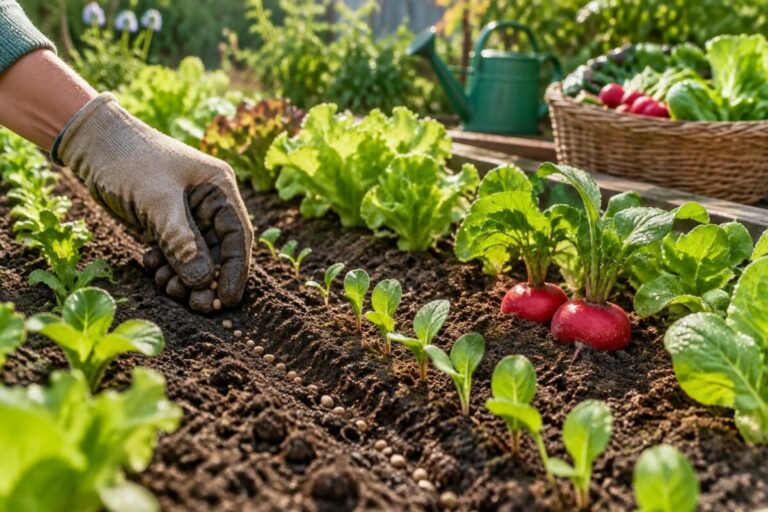
Start with a few species, then monitor how they develop over the first few weeks. Mulch and water regularly at first to encourage root growth; after that, adapt your care to the actual conditions rather than following a rigid schedule.
For example, Lina has a sunny balcony and little free time during the week. By grouping sun-loving plants in pots that are large enough, she avoids having to water too often and can quickly spot which ones need more attention. Taking things step by step makes it possible to adjust without turning the garden into a chore.
Practical questions about choosing easy-care plants
Which plants should beginners choose for the garden?
Choose varieties suited to your climate, exposure, and soil. Starting with a few hardy plants makes it easier to observe them and care for them.
How can you spend less time watering?
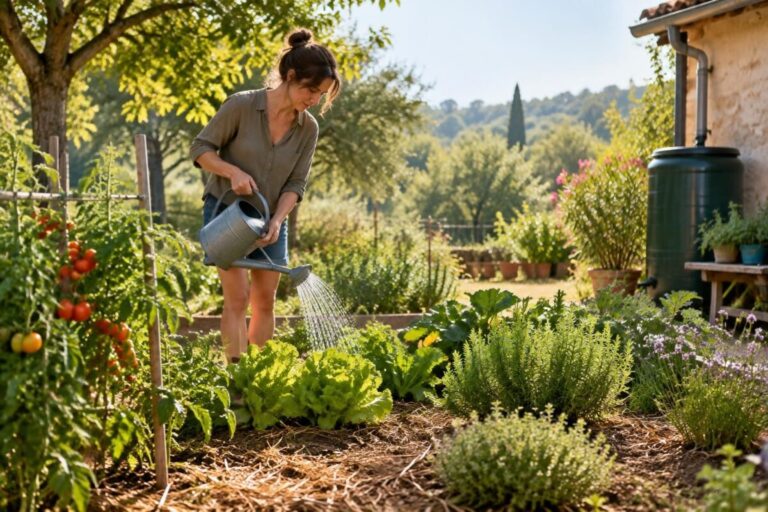
Group plants with similar water needs, mulch the soil, and choose containers that are large enough. Water according to the condition of the soil rather than out of habit.
Can an easy-care plant be left without any care?
No. Even a low-maintenance plant needs suitable conditions and a little attention, especially after planting or during periods of extreme heat.
Which gardening tools should you have when starting out?
A watering can, clean pruning shears, and a small shovel are generally enough to get started. Add equipment only if your needs call for it.
I hope you found these tips helpful. See you soon! — Solan