Garden tools: Do you need a greenhouse to get started?
Hello, it’s Solan here. No, you don’t need a greenhouse to get started: begin with a few suitable tools, then add a greenhouse if your crops really need one. It helps you start seedlings earlier, protect plants from bad weather, and extend the harvest season. But without a good location or proper ventilation, it can quickly become too hot or humid. For beginner gardening, it’s best to choose your equipment based on your space, climate, and plans.
Things to do right away
- Choose a sunny, level spot that’s easy to access.
- Get gloves, a shovel, a tape measure, and a level ready.
- Check the planning regulations with your local town hall.
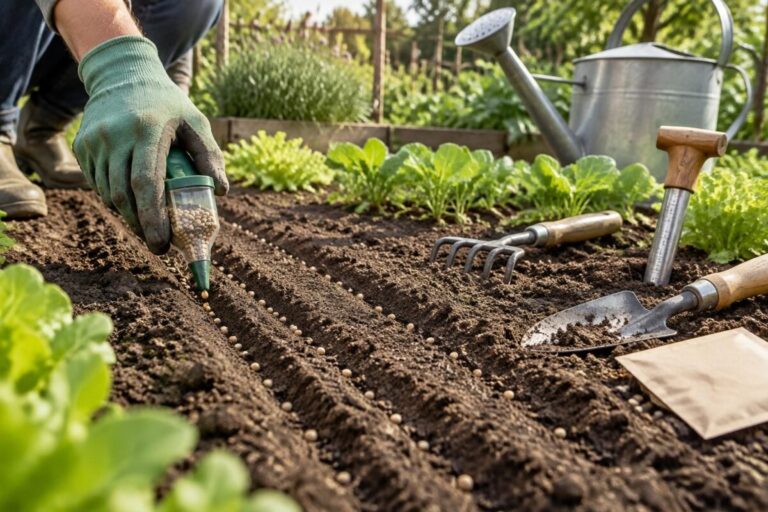
- Start your seedlings using a few trays and labels.
- Plan a simple way to water and ventilate the plants.
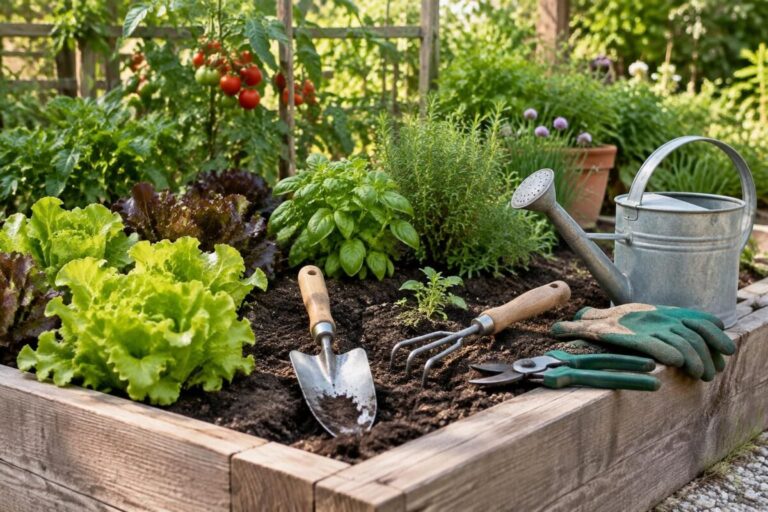
To get started, a hand trowel, pruning shears, and a watering can are often enough: there’s no need to buy all your garden tools at once. You can add to your supplies as needed for your crops with these tips on getting started with gardening without spreading yourself too thin and this guide to which tools to get out in the garden.
Is a garden greenhouse useful for beginners?
A garden greenhouse is useful if you want to start seedlings earlier, shelter delicate plants, or extend certain harvests. It isn’t essential for a small vegetable garden: seedlings on a bright windowsill and crops suited to the season are enough to get off to a good start.
If you mainly want to grow a few summer vegetables, start without a greenhouse and see how your space works. If you want to protect plants from the cold or spread out your harvests, a small greenhouse can be a useful piece of garden equipment.
A neighbor started with a shelf and seed trays near a window. The following spring, she chose a small greenhouse after realizing her plants were running out of room.
“The right tool is the one that meets a real need.” This principle helps you avoid impulse purchases and leaves more of your budget for plants and soil.
What essential tools do you need to set up a greenhouse?
For assembly, have sturdy gloves, safety glasses, a shovel, a tape measure, and a level ready. Depending on the ground and the model, a base and foundation materials such as treated wood or concrete blocks may also be needed.
Assembly time varies depending on the structure, the instructions, and the number of people involved. These estimates are a guide, not a promise: always check the manufacturer’s instructions.
| Greenhouse type | Useful tools | Estimated time |
|---|---|---|
| Polytunnel | Drill/driver, mallet, wrenches or sockets | A few hours, depending on the model and circumstances |
| Polycarbonate greenhouse | Tools specified in the instructions, level, tape measure | About one day for two people, depending on the model and circumstances |
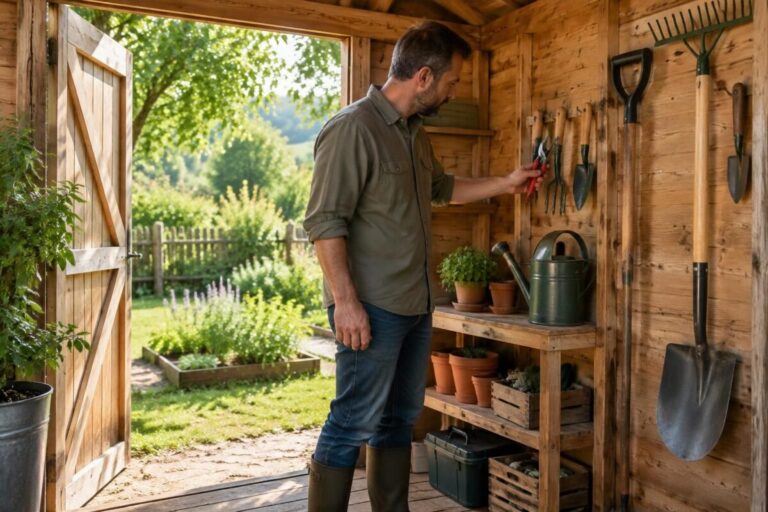
For greenhouse growing, also think about everyday tools: a dibber, hand trowel, hand cultivator, pruning shears, and spray bottle. Keep them clean and store them in a dry place; you’ll be able to find them easily when it’s time to plant.
How do you choose a location and size?
First, find a bright, level spot away from areas where water collects. A sunny location helps crops grow, while a hedge or wall can soften gusts without blocking out all the light.
Place the greenhouse near a water source and make sure there’s convenient access for maintenance. Also ensure it has adequate ventilation: opening windows, roof vents, or suitable ventilation. In summer, shade cloth can help prevent overheating.
Before you choose a greenhouse, measure the space available and think about what you want to grow in it. A compact structure is easier to equip and manage than a large shelter that sees little use.
Steps for setting up a greenhouse without making things complicated
- Step 1: Measure the space, make sure the ground is stable, and check the PLU as well as with your local town hall. As a general rule, a greenhouse up to 5 m² does not require a permit; for one between 5 and 20 m², a prior planning application may be required; and above that, a building permit is generally required. Local rules and protected areas may change these requirements.
- Step 2: Prepare a level, solid base, then assemble the structure following the instructions. Secure it properly to reduce the risk of wind damage.
- Step 3: Set up ventilation and choose a suitable watering method. For a small area, hand watering is simple; drip irrigation delivers water precisely, while sprinkler irrigation is more suitable for larger areas.
When watering, adapt the method to your plants: a long-spout watering can helps you direct water to the roots, and a rain barrel can reduce your use of mains water. Also monitor temperature and humidity with a thermometer and hygrometer.
Useful accessories for successful seed starting
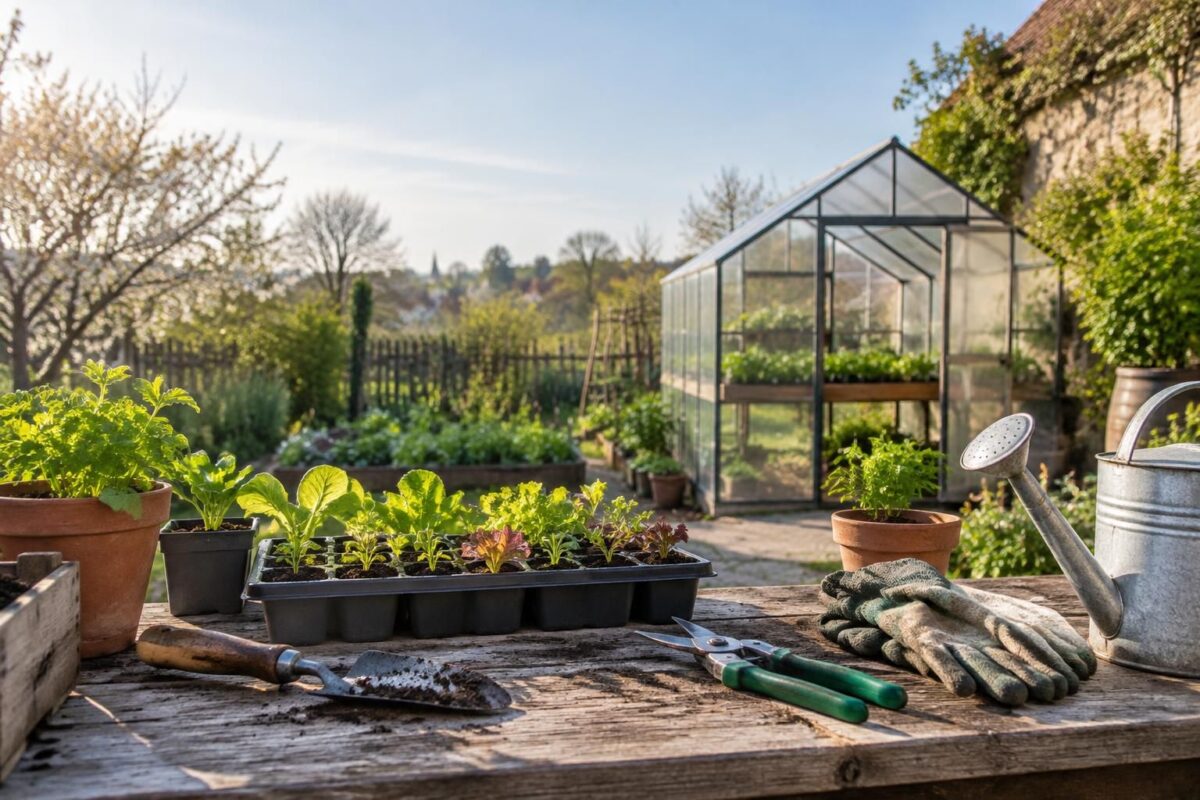
Seed trays make it easier to organize and move young plants. Add markers to note varieties and dates; a heated mini greenhouse can help some seeds germinate, but it isn’t necessary for every crop.
A greenhouse needs to be ventilated to prevent excessive humidity and overheating. Depending on the season, shelves, a potting bench, or hanging baskets can free up floor space and make gardening tasks more comfortable.
To avoid problems, don’t choose a structure that’s unsuitable for the climate, install it in a flood-prone area, or leave out UV protection when the material requires it. Simple, well-chosen equipment makes it easier to keep track of your first crops.
Questions to ask yourself before starting greenhouse gardening
Can you start gardening without a greenhouse?
Yes. A few basic tools, seedlings suited to the season, and a bright location are enough to start a vegetable garden.
What is the best location for a garden greenhouse?
Choose a bright, level, well-drained spot that’s easy to access. Shelter from strong winds and a nearby water source are also practical.
Which watering system should you choose for a greenhouse?
Hand watering is suitable for small areas, drip irrigation for crops that need regular watering, and sprinkler irrigation for larger spaces.
Do you need a permit to install a greenhouse?
This depends in particular on its area, local rules, and the location of the property. Check the PLU and confirm the requirements with your local town hall before starting work.
Thanks for reading; Solan