Vegetable plants: which ones thrive even in a small space?
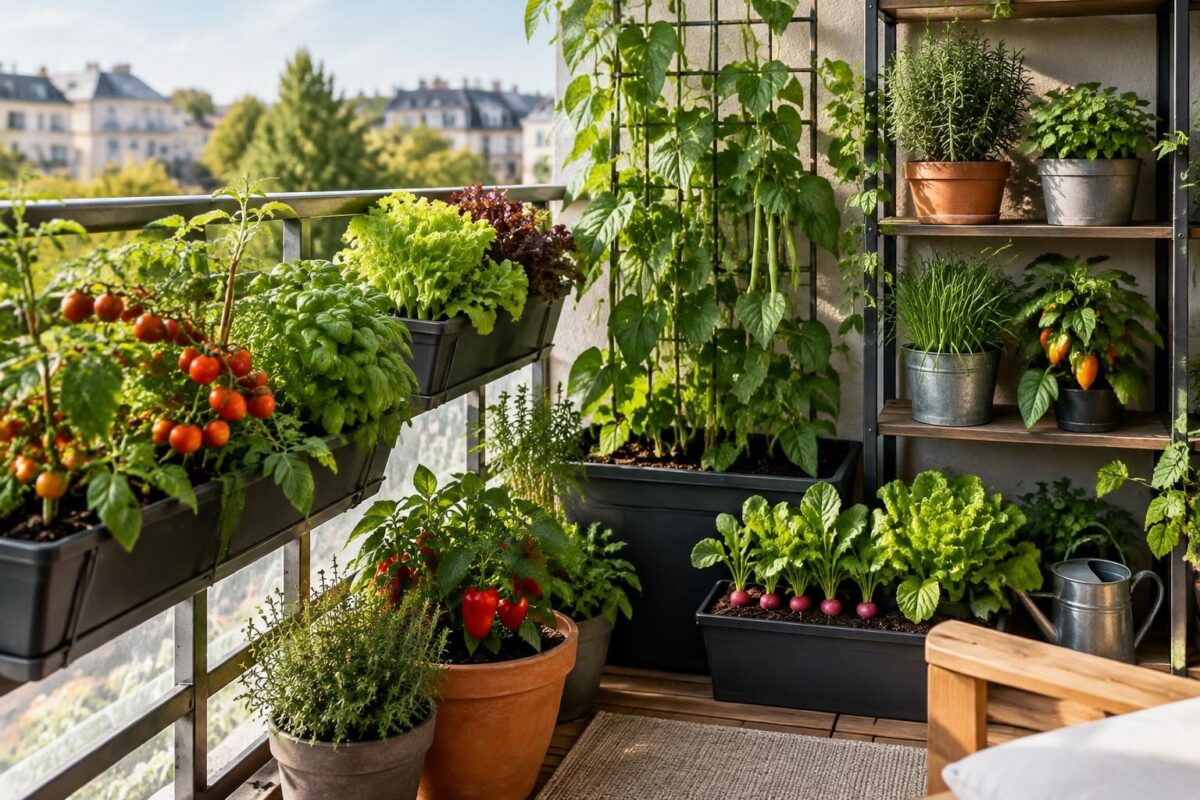
Hi there, Solan here. Lettuce, radishes, herbs, cherry tomatoes, and climbing vegetables can produce generous harvests in pots or planters, even on a balcony. Choose each plant according to the available light and depth, then make use of vertical space to save room.
Tips for a productive vegetable garden in a small space
- Identify sunny areas and shadier spots before choosing what to grow.
- Reserve shallow planters for lettuce and radishes.
- Place climbing vegetables near a trellis or sturdy stake.
- Use a compost-rich growing medium and make sure each container drains well.
- Sow fast-growing crops a few weeks apart to spread out the harvests.
To organize an urban vegetable garden without cluttering the balcony, start with a few easy crops, then add more depending on the results. These tips for a productive vegetable garden in a small space and this selection of crops suited to small spaces can help you choose.
Which vegetable plants should you choose based on space and light?
When gardening in a small space, consider both the growing period and the amount of room available for the roots. Lettuce and radishes free up space quickly, while cherry tomatoes and beans produce over a longer period.
| Crop | Suggested container | Main advantage |
|---|---|---|
| Lettuce and baby greens | Planter 15 to 20 cm deep | Harvest leaves as needed |
| Radishes | Planter about 15 cm deep | Fast-growing and easy to sow repeatedly |
| Cherry tomatoes | Deep pot of around 20 liters or more | Extended harvest, with a stake |
| Climbing beans and peas | Deep planter with a trellis or poles | They make use of vertical space |
| Herbs | Pots suited to each species | Take up little space, frequent harvests |
| Climbing cucumbers | Large planter, often 30 to 40 liters depending on the model/situation | Vertical growing and easy-to-reach fruit |
Lettuce and radishes for quick harvests
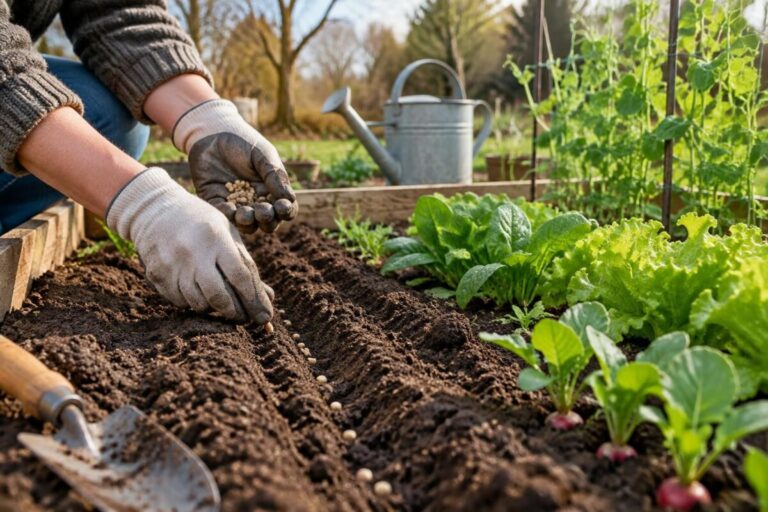
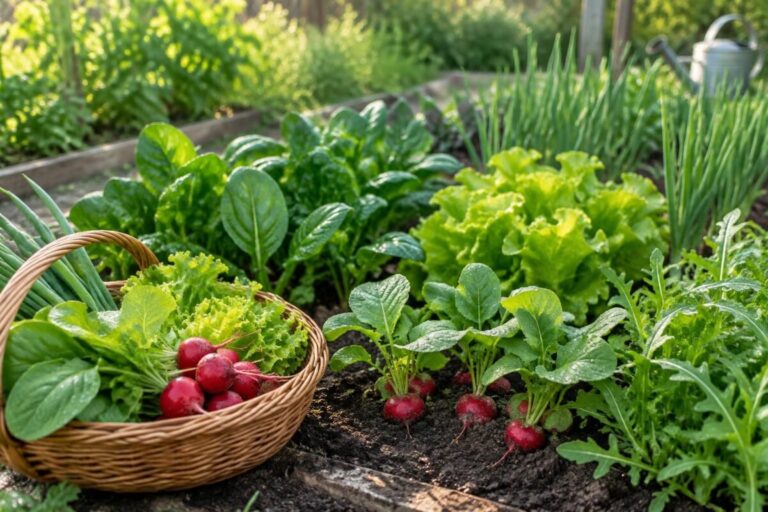
Cut-and-come-again lettuce, arugula, and mesclun grow well in a shallow planter. Harvest a few leaves at a time and sow again every two or three weeks to keep the planter productive.
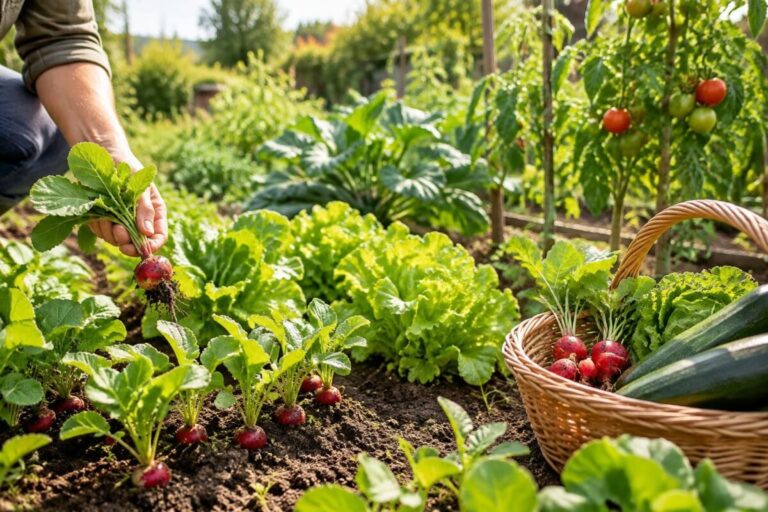
Radishes need regular watering: soil that dries out too much can make the roots taste hotter or prevent them from developing properly. Sow them between rows of lettuce, then thin the seedlings to give them room.
Cherry tomatoes and climbing vegetables to make use of vertical space
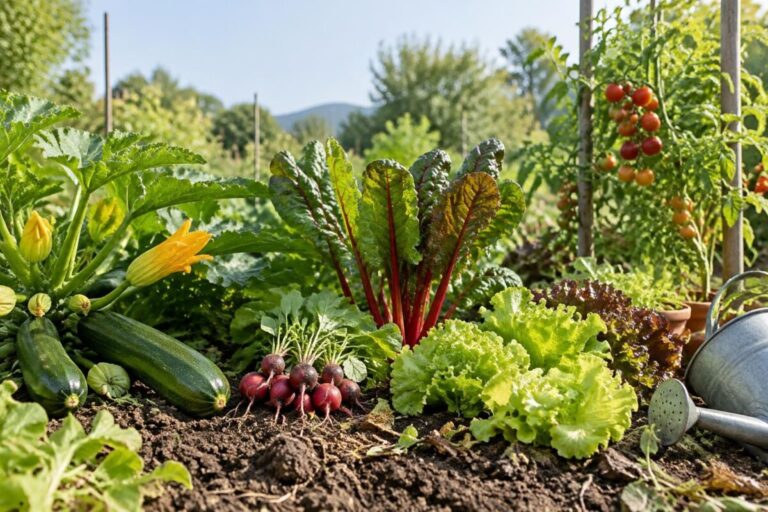
Cherry tomatoes often do better in pots than very vigorous varieties intended for the garden. Provide a deep container, mature compost, good drainage, and a stake; mulch helps retain moisture on hot days.
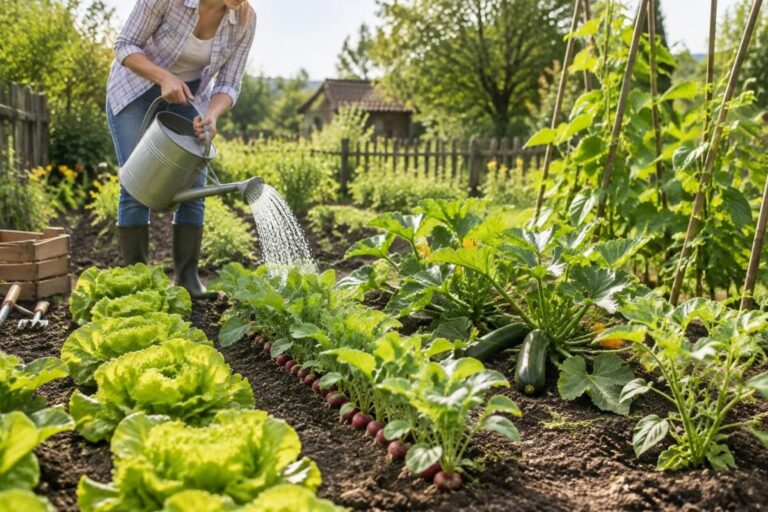
Pole beans, peas, and climbing cucumbers turn a trellis into growing space. Guide the young stems at first and make sure the support is securely fastened, especially if the balcony is exposed to wind.
If your balcony gets little sun, prioritize lettuce, parsley, and chives. If your space is very sunny, try cherry tomatoes, climbing beans, and flowers that attract pollinators, keeping an eye on watering.
Herbs and useful flowers in an urban vegetable garden
Thyme, rosemary, and oregano generally prefer sun and well-drained growing medium. Parsley and chives tolerate partial shade better; keep mint in its own pot, as it can quickly take over.
Nasturtiums, marigolds, borage, and cosmos add color and attract pollinating insects. A few edible flowers, such as nasturtiums and chive blossoms, can also brighten up a salad.
On a balcony, a planter of lettuce seemed doomed after a dry spell. With a light layer of mulch and staggered sowings, the harvests became regular again. As a simple saying goes: “Every pot counts, as long as you give it what it needs.”
Planting vegetables in pots in three simple steps
- Step 1: Check the exposure. Note the hours of sunlight and choose crops accordingly; fruiting vegetables generally need more light than leafy crops.
- Step 2: Prepare the container. Make sure it has drainage holes, fill it with fertile growing medium, and match its depth to the plant’s roots.
- Step 3: Plant, then observe. Space out the seeds, water when the surface starts to dry, and add a light layer of mulch to limit evaporation.
To get started, combine radishes, lettuce, and chives in a planter. You can then set aside a large pot for cherry tomatoes and a trellis for beans: a few well-tended crops are better than an overcrowded balcony.
FAQ about vegetable plants in small spaces
Which plants should I choose to get started on a balcony?
Start with lettuce, radishes, chives, or parsley. If you have enough sun and a deep pot, add a cherry tomato plant.
Can you grow several vegetables together in one planter?
Yes, as long as each plant has enough light and room for its roots. Lettuce, radishes, and chives grow well together in a suitable planter.
What can you grow on a shady balcony?
Try lettuce, spinach, parsley, and chives. Tomatoes and cucumbers generally produce better with more sun.
How can you prevent potted plants from running out of water?
Check the moisture of the growing medium regularly, especially during hot weather, and add a light layer of mulch. Water needs vary depending on the weather, exposure, and container size.
Thanks for reading; Solan