Garden care: how can you retain moisture without overwatering?
Hello, Solan here. To retain moisture without overwatering, improve the soil, apply suitable mulch, and water less often but more deeply. The goal is to keep water near the roots without saturating the soil. A few simple steps are often enough to space out watering. Always check the soil before adding water.
Put these steps in place right away
- Add mature compost to improve the soil structure.
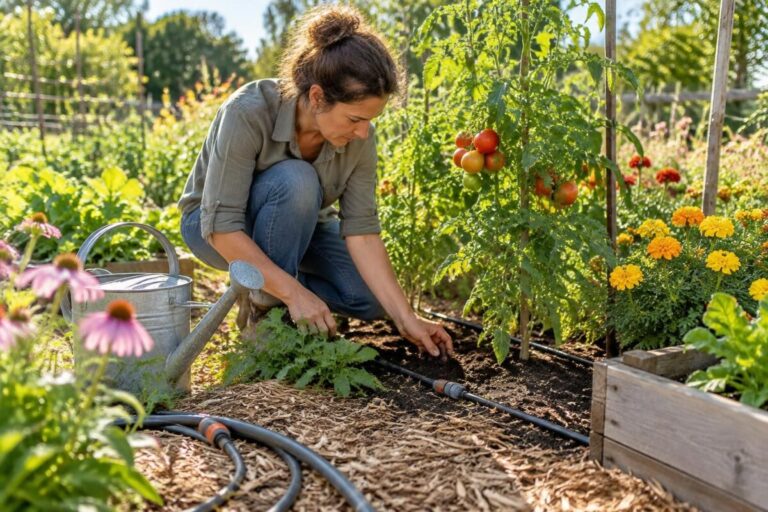
- Apply 5 to 6 cm of mulch in the vegetable garden, without covering the plants’ crowns.
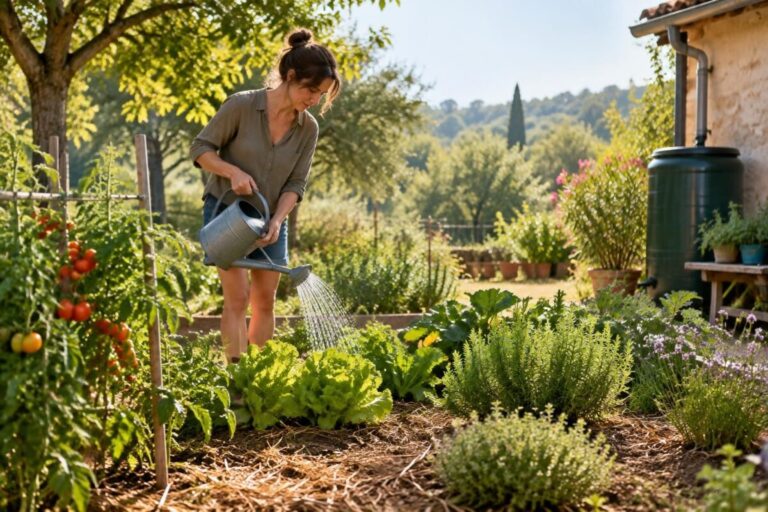
- Water at the base of the plants, early in the morning or in the evening.
- Check the moisture under the mulch before watering.
- Collect rainwater for future watering.
Start by checking the soil a few centimeters below the surface: if it is still cool and moist, wait before watering. To find out more, you can read these tips on choosing between a raised bed and planting directly in the ground and on regular vegetable garden maintenance.
Prepare soil that retains water without suffocating it
Water retention depends first and foremost on the soil structure. Sandy soil lets water drain away quickly, while clay soil can hold so much water that it becomes waterlogged. Compost gradually helps make the soil looser and more welcoming to roots.
If the soil is compacted, water runs off instead of soaking in. Loosen it in spring with a broadfork, without turning over the layers. Light hoeing of the surface can also help prevent a crust from forming after rain, but avoid working waterlogged soil.
As a simple principle reminds us, “living soil drinks better.” To explore practices that help keep soil cool and moist, see these tips on maintaining soil moisture in the garden.
Choose mulch suited to the garden and pots
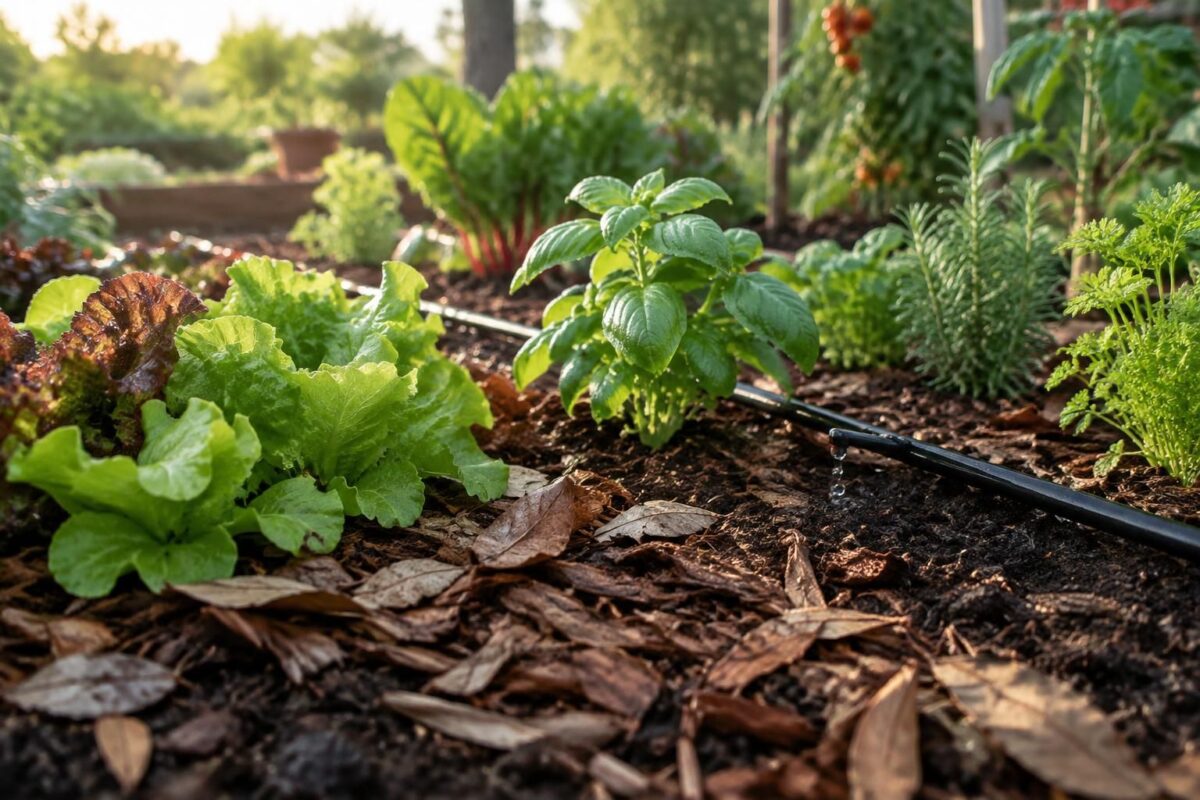
Mulch protects the soil from the sun and slows evaporation. In a vegetable garden, a layer of about 5 to 6 cm is often suitable, depending on the material and conditions. If it is too thick, it can hold water in its fibers and prevent light rain from reaching the soil.
Leave a few centimeters clear around the stems. In pots, use a thinner layer, around 2 to 3 cm, with lightweight materials such as flax or hemp shives. For tips tailored to containers, see this guide on moisture in pots and planters.
A neighbor had spread a generous layer of mulch around her tomatoes, but the water from a light shower stayed on the mulch instead of soaking through. By thinning it out and watering directly at the base of the plants, she got the soil moist again where the roots needed it.
Water less often, but in the right place
Moderate watering does not mean giving plants a few drops every day. Frequent, shallow watering encourages roots to stay near the surface. Water more slowly and deeply, then let the soil dry out slightly before watering again.
Drip irrigation delivers water near the roots and reduces evaporation losses. It also keeps the foliage drier, which can reduce conditions favorable to certain diseases. To decide when to water, a moisture sensor can complement the finger test, especially in large containers or difficult soils.
A simple three-step method
- Step 1: Check the soil under the mulch or a few centimeters below the surface. If it is still cool and moist, hold off on watering.
- Step 2: Water slowly at the base of the plants, preferably early in the morning or in the evening.
- Step 3: Cover the soil and check its condition again before watering next time.
If you’ll be away for a few days, watering spikes or a suitable bottle can help keep potted plants watered. The reservoir should empty gradually: if the potting mix stays constantly waterlogged, reduce the amount of water.
Adapt your approach to the soil and plants
| Situation | Helpful action | What to watch for |
|---|---|---|
| Sandy soil | Add compost and maintain a regular layer of mulch. | Water quickly seeps deep into the soil. |
| Clay soil | Aerate it, add organic matter, and consider raised beds if water pools. | Excess water can suffocate the roots. |
| Pot or planter | Choose a container that is sufficiently deep, has drainage holes, and suits the exposure. | Terracotta often dries out faster than plastic. |
| Mediterranean plants | Maintain well-draining soil and space out watering. | Thyme, rosemary, and succulents do not like staying in wet soil. |
If the soil is sandy, enrich it and protect it from the sun with mulch. If it is heavy soil that stays waterlogged, improve aeration and drainage first rather than adding even more moisture.
Ground cover plants can protect bare areas and help keep the soil from overheating. Choose species suited to your climate and leave enough room for vegetables to avoid excessive competition. Collecting rainwater complements these practices: stored in a tank, it is available for watering at the base of the plants when the soil really needs it.
Good practices for planters
In pots, depth matters: a larger volume of soil often dries out less quickly than a small container. Make sure water can drain through the bottom, then adjust how often you water according to the material and exposure. Metal heats up quickly in the sun, while porous terracotta lets more moisture escape.
Before watering, slip a finger under the mulch. If the soil is still cool and moist, wait. If you’ll be away, a capillary watering system can help keep a few pots watered, but test it before you leave to avoid keeping the growing medium too wet.
What thickness of mulch should you use in a vegetable garden?
A layer of around 5 to 6 cm is often suitable for a vegetable garden, depending on the material and conditions. Leave the plant crowns uncovered and check that water is reaching the soil.
Should you water every day when it is hot?
Not necessarily. First check the soil moisture and water generously at the base of the plants when the soil starts to dry out, rather than giving frequent, small, shallow amounts.
How can you keep a pot moist while you are away for a few days?
A watering spike or capillary watering system can help. Test it in advance and make sure the pot drains excess water.
Do all plants like moist soil?
No. Succulents, rock garden plants, and herbs such as thyme and rosemary generally prefer well-drained soil and spaced-out watering.
Thanks for reading; Solan