Gardening: 7 tips to prevent giving up in summer
Hello there, Solan here. To avoid abandoning the garden in summer, simplify garden maintenance: water less often but deeply, mulch the soil, and choose plants suited to the heat. A few short tasks, repeated at the right time, are often enough to keep an outdoor space thriving. The goal isn’t to do more, but to preserve your energy and the plants’.
Things to put in place right away
To get back to gardening without putting pressure on yourself, start with a few simple tasks and choose a realistic routine. These easy gardening tips can also help you maintain your garden without getting discouraged and restore soil that’s too dry in summer.
- Water early in the morning, directly at the base of the plants.
- Spread mulch over bare soil to retain moisture.
- Remove weeds while they’re still young.
- Harvest ripe vegetables and remove damaged fruit.
- Group pots in light shade before a hot day or a trip away.
These five tasks provide a simple foundation. In summer, consistency matters more than a long, improvised gardening session.
1. Choose heat-resistant plants
A garden takes less effort to maintain when the plants are suited to the climate and soil. Lavender, sedum, blanket flower, rosemary, and olive trees often tolerate heat well once established; also ask a local nursery for advice on choosing varieties suited to your region.
Newly planted and potted plants remain more sensitive. If you add any in summer, make sure you can water them regularly, or wait for a cooler period to plant.
2. Adjust watering before a heat wave
Deep, infrequent watering helps roots seek water deeper in the soil. Water in the morning if possible, at the base of the plants, then check the forecast: expected rain may mean you can skip an unnecessary watering. During periods of extreme heat, prioritize young plants, the vegetable garden, and potted plants.
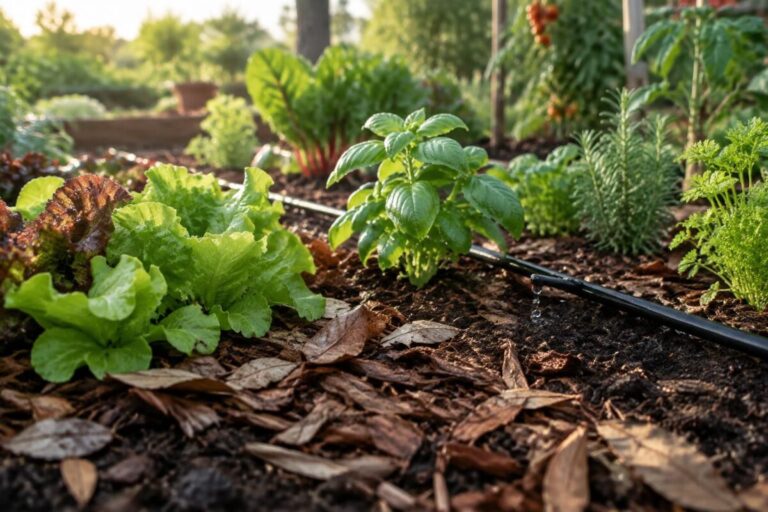
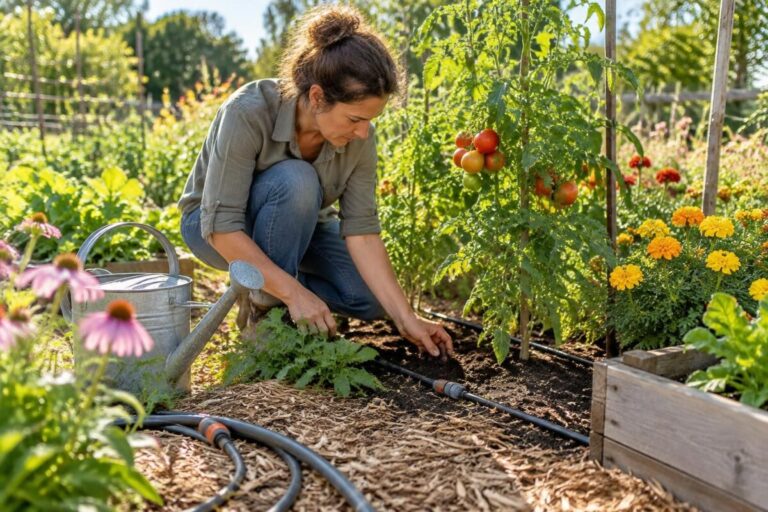
Collecting rainwater and using a drip hose can reduce trips back and forth. Watering needs vary depending on the soil, plants, and weather: check the soil before watering instead of following a fixed schedule.
If it’s an established flower bed, water less often and moisten the soil thoroughly. If they’re potted plants, check the potting mix every day during hot spells and empty any standing water from the saucers.
3. Protect the soil with mulch
Mulch limits evaporation, suppresses unwanted weeds, and protects the soil from temperature fluctuations. A layer about 5 to 8 cm thick is often suitable, depending on the material and the situation. Straw, fallen leaves, and wood chips gradually enrich the soil; volcanic rock and slate last longer, but do little to improve the soil.
Before mulching, remove weeds and water if the soil is dry. Leave a little space around stems and trunks to avoid keeping the area around the plant excessively moist.
4. Feed and aerate the soil without disturbing it
Soil rich in organic matter holds water better and helps plants get through dry spells. Add mature compost to the surface or work it in with a light raking; there’s no need to turn the soil deeply in the middle of summer.
If a crust forms, shallow hoeing helps water soak in. A small task after rain or watering is often better than a major job under the sun.
5. Make summer weeding and pruning easier
Weeding is quicker when weeds are still young and the soil is slightly moist. For summer pruning, limit yourself to removing faded flowers or troublesome branches; avoid severe pruning during a heat wave, as it can weaken plants.
In the vegetable garden, harvest zucchini, tomatoes, and beans regularly. On the lawn, raise the cutting height to around 7 to 8 cm and mow less often: a lawn that turns yellow during a drought may green up again when the rains return.
Once, a vegetable garden that had been left unattended for several days got back into a simple routine with two tasks: harvesting ripe vegetables and mulching the rows. The owner was able to get back to gardening without having to restore everything at once.
“A small task at the right time is better than a big chore done too late.” Keep this in mind when your gardening motivation starts to fade.
6. Create shade for your plants and yourself
A shady spot protects sensitive crops and makes the garden more pleasant to spend time in. A shade cloth, parasol, or pergola covered in climbing plants may be enough; also remember to preserve cool areas for insects and beneficial garden wildlife.
In the vegetable garden, position the shade cloth so it doesn’t rest directly on the foliage. For potted plants, choose light shade rather than a dark, stuffy spot.
7. Set up a simple routine before you go on vacation
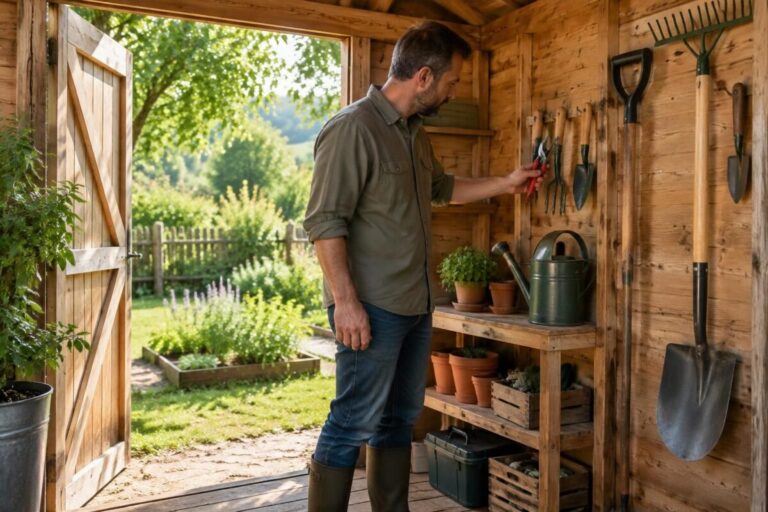
Before you leave, harvest ripe vegetables, mulch the crops, group the pots, and test your watering system. A drip system should be checked before you leave: a kinked hose or incorrectly set timer can leave plants without water.
To keep gardening easy, choose two or three short time slots each week instead of trying to do everything every day. This routine helps you stay motivated and spot signs of stress early.
A three-step method for getting back to gardening
- Step 1: Walk around the garden and identify potted plants, new plantings, and dry areas.
- Step 2: Water the plants that need it most, remove troublesome weeds, and cover bare soil with mulch.
- Step 3: Schedule a short, regular visit to harvest, observe, and adjust care according to the weather.
Start with the areas that need the most help. The rest can wait: a thriving garden doesn’t need to be immaculate.
Summer gardening tasks to adapt to each area of the garden
| Area | Priority task | What to watch out for |
|---|---|---|
| Flower beds | Deep watering, mulching, and removing faded flowers | Avoid unnecessarily wetting the foliage |
| Young trees and shrubs | Water thoroughly once or twice a week, depending on the heat | Don’t prune severely during a heat wave |
| Vegetable garden | Regular harvesting, watering at the base of plants, and early weeding | Keep an eye on leaves and pests |
| Lawn | Mow higher and less often | Summer yellowing doesn’t always mean the lawn needs watering |
Practical answers for maintaining your garden in summer
How often should you water the garden in summer?
Water less often but deeply, adjusting the frequency to the soil, plants, and weather. Pots and new plantings generally need to be checked more often than established flower beds.
Should you water a lawn that’s turning yellow?
Not necessarily. An established lawn can go dormant during a dry spell and green up again when the rains return. Mow higher and avoid cutting it in the heat of the day.
Can you prune plants during a heat wave?
Avoid major pruning during hot weather. Remove only faded flowers or troublesome branches, and put off heavier work until a cooler period.
What should you do in the garden before going on vacation?
Harvest ripe vegetables, mulch the soil, place pots in light shade, and test your watering system. Also follow any local water restrictions.
Thanks for reading; Solan